2 Gulden
The 2 gulden (double gulden) is a silver coin corresponding to the value of two gulden, used mainly in the Habsburg monetary system of the 19th century. In practice it functioned as a higher circulating coin for larger payments and its parameters changed according to the monetary reforms of the time.
The 2 gulden belongs to denominations which by name follow on from the traditional gulden way of counting, but in reality it is a silver circulating coin. Two-gulden coins were significant particularly where in everyday practice counting was done in gulden and kreuzer and it was necessary to have at hand a coin 'for a larger sum' without having to reach for large thaler strikings. It is precisely for this reason that the double gulden is described in the sources as a coin 'of the value and weight of two gulden' – that is, as a denomination firmly embedded in the contemporary accounting logic.
It is interesting that in the period of the gulden currency in the years 1561–1573 the double of the gulden (i.e. 60-kreuzer) was not commonly struck in our lands. The denomination thus did not for a long time assert itself in the Czech environment as a regular part of domestic striking and its 'great' era is connected only with the 19th century, when monetary conditions stabilised differently from in the Renaissance period and when the state needed standardised silver coins for broad circulation.
Under the reign of Francis Joseph I the double gulden appears in circulation on our territory from 1852 within the convention currency. A weight of 25.98 g is given and a practical equation with one thaler, that is with a value of 120 kreuzer. Such a linkage shows well how various 'languages of money' were converted in practice: people counted in gulden and kreuzer, but at the same time relied on thaler values as an intelligible standard for higher sums.
History
A further marked turning point was brought by the introduction of the Austrian currency in 1857. The double gulden in this setting acquired a value of 200 kreuzer and at the same time its parameters changed (a weight of 24.69 g is given). The striking of the double gulden continued until the introduction of the koruna currency in 1892, while the validity of the coin in practice persisted even afterwards. This is typical of transitions of monetary systems: older quality circulating coinage was often still tolerated for some time or was reckoned with according to conversions, even though the new currency was already asserting itself systemically.
For collectors the question of mint origin is also important. Double gulden coins for Austria-Hungary were predominantly struck by the Vienna mint, more rarely strikings from Kremnica and Venice are cited. By contrast they were not struck in Prague, which is a practical piece of information for determining and comparing pieces: if a 'Prague' attribution appears, increased caution is in order and one should check whether it is not an error in the description or a confusion with a different denomination or area.
The 2 gulden is a typical 'large' silver coin whose meaning lay in the convenient payment of higher sums. In the convention setting from 1852 a weight of 25.98 g is given and a value corresponding to one thaler (120 kreuzer). After the monetary change of 1857 the double gulden was tariffed at 200 kreuzer and at the same time the weight changed to 24.69 g. This in itself is instructive for collectors: the same name of a denomination may in different monetary systems mean different parameters and conversions, and therefore when determining it is important to perceive not only the year and the ruler but also the broader monetary framework.
Parameters, monetary context and collector significance
As a collector item the double gulden is attractive for its combination of large format and relatively clear historical classification. The large area of the coin usually bears well-legible motifs and legends, which facilitates identification, but at the same time every careless cleaning is easily visible on such a coin. With silver strikings a natural patina tends to be valued; aggressive polishing may 'flatten' the surface and take away the coin's authenticity. Rarer variants may arise precisely according to the mint (for example pieces outside Vienna), or possibly according to specific years and state of preservation.
A practical guide when collecting double gulden coins is therefore a trio: the monetary period (before/after 1857), the parameters and the mint origin. Whoever watches these points obtains a denomination which is not only 'large silver', but also a well-legible document of how value conversions changed in the 19th century and of how the state sought balance between traditional terminology and a more modern monetary organisation.
In our auction and shop
- Code: MA096-1879KB.L
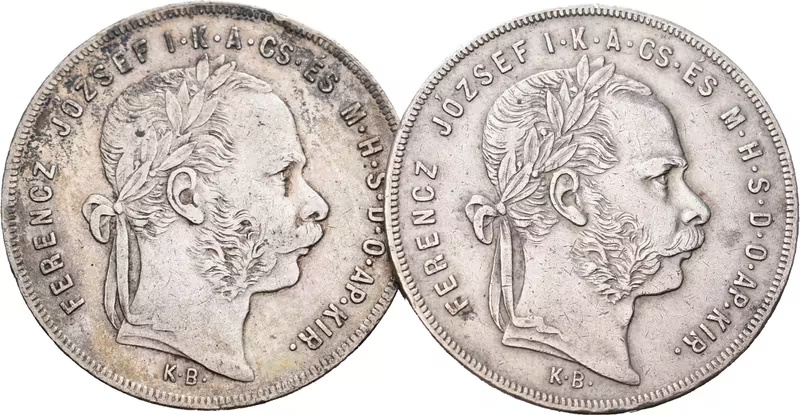
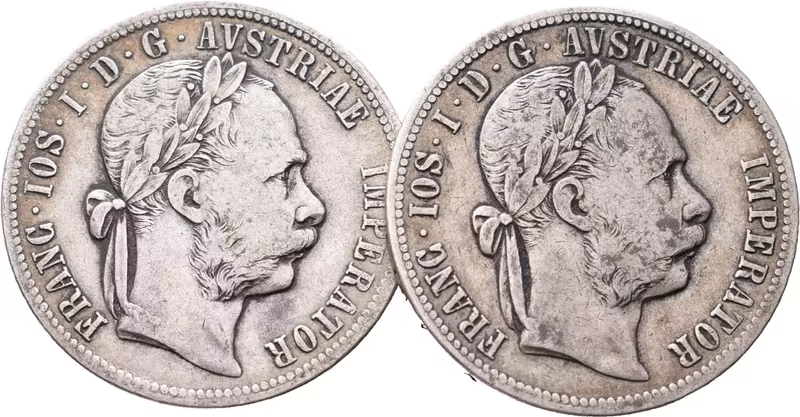
Zlatník 1879 KB - lot 2 kusů
František Josef I. (1848 - 1916) Zlatník 1879 KB - Kremnica - lot 2 kusů, Ves. 96, oběhová zachovalost
Skladem 1 ks - Code: MA067-1878.22LOT
Zlatník 1878, 2 kusy
František Josef I. (1848 - 1916) Zlatník 1878 b.z. - Vídeň , Ves. 67, špatná zachovalost_celkem 2 kusy
Skladem 1 ks - Code: MA096-1878KB.2
- Code: MA096-1879KB.2
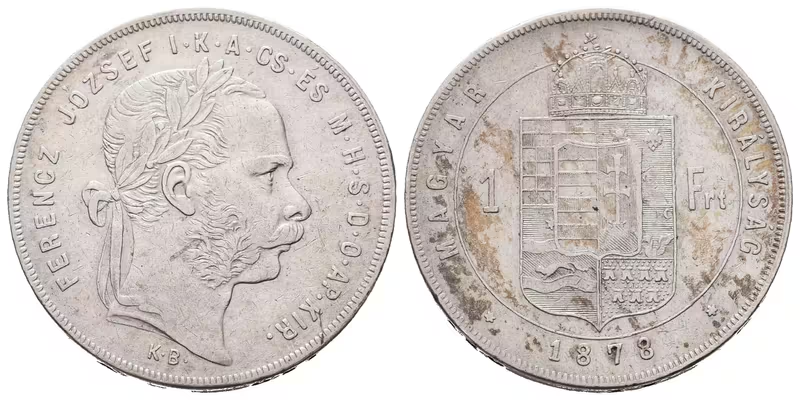
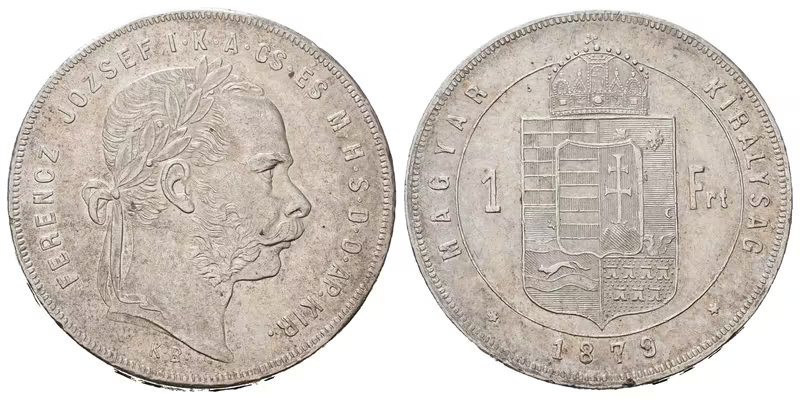
Zlatník 1879 KB
František Josef I. (1848 - 1916) Zlatník 1879 KB, Ves. 96, zbytky lesku, patina, drobné hranky a rysky
Skladem 1 ks