Adam Friedrich von Seinsheim
Adam Friedrich von Seinsheim was a Franconian prince-bishop in Würzburg and Bamberg (18th century), associated with Enlightenment reforms, an architectural flowering and also with ecclesiastical coinage. His strikes belong among the sought-after documents of late Baroque minting culture in the Holy Roman Empire.
Adam Friedrich von Seinsheim (1708–1779) belongs among the prominent personalities of the Catholic ecclesiastical aristocracy at a time when a number of German principalities sought to combine traditional representation with more modern, "Enlightenment" administration. He came from a noble background and, thanks to family ties and education alike, was soon engaged in ecclesiastical and territorial administration. He studied philosophy and theology, completed part of his studies in Rome, and alongside his spiritual career also acquired legal training, which was crucial for the administration of princely bishoprics.
In 1755 he became prince-bishop in Würzburg, and two years later he also took over the bishopric of Bamberg, thus creating a personal union of two important Franconian territories. In his day both courts attempted to maintain their prestige within the Holy Roman Empire while at the same time coping with the pressure of modernisation: reform of education and administration, support for healthcare and efforts at more effective management of the territorial finances are typical themes associated with his rule. He left a mark on cultural history as a patron and a builder — under his oversight large building projects were completed or substantially advanced, and a court culture which in Franconia continued the late Baroque and Rococo.
He also left a significant trace in the field of learning. In Bamberg he raised the local academy to the rank of a university (1773), which can be understood as an expression of his effort to strengthen the institutional foundations of the country and to educate officials and clergy. In a broader European context his rule unfolded in a restless time of wars and rivalry between great powers, when the conflicts of the 18th century reached into the Franconian territories as well. Such upheavals had an impact on the economy and on the need for stable circulating coin, which is also important for understanding the minting output of princely bishoprics.
History
For numismatics, Adam Friedrich von Seinsheim is of interest above all as a sovereign who exercised the right to mint coins within ecclesiastical states. His strikes belong to the tradition of German ecclesiastical coinage: the coins bore the coat of arms and titulature of the ruling bishop and at the same time fulfilled the ordinary circulating function in the regional economy. Although more representative pieces were also struck in his time, a substantial part of the output belonged to the practical denominations intended for everyday payments. It is precisely the combination of court representation, territorial administration and the needs of circulation that lends his coins their particular appeal: they are at once a "state document" and a tangible witness to the regional economy of the 18th century.
Adam Friedrich von Seinsheim as a prince-bishop stood at the head of a territory where coinage was not just a technical service but also an expression of sovereignty. On his coins one usually encounters the episcopal coat of arms, ecclesiastical insignia and inscriptions that clearly identify the issuer. In practice this means that even minor denominations carry a political message: who has the right to determine the value of the circulating coin and who guarantees its validity.
In the 18th century, alongside higher silver denominations, smaller silver and copper coins for daily trade were also minted in the German lands. With strikes connected to Seinsheim the range of values is therefore particularly rewarding for collectors: from "larger silver", which was often hoarded, to small coins bearing the typical traces of circulation. The grade of preservation is decisive here — with smaller values the legibility of the legends is quickly lost, while with larger coins the quality of striking and any interference with the surface stands out.
Coinage in Würzburg and Bamberg
For the collector it is useful to look at three things: the mint, the type of inscriptions and the rendering of the coat of arms. Strikes from various centres can differ in script and composition, which aids more precise identification. With ecclesiastical strikes small heraldic details often play a decisive role, distinguishing individual issuers and sometimes even particular stages of rule. If a coin has preserved a clear legend and well-legible emblems, it is a markedly more attractive specimen than a piece with a "clipped" edge or worn-away text.
Coins of Adam Friedrich von Seinsheim are today collected not only as regional circulating coin but also as part of the broader theme of ecclesiastical states in the Holy Roman Empire. They fit well into collections of German princely strikes, into thematic sets of the Rococo period and into series that follow the development of titulature and emblems on coins. Therein lies their lasting value: they are not merely "a pretty coin" but a key to understanding how power, economy and symbolism worked in 18th-century Europe.
In our auction and shop
- Code: SUGA-D2006B
Uganda, 2000 Shillings 2006 - Jozef Adamec
Ugandská republika (1987 -) 2000 Shillings 2006 - Jozef Adamec, KM# 332 Postříbřený mědinikl (CuNi), 39 mm (24,8 g), proof, v kapsli. Mincovna: Cape Mint - Jihoafrická republika. Ze série "Hall of Fame of Football" (Fotbalová síň slávy) - Jozef Adamec -…
Skladem 1 ks - Code: MCZ133
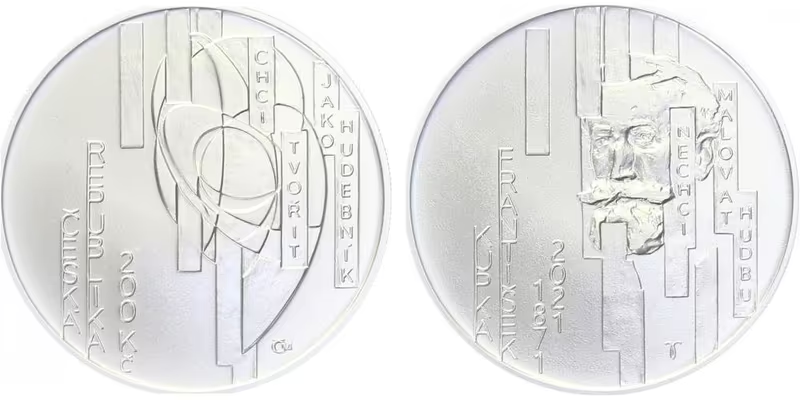
200 Kč 2021 - František Kupka
Česká republika (1993 - ) 200 Koruna 2021 - 150. výročí narození Františka Kupky, autor Adam Alva Fejfar, Aurea C233, kapsle, certifikát, běžná kvalita Ag 0,925, 31 mm (13 g), raženo 5 600 ks (běžná kvalita), 10 900 ks (proof)
Skladem 3 ks - Code: MCZ133-PROOF
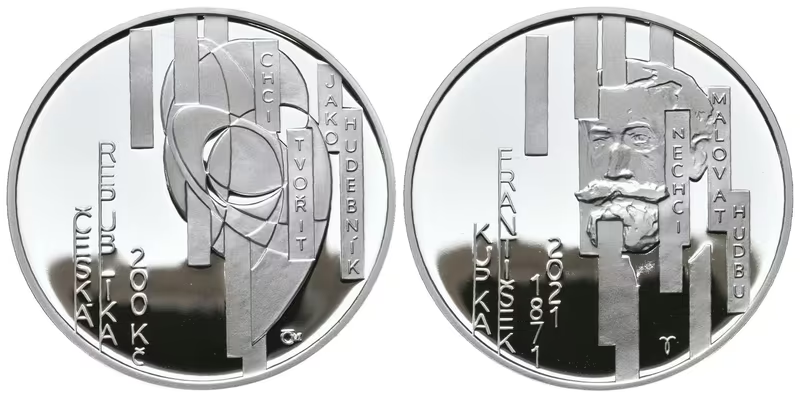
200 Kč 2021 - František Kupka, PROOF
Česká republika (1993 - ) 200 Koruna 2021 - 150. výročí narození Františka Kupky, autor Adam Alva Fejfar, Aurea C233, etue, certifikát, PROOF Ag 0,925, 31 mm (13 g), raženo 5 600 ks (běžná kvalita), 10 900 ks (proof)
Skladem (>5 ks) - Code: MCZ125
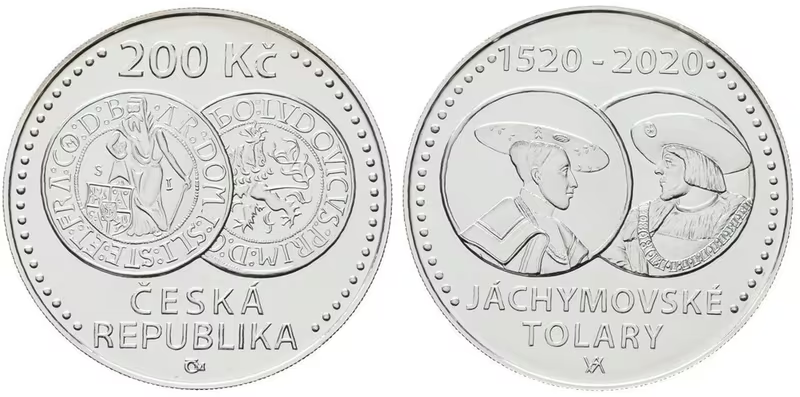
200 Kč 2020 - Zahájení ražby jáchymovských tolarů
Česká republika (1993 - ) 200 Koruna 2020 - 500. výročí zahájení ražby jáchymovských tolarů, autorka Veronika Adamcová, Aurea C225, kapsle, certifikát, běžná kvalita Ag 0,925, 31 mm (13 g), raženo 6 700 ks (běžná kvalita), 12 300 ks (proof)
Skladem 1 ks