Henry IV of the Salian Dynasty
Henry IV (1050–1106) was Roman king and Emperor of the Holy Roman Empire, whose rule was marked by the dramatic conflict with the papacy known as the Investiture Controversy. His strikes document one of the most turbulent periods of medieval imperial history.
Henry IV was born on 11 November 1050 at the imperial palace in Goslar as the son of Emperor Henry III the Black of the Salian dynasty and Agnes of Poitou. Already at the age of four, on 17 July 1054, he was crowned Roman king, by which his father secured the continuation of the dynasty. The unexpected death of Henry III in 1056, however, left the Empire in the hands of a six-year-old boy.
The regency for the underage king was taken over by his mother Agnes, who, however, could not assert herself against the powerful imperial princes. They took advantage of the weakness of the central power and appropriated extensive imperial estates and prerogatives. In 1062 the Archbishop of Cologne Anno II abducted the young king during a boat trip and thus took control of the regency government. Henry was forced to serve as an instrument in the hands of the ambitious princes until he came of age.
After being declared of age in 1065, Henry began laboriously to restore royal authority. He allied himself with the lesser nobility and the towns against the imperial magnates, and gradually consolidated his power. His chief opponent, however, became Pope Gregory VII, who insisted on the independence of the Church from secular power and laid claim to the right to appoint bishops without royal consent.
History
The conflict culminated in 1076, when at the Synod of Worms Henry declared the pope deposed. Gregory VII responded with excommunication and the release of Henry's subjects from their oath of fealty. Threatened by a revolt of the princes, in January 1077 Henry undertook the memorable penitential journey to Canossa, where after three days of waiting in the cold he obtained the pope's forgiveness. The Investiture Controversy, however, continued, and Henry finally conquered Rome in 1084 and obtained the imperial coronation from the antipope Clement III.
For Czech history it is significant that Henry IV in 1085 rewarded the Czech Prince Vratislav II with the royal title for faithful service during the Italian campaign. This was the first granting of the royal dignity to a Czech sovereign, albeit only personal, not hereditary. Henry IV died on 7 August 1106 in Liège, abandoned by his sons, who had rebelled against him.
Coin production under the rule of Henry IV reflects the complex political situation of the Empire in the second half of the 11th century. The royal and imperial mints struck above all silver denarii, which remained the basic denomination of medieval money circulation. Important mints functioned in Goslar, Speyer, Worms and other imperial cities.
Coinage under Henry IV
A characteristic feature of the strikes from the period of Henry IV is their stylistic diversity corresponding to the decentralised nature of imperial coinage. The individual mints created their own iconographic types, with the obverses usually bearing a stylised portrait of the sovereign or a royal monogram. The reverses depict crosses, architectural motifs symbolising church buildings, or inscriptions with the title of king or emperor.
From the numismatic point of view, the coins from the period of co-rule are interesting, when the anti-kings Rudolf of Rheinfelden and later Hermann of Salm acted against Henry. The strikes of both sides of the conflict document the splintering of imperial power and the struggle for legitimacy. The coins of Henry IV represent a valuable source for the study of the political, economic and artistic history of the Salian period.
In our auction and shop
- Code: SFRA88-D1603
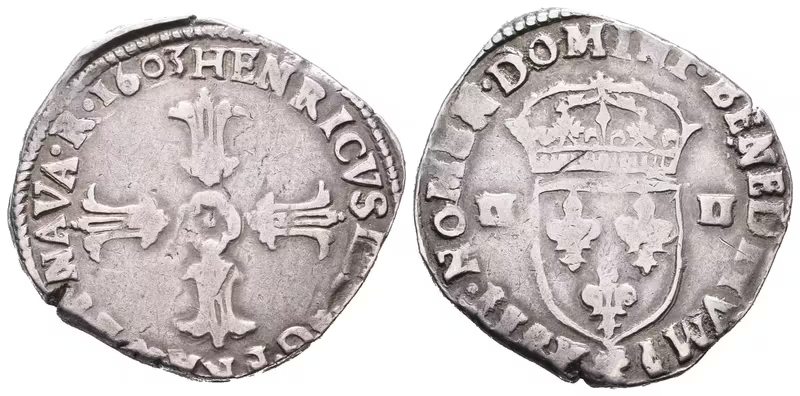
Francie, 1/4 Ecu 1603
Francie, Jindřich IV. (1589 - 1610) 1/4 Ecu 1603 (značka tři kroužky?), minc. Bordeaux nebo Remes, Dupp.1224, patina, excentrický, vady střížku (9,52 g)
Skladem 1 ks - Code: NABAVLA-1393
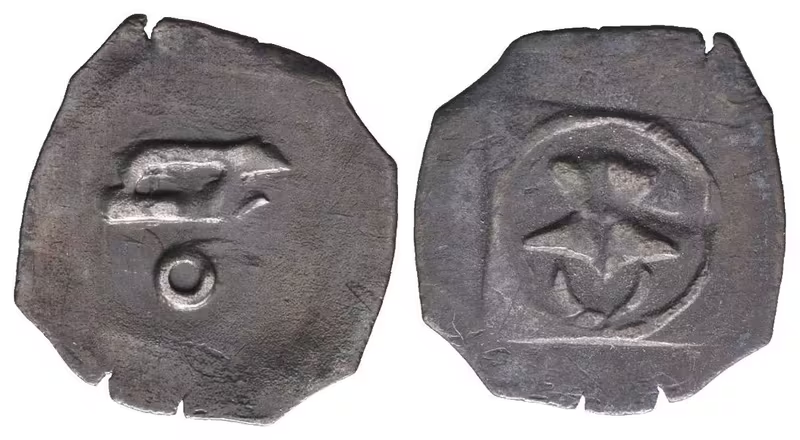
Bavorsko - Landshut, Fenik se čtyřrázem
Bavorsko - Landshut, Jindřich IV. (1393 - 1450) Pfennig se čtyřrázem, minc. Landshut, Rad.48, pěkná zachovalost, patina, ned.
Skladem 1 ks - Code: SFRA87-B1603
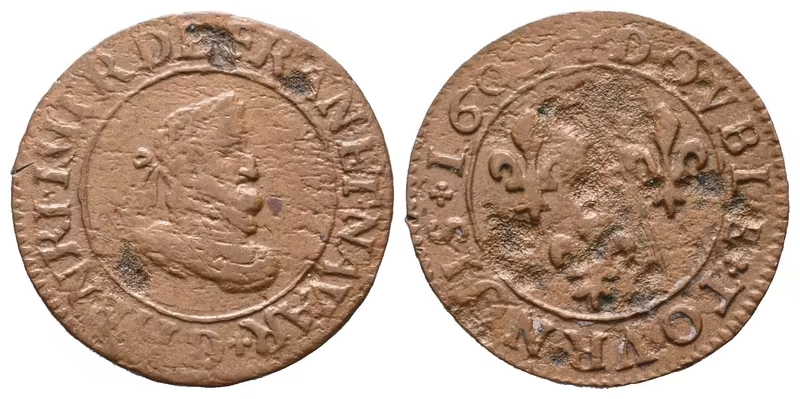
Francie, Double tournois 1603
Francie, Jidřich IV., (1589 - 1610) Double Tournois 1607? D, Lyon, KM.16, koroze, typ.1A
Skladem 1 ks - Code: NABAVLA-1393.3
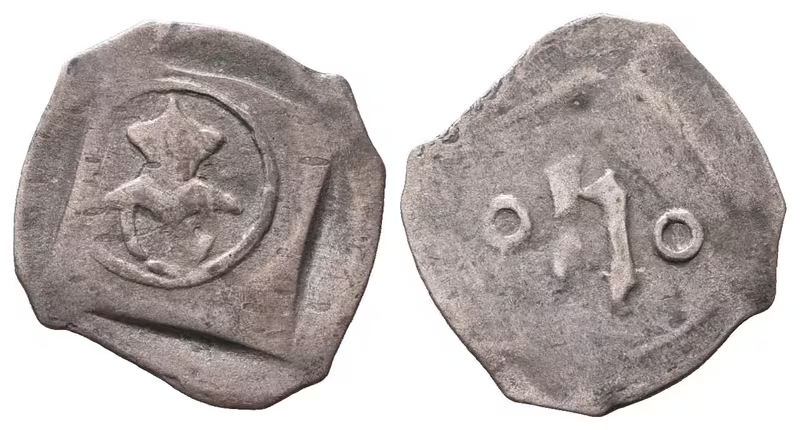
Bavorsko - Landshut, Fenik se čtyřrázem
Bavorsko - Landshut, Jindřich IV. (1393 - 1450) Pfennig se čtyřrázem, minc. Landshut, Rad.48, pěkná zachovalost, patina, ned.