Charles William Ferdinand
Charles William Ferdinand of Brunswick-Wolfenbüttel (1735–1806) was Duke of Brunswick reigning from 1780 to 1806 and a Prussian field marshal who became famous as one of the most capable military commanders of his day during the Seven Years' War and the Napoleonic Wars, but who perished tragically after the Battle of Jena and Auerstedt. Charles William Fe…
Charles William Ferdinand was born on 9 October 1735 at Wolfenbüttel as the son of the Duke of Brunswick Charles I and Philippine Charlotte of Prussia, sister of Frederick the Great. He grew up in an environment of Prussian military tradition and received a quality education in the spirit of the Enlightenment. From his youth he showed military talent and strategic thinking.
His military career began in the Seven Years' War, when Charles William Ferdinand served under Frederick the Great and quickly gained the reputation of a capable tactician. He distinguished himself at the battles of Kolín, Rossbach and Leuthen, where he proved his courage and military talent. Frederick considered him one of his best generals.
Accession to the Brunswick throne in 1780 after his father's death brought Charles William Ferdinand rule over a strategically important duchy in northern Germany. As an enlightened sovereign he modernised the administration, supported education and culture and maintained Brunswick as an important centre of German Enlightenment.
Prussian service continued during his ducal reign. Charles William Ferdinand remained a Prussian general and adviser to King Frederick William II. His military experience and strategic knowledge were valued at the Prussian court, and the army hierarchy respected him as a veteran of the Seven Years' War.
The French Revolutionary Wars brought new challenges. Charles William Ferdinand commanded the counter-revolutionary coalition during the invasion of France in 1792, but the campaign ended unsuccessfully at Valmy. This defeat showed the strength of the revolutionary armies and the necessity of adapting traditional warfare to new conditions.
History
Reforms of the Brunswick army reflected Charles's experiences with French revolutionary tactics. He modernised military training, improved weaponry and reorganised the command structure according to the latest military theories. Brunswick units became among the best in northern Germany.
The Napoleonic Wars placed Charles William Ferdinand at the head of anti-French resistance in the German lands. As one of the chief commanders of the Fourth Coalition he organised the defence against French expansion and tried to coordinate the efforts of the German princes against Napoleon.
The Battle of Jena and Auerstedt on 14 October 1806 proved fatal for Charles William Ferdinand and for the Prussian army. As supreme commander of the Prussian forces he faced Napoleon's genius and French tactical superiority. During the battle he was seriously wounded by a French bullet to the head.
The death of Charles William Ferdinand on 10 November 1806 at Ottensen near Hamburg ended the life of one of the last great generals of the Frederician school. His death symbolised the end of the old Prussian military tradition and the need for a profound reform after the catastrophe at Jena. The Duchy of Brunswick was incorporated into the Kingdom of Westphalia.
The legacy of Charles William Ferdinand lies in his contribution to military theory, the modernisation of Brunswick administration and the resistance against Napoleonic hegemony. He was respected both by friends and by enemies as a gentleman-soldier of the old school and an honourable adversary representing the best traditions of the Prussian officer corps.
Charles William Ferdinand in numismatics
The coins of Charles William Ferdinand of Brunswick-Wolfenbüttel document his twenty-six-year reign over the Duchy of Brunswick and combine ducal portraits with military symbolism reflecting his dual role as sovereign and general. The portraits depict a dignified aristocrat in military uniform with the Prussian Order of the Black Eagle.
Characteristic motifs are the Brunswick arms with horse and ducal crown combined with the Prussian eagle and military distinctions. The design often includes references to Charles's service to Frederick the Great and his position in the Prussian military hierarchy. The inscriptions emphasise the title of Duke of Brunswick and Prussian field marshal.
Military medals and decorations celebrate Charles's successes during the Seven Years' War and the French Revolutionary Wars. These issues document his military career and the respect he enjoyed among his contemporaries. The motifs often include military symbols, laurel wreaths and allegories of victory.
Commemorative coins for various anniversaries of Charles's reign and military achievements document his dual role as enlightened duke and military commander. The quality of Brunswick coins remained high throughout his reign thanks to the prosperity of the duchy and Charles's investments in culture and crafts.
In our auction and shop
- Code: SFRA-D1990
Francie, 100 Francs / 15 Ecus 1990 - Karel Veliký (Charlemagne, 742-814)
Francouzská republika (1958-dosud) 100 Francs / 15 Ecus 1990 - Karel Veliký (Charlemagne, 742-814), KM# 983 Ag (.900), 37 mm (22,2 g), v kapsli. Stav mince odpovídá fotografii.
Skladem 1 ks - Code: M78B-BZ1719
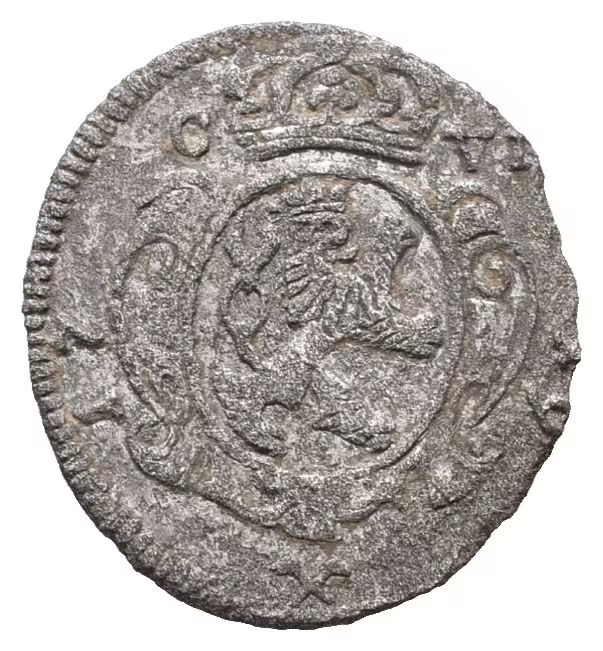
Karel VI., 1/2 Krejcar 1719
Karel VI. (1711 - 1740) 1/2 Krejcar 1719, Kutná Hora-Weyer, oxidace, lehce olámaný_R!
Skladem 1 ks - Code: RASPANEK-1958A
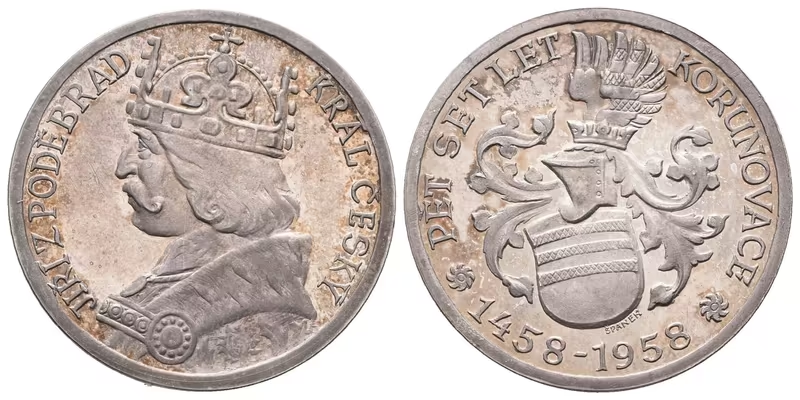
Špánek Karel - Výročí korunovace Jiřího z Poděbrad
Špánek Karel (1883 - 1983) AR Medaile 1958 - 500. výročí korunovace Jiřího z Poděbrad a Kunštátu českým králem Ag 0,900, 29 mm (12,13 g), puncováno luxusní zachovalost, jemná patina, lesk
Skladem 1 ks - Code: RASPANEK-1958A.1
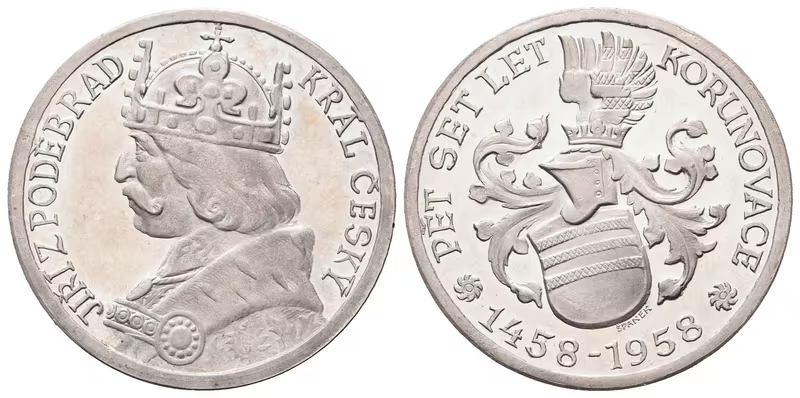
Špánek Karel - Výročí korunovace Jiřího z Poděbrad
Špánek Karel (1883 - 1983) AR Medaile 1958 - 500. výročí korunovace Jiřího z Poděbrad a Kunštátu českým králem Ag 0,900, 29 mm (12,17 g), puncováno luxusní zachovalost, jemná patina, ražební lesk
Skladem 1 ks