Coin pressing
Coin pressing is a method of manufacture in which a metal blank is forced under high pressure between two dies, producing a sharp relief and inscriptions. Compared to hammer-striking, pressing gives a more uniform shape, a more precise edge and better protects the coin against tampering.
Coin pressing is the result of a long development of minting technique, which responded to two basic needs: to produce more coins more quickly and at the same time to maintain their uniform parameters. In the Middle Ages, hammer-striking predominated. The blank was placed on the lower die, the upper die was placed on top of it, and with blows of the hammer the design was transferred into the metal. The result was usable but naturally irregular: coins tended to be oval, often off-centre, with a shallow relief and a variable edge. It was precisely the edge that was the weak point, since on gold and silver coins it tempted clipping or filing.
As in the early modern period larger silver denominations spread, and at the same time the volume of trade grew, the uniformity of the coin became more important than before. With it came the effort to replace human force with a machine. The first mechanical procedures relied on a screw press: a large screw converted the force of human (or later animal) power into pressure on the dies. This principle allowed a much higher and, above all, repeatable pressure than the hammer. Coins thus acquired a sharper image, a more stable diameter and, gradually, a more controlled edge. Together with mechanisation, "edge security" also developed, for example regular reeding or edge inscriptions, since precisely these features could make the removal of metal more difficult and reveal tampering.
In the 17th and 18th centuries pressing became the standard in an ever larger number of mints. Not only the press itself was improved, but also the preparation of the blanks: the metal was rolled into precise sheet, the blanks were punched out at a uniform diameter, and the edge was reinforced before striking into a raised rim. Thanks to this the relief wore less, coins stacked better in columns and quality control was easier. At the same time the specialisation of production also asserted itself: one workshop prepared the metal, another produced the dies and yet others concentrated purely on striking.
History
A real breakthrough in productivity was brought by the industrial era. Pressing began to use mechanical drive, and press construction was further refined. Mints could thus strike large series with high precision while maintaining the same appearance across years. Modern presses work with precisely controlled pressure and often also with several stages of control: from optical inspection of the blank, through the automatic rejection of defective pieces, to the precise metering of material. The result is a coin with a regular circle, a sharp edge and clean details, which would arise from hammer-striking only exceptionally.
In numismatics, pressing also has fundamental importance for the assessment of authenticity. For modern strikes, consistent rendering of details, an even height of relief and a precise appearance of the edge are expected. Deviations may point to counterfeiting, additional alterations or non-standard production. At the same time, even a pressed coin may bear production deviations; these, however, have a different character than in the case of hammer-striking and can often be recognised by the typical traces of the process.
The basis is a well-prepared blank: it must have the correct weight, diameter and surface. Before striking, a raised rim is often created, which during pressing helps to "lock" the metal into the shape of the coin and to protect the relief against rapid wear. The pressing itself proceeds in such a way that the blank is placed in a guide ring (a collar), which determines the precise diameter and at the same time makes it possible to create a regular edge: smooth, reeded or inscribed. The dies then press the design into the metal under pressure; in quality strikes the image is sharp, the lettering clean and the edge regular.
How pressing proceeds and what it reveals on the coin
Pressing leaves on the coin typical features that are useful for collectors. Standard production tends to have an even height of relief and a clearly legible legend even at the edge. Collectors' executions (for example polished strikes) often use higher pressure, more carefully prepared blanks and sometimes more than one blow, so that the design is maximally sharp. On the other hand, with worn dies, a slight "blurring" of detail or a thin burr at the edge may appear, which testifies more to the state of the tools than to interference with the coin.
Among the typical production defects of pressed coins are an off-centre blank (off-centre strike), a double strike (a second blow with a slight shift), die cracks (lines in the relief) or edge defects caused by poor seating in the collar. When assessing authenticity, it is therefore useful to follow especially the edge and the regularity of detail: a pressed coin should have a "machine" certainty of shape, which counterfeits often try to imitate but in small details fail.
In our auction and shop
- Code: YLE-371935
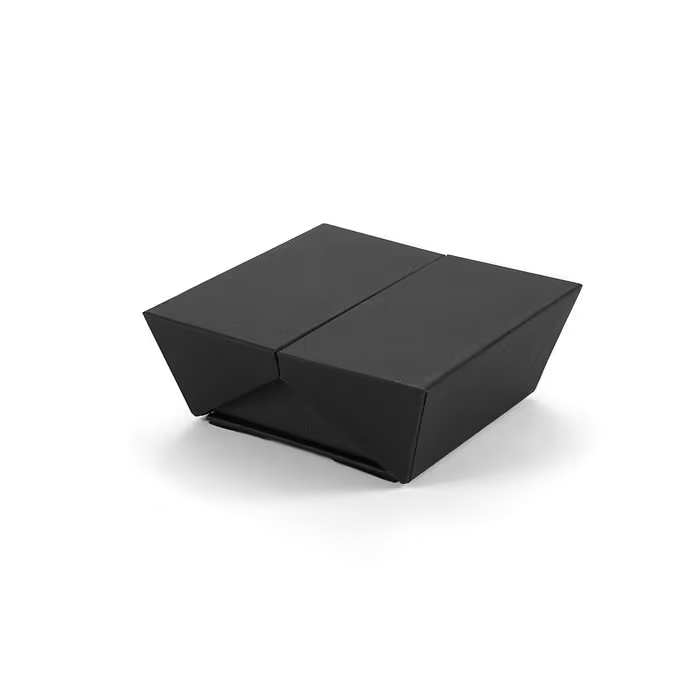
Dárková krabička Porta - Systém QUADRUM - Leuchtturm
Dárková krabička od firmy Leuchtturm, pojme univerzální kapsli QUADRUM (od 10 do 41 mm) Otevření dvířek tohoto pouzdra, které je vyrobeno výhradně z papíru, přináší sběratelům skutečný zážitek. Díky nenápadnému magnetickému uzávěru zůstává pouzdro během…