Nathan Rothschild
Nathan Rothschild (1777-1836), in full Nathan Mayer Rothschild, was a British banker born in Frankfurt am Main, who built up the London branch of the House of Rothschild. He became famous for his ability to organise credit, bills of exchange and deliveries of precious metals at speed, and became one of the key financial figures of Napoleonic and post-war…
Nathan Rothschild was born in 1777 in Frankfurt am Main into a Jewish family led by Mayer Amschel Rothschild. The father laid the foundations of the banking house and at the same time thoughtfully divided the family business among the sons across several European centres. To Nathan fell Great Britain, then a rapidly growing economic power whose London was being transformed into the principal node of trade, insurance and financial markets.
He came to England in 1798 and settled in Manchester, where he first worked in the textile trade and gradually built up capital and a network of contacts. Already at the beginning of the 19th century his interest shifted from goods to finance: from 1804 he moved in the London milieu and shortly afterwards developed a banking business based on trading in bills of exchange and state securities. A fundamental advantage was the family network across Europe, which made it possible not only to transfer value between countries, but also to obtain information and react more quickly than the competition.
The Napoleonic Wars created exceptional demand for credit and for "hard" money. From 1811 Nathan was significantly involved in organising transfers of funds for British army pay and support to the allies on the continent. In practice this meant mastering the logistics of bills of exchange, currencies and physical deliveries of metal at a time when the roads were uncertain and the political situation was rapidly changing. It was precisely the ability to combine commercial daring with precise management of risk that brought him an extraordinary position in the London financial world.
History
After 1815 Europe was shifting from a war economy to a period of reconstruction and investment. Nathan used the situation to strengthen the role of his house in the market for state bonds and large loans. In 1818 he took part in a significant loan to the Prussian government, and his bank gradually acquired the reputation of an institution able to swiftly secure liquidity even in moments of tension. From the episodes of the time the year 1825 is often recalled, when during the financial panic he helped to secure a sufficient supply of coins so as to relieve pressure on the monetary circulation and market confidence. These moments show that this was not merely "paper" banking, but the ability to work with metal, cash and the immediate need of the market.
In the last years of his life he also took on large commodity and state contracts. In 1835 he obtained a contract with the Spanish government which gave him rights connected with the mines of Almadén, historically known for the extraction of mercury. Nathan died on 28 July 1836 in Frankfurt, where he had come for a family event, and his body was transported to London for burial.
Nathan Rothschild was not a mintmaster or an issuer of coins, but his significance is closely connected with the role of precious metals in the monetary system of the 19th century. In a world where bills of exchange, state bonds and banking credit were still grounded in confidence in metallic money, the ability to procure gold and silver had exceptional weight. A banker who was able to deliver cash or metal at the right moment for the settlement of obligations had influence not only on trade but indirectly on the stability of the currency.
Financial system, precious metals and "metallic" money
For numismatics this context is important because it reminds us that coins are not merely a collector's object but part of a broader financial circulation. In Nathan's time financial instruments developed rapidly alongside coins, but it was precisely metallic money that remained the key "anchor" of confidence. That is why with the great houses such great value was placed on the ability to work with cash, exchange rates and physical deliveries of metal. Nathan's story thus helps to understand why gold and silver coins still had such a strong role in the 19th century - and why in crises attention was always once again turned to them.
In our auction and shop
- Code: SVEL91-F2023.A
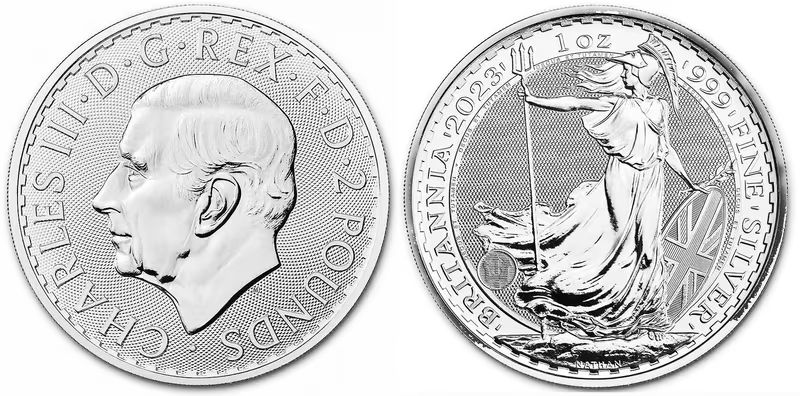
Velká Británie, 2 Pounds 2023 - Britannia
Velká Británie, Charles III. (2022 - ) 2 Libra 2023 - Britannia Ag 0,999, 38,61 mm (31,1 g), 1 Oz, běžná kvalita Stříbrná Britannia ročníku 2023 navazuje na tradici vydávání populárních mincí Britské královské mincovny (The Royal Mint). Ta trvá již od…
- Code: SVEL91-F2024
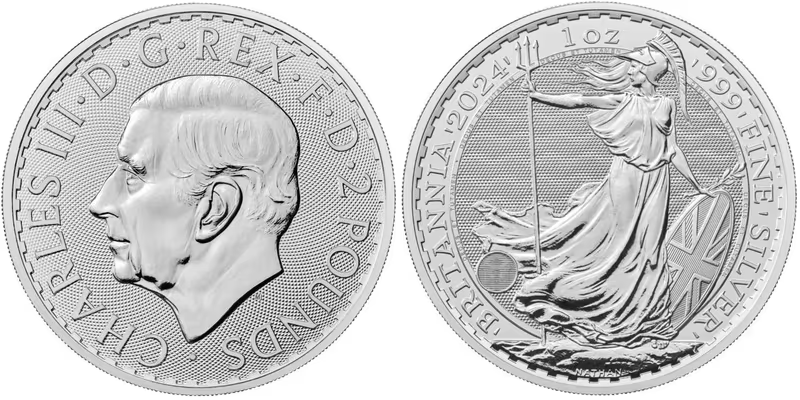
Velká Británie, 2 Pounds 2024 - Britannia
Velká Británie, Charles III. (2022 - ) 2 Libra 2024 - Britannia Ag 0,999, 38,61 mm (31,1 g), 1 Oz, běžná kvalita Stříbrná Britannia ročníku 2023 navazuje na tradici vydávání populárních mincí Britské královské mincovny (The Royal Mint). Ta trvá již od…