Poznań
Poznań is a significant historical city in western Poland on the river Warta, regarded as one of the oldest centres of the Polish state. Thanks to its position on trade routes it became an important administrative and economic hub, and in history it has also repeatedly played a role as a site of minting and financial administration.
Poznań belongs among the oldest cities of Poland, and its beginnings are closely linked with the early period of Polish statehood. The oldest core is the island of Ostrów Tumski, where a fortified seat and later an ecclesiastical centre arose. It was here that the power of the early Piasts was concentrated, and Poznań is mentioned among the principal strongholds of the emerging principality. In the early Middle Ages cities of this type had strategic value: they controlled river crossings, administered the surrounding region and provided a base for trade and the collection of fees.
From the 10th century Poznań developed as an important ecclesiastical centre — the establishment of a bishopric and the construction of early churches enhanced its prestige and stability. At the same time settlement expanded along the banks of the Warta, since the position of the city was advantageous for long-distance trade and regional markets. In the High Middle Ages Poznań joined the strengthening urban network of Central Europe: the importance of crafts, markets and municipal self-government grew, and the city gradually transformed into the economic centre of Greater Poland.
In later centuries the city went through periods of prosperity and crises, as is often the case with Central European cities. Wars, epidemics and fires played a fundamental role, as did changes in trade routes and the fiscal policy of the state. Nevertheless Poznań long retained its position as a regional metropolis with significant markets, warehouses and administrative institutions. In the modern period the cultural and educational layer was also strongly active here, which reinforced the city's identity and continuity.
History
The modern history of Poznań is then closely linked with the transformations of state borders and with industrialisation. The position of the city between the German and Polish cultural spheres led to the meeting here of various administrative and linguistic influences. Even so, Poznań preserved the character of a strong regional centre — with universities, exhibition activity and an industrial tradition. Within Polish history the city has also become a symbol of civic and social energy, which is evident in many events of the 19th and 20th centuries.
From a numismatic point of view what is important for Poznań is above all that, as an old administrative and trading centre, it was a natural place where monetary flows concentrated and where, in various periods, minting and accounting functions appeared. In Greater Poland over the course of the centuries strikes appear that are linked both to royal power and to the urban environment, and Poznań is therefore often mentioned in the literature in connection with the history of the circulation of money and with the administration that ensured it.
The practical significance of Poznań always derived from its position: the Warta river and connections to overland routes enabled the movement of goods and people. With this was connected the need for markets, measures, weights and also reliable monetary circulation. In the Middle Ages and the early modern period it was precisely in such centres that exchange services and the collection of fees were concentrated, since the city gate, marketplace or warehouses were places where money was used daily and in large volumes.
Poznań as a trading and numismatic locality
In numismatics Poznań appears mainly as a geographical designation of origin (the place of administration, circulation or finds) and as part of the historical context of strikes of Greater Poland. With coins and medals it may be associated with heraldic or textual designations of the region, or with contemporary inscriptions relating to the city. For the interpretation of finds Poznań is moreover important because it lies at the crossroads between Pomerania, Silesia, central Poland and territories west of the Oder — that is, in an area where various monetary systems could meet in circulation.
From the standpoint of collecting practice it is useful to understand Poznań as a "hub", not just as a point on the map. For many strikes and find circumstances what is decisive is not only where the coin was made, but also how and why it spread. And it is precisely cities of the trading type — among which Poznań long stands — that are key for the explanation of monetary flows and economic ties.
In our auction and shop
- Code: NE-Z1917LIS
Nouzové ražby, 50 Pfennig - Lissa u Poznaně
Nouzové platidlo - Německo 50 Pfennig b.l. (1917) - Lissa u Poznaně (Posen). Fe 25 mm_R!
Skladem 1 ks - Code: SPOL89-F1598P
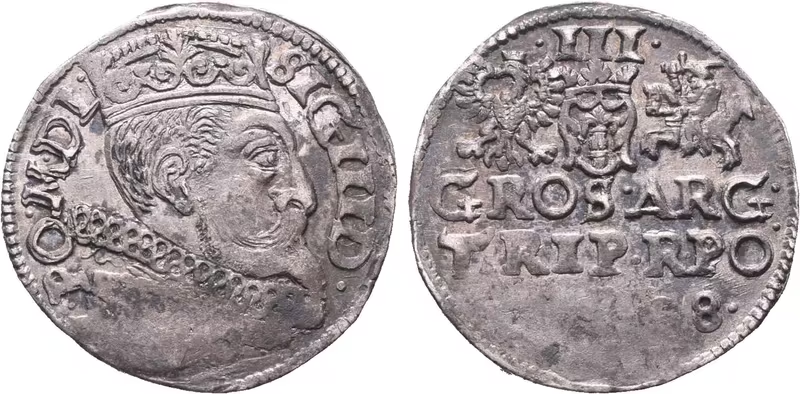
Polsko, III Groš 1598, Poznaň
Polsko, Zikmund III. Vasa, 1587 - 1632 III Grosz 1598, Poznaň, Iger R.98.1-2.a? , pěkná zachovalost, patina,nedoražený na Rv., zbytky lesku
Skladem 1 ks - Code: SPOL89-F1599P
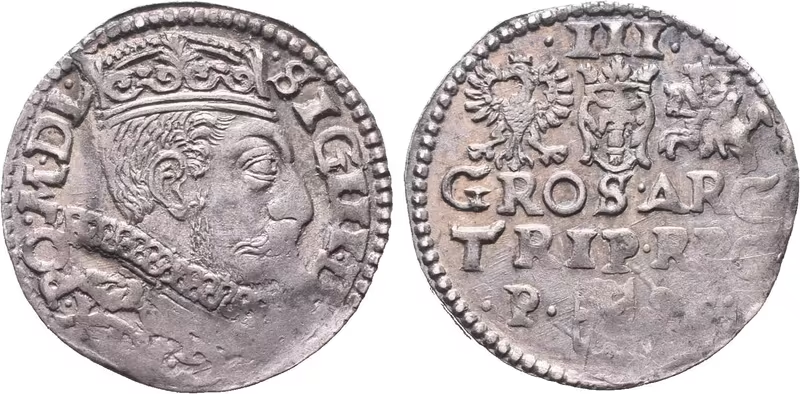
Polsko, III Groš 1599, Poznaň
Polsko, Zikmund III. Vasa, 1587 - 1632 III Grosz 1599, Poznaň, Iger R.99.1.? , pěkná zachovalost, patina,nedoražený na Rv., zbytky lesku
Skladem 1 ks - Code: NE-Z1918KO
Nouzové ražby, 10 Pfennig 1918 - Koschmin
Nouzové platidlo - Německo 10 Pfennig 1918 - Koschmin u Poznaně, Fe 20 mm
Skladem 1 ks