United East India Company
The United East India Company (VOC) was a Dutch trading corporation founded in 1602 which obtained a state-granted monopoly on trade with Asia. It became renowned as a pioneer of joint-stock financing, of large-scale overseas logistics and of its own administration and army in the area of the Indian Ocean.
The rise of the VOC was linked to the rapid ascent of the Dutch Republic at the turn of the 16th and 17th centuries. The Dutch were then trying to penetrate the lucrative trade in spices and Asian goods, long dominated by the Iberian powers and their allies. Competing Dutch "pre-companies" sailed to Asia, driving up each other's costs and weakening their negotiating position. The States General therefore decided on their unification: in 1602 the United East India Company was founded as a single enterprise with capital raised by the subscription of shares. Thus was born a model now considered one of the key innovations of early capitalism: a long-term company with transferable shares and stable governance.
The VOC was divided into several chambers in the main Dutch ports and was governed by a central body known as the "Heeren XVII" (Lords Seventeen). The state granted it exceptional rights: it could conclude treaties, build fortresses, fit out fleets, maintain armed units, and in practice carry out administration in distant territories. The aim was not only trade but also control of resources – above all spices (nutmeg, cloves, pepper) and key ports. From the outset the company therefore combined commercial enterprise with political and military power, which distinguished it from ordinary merchants.
A fundamental change was the establishment of a solid Asian centre. In 1619 Batavia (today's Jakarta) was founded on Java and became the main hub of administration, storage of goods and direction of voyages in the Indian Ocean. Jan Pieterszoon Coen, who advocated a hard, power-based approach to securing the trade monopoly, is closely associated with this. The VOC gradually extended its influence in Indonesia, the Moluccas, Ceylon and the Malacca region, and maintained outposts elsewhere in the region as well. Alongside spices, it also traded in textiles, tea, porcelain and other commodities, with operations requiring vast logistics: ships, warehouses, credit and risk management.
History
Two things were typical for the running of the company: an orientation on monopoly and long-term state support. Monopoly meant an effort to limit competition and regulate the flow of goods so that prices remained favourable. This, however, also had a dark side: in some areas a coercive policy was enforced against local producers and rivals. State support, in turn, ensured a legal framework but also created scope for corruption and poor oversight, since distant holdings were difficult to administer. In the 18th century problems began to mount: rising costs of administration and defence, deteriorating finances, competition from other European powers, and changes in the Asian and European markets. The company gradually fell into debt, and its model ceased to be sustainable.
The end came at the close of the 18th century. After a period of crisis and state intervention, the VOC was dissolved in 1799 and its assets and obligations were taken over by the state. The former trading "super-corporation" thus became a chapter of history which significantly influenced the shape of colonial administration and European trade, but also left a legacy in the way the modern economy understands the company, shares and risk management.
The VOC was in many respects a "state within a state". In its Asian centres it operated administration, courts, warehouses and armed forces, and had to deal with practical questions of everyday life as well – including the supply of cash. In long-distance trade, coins and precious metals were fundamental: some Asian markets preferred payments in silver and reliable coinage, so the company had to organise not only the transport of goods but also the flow of money, exchange and accounting across continents.
Administration, trade and numismatic connections
For numismatics the VOC is interesting above all because its mark appears on coins and because local coin issues arose within its sphere. Typical is the monogram designation "VOC" supplemented by the letter of the chamber or minting place, which facilitates the identification of origin. In circulation, small copper coins (for example the "duit") were used especially for everyday payments in ports and colonial centres; alongside these, however, there was a need for reliable silver denominations for larger transactions. Particularly valued by collectors are the pieces that bear a clear link to the administration of the company, since they combine the worlds of trade, politics and money in a single tangible object.
The VOC also shows that "money" overseas was not merely a technical matter but part of power. Whoever controlled trade, warehouses and cash also controlled the ability to pay troops, conclude treaties and maintain order in ports. The United East India Company is therefore an important concept not only for the history of trade but also for understanding how coins and currency contributed to the functioning of early modern empires.
In our auction and shop
- Code: RAKOLA-SADA
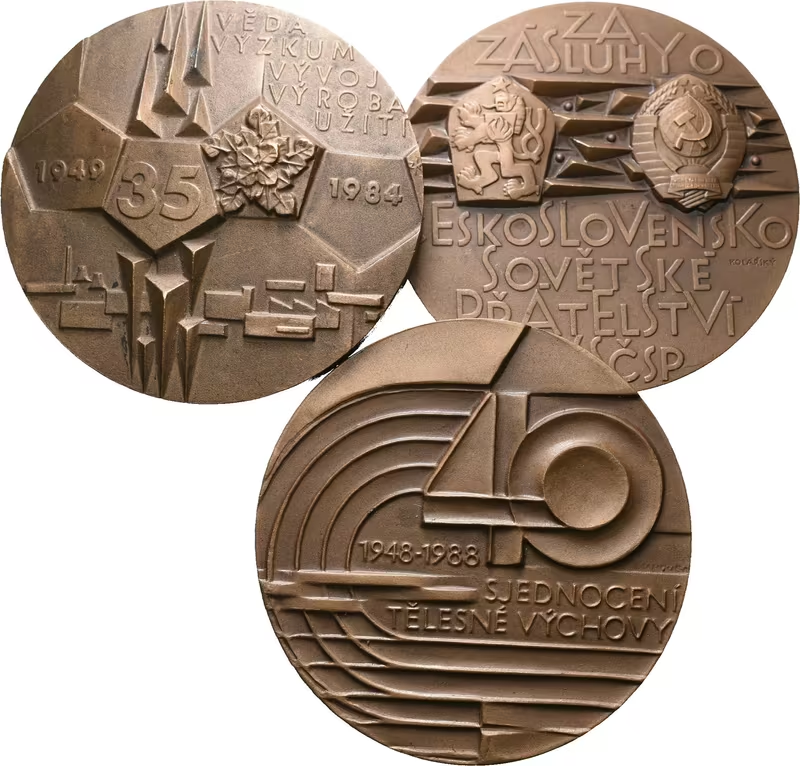
Kolářský Zdeněk - lot 3 medailí
Kolářský Zdeněk (1931 - 2022) AE Medaile - lot 3 ks, Za zásluhy o československo-sovětské přátelství, 1948-1988 sjednocení tělesné výchovy, SVÚM 1949-1984 Patinovaný bronz, 60 mm
Skladem 1 ks - Code: NG-B2000D
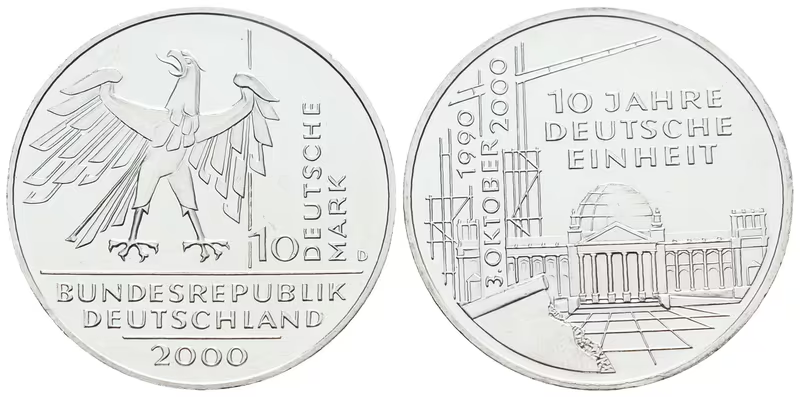
SRN, 10 Marka 2000 D - Sjednocení
Spolková republika (1949 - ) 10 Marka 2000 D - K 10. výročí sjednocení Německa, J.477, ražební lesk, drobné rysky, patina Ag 0,925, 32,5 mm (15,5 g)
- Code: NZAC3000EUITALIE
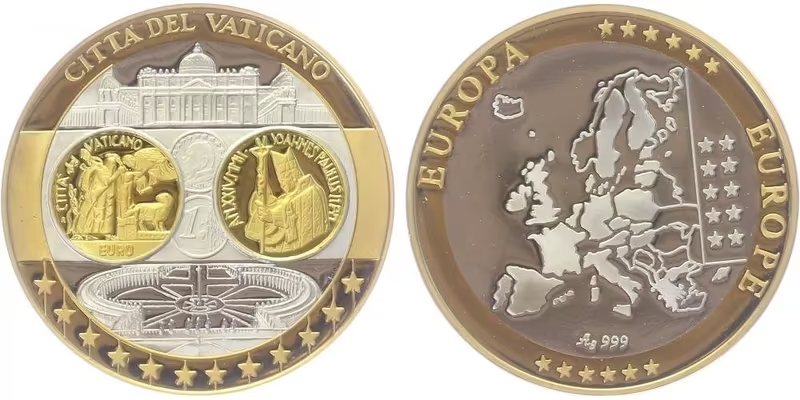
AR Medaile b.l. - Mapa sjednocené Evropy - Itálie, Ag 0,999, PROOF
Česká republika, 1993 - AR Medaile b.l. - Mapa sjednocené Evropy - Itálie, Ag 0,999, 40 mm (20 g), zlacené, kapsle, PROOF
- Code: RG-IRSK
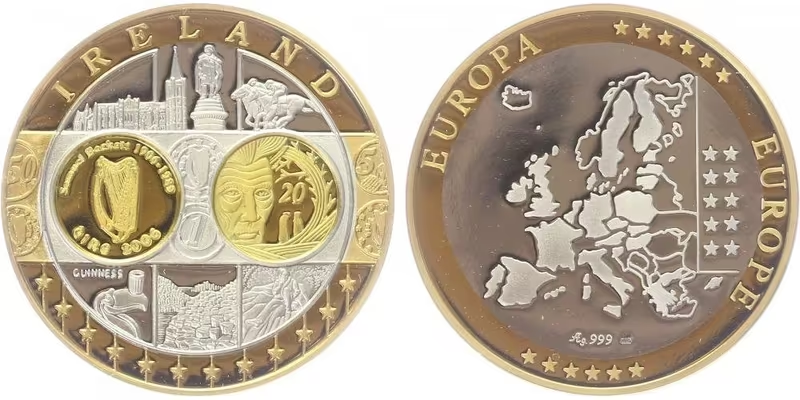
AR Medaile b.l. - Mapa sjednocené Evropy - Irsko
Česká republika (1993 - ) AR Medaile b.l. - Mapa sjednocené Evropy - Irsko, Ag 0,999, 40 mm (20 g), zlacené, PROOF