Black pfennig
The black pfennig (also black penny or black coin) is the historical designation for inferior small-denomination strikes mainly of Bavarian and Austrian origin from the 15th century, which acquired their name from the dark coloration caused by a low silver content. The term gradually spread also to various kinds of inferior domestic coins whose blackish a…
The phenomenon of black pfennigs is connected with the monetary crisis of the late Middle Ages, when rulers systematically reduced the precious metal content in coins for fiscal gain. In the South German area, the massive debasement of small denominations began after 1450. The Bavarian dukes of the Wittelsbach family struck pfennigs with only 15–20% silver, the rest consisting of copper and lead, which caused the characteristic blackening of the surface.
The Archduchy of Austria under Frederick III (1440–1493) followed the Bavarian example. From 1460, the Vienna mint produced black pfennigs en masse to finance the wars with Matthias Corvinus. The official name was "pfennig", but the popular designation "Schwarzgeld" (black money) quickly took hold. These coins often contained only 10% silver, which led to rapid oxidation and darkening.
Black pfennigs penetrated the Czech lands through cross-border trade. The first mentions come from the town books of Cheb from 1468, where the town councillors prohibited the acceptance of "schwarz pfenning". A massive influx occurred during the Jagiellon period, when weakened royal power was unable to control monetary circulation. Prague merchants complained that they were forced to accept "pfennigs of black colour from Bavaria" in a ratio of 8:1 against the high-quality Prague groschen.
History
The situation reached its peak under Ferdinand I of Habsburg, who in 1534 issued a monetary mandate prohibiting the circulation of black pfennigs in the Czech kingdom. The penalty for their use consisted of the confiscation of goods and a fine of 10 score of groschen. Even so, black coins continued to circulate until the great Kipper and Wipper period (1619–1623), when they were replaced by even worse strikes of the Thirty Years' War.
An interesting category was the so-called Schinderling — extremely debased black pfennigs from the period 1457–1460, named after the Bavarian mintmaster Hans Schinderling. They contained less than 5% silver and were effectively copper coins with a minimal silver admixture. Their mass striking caused the first documented hyperinflation in Central Europe.
Black pfennigs were distinguished by specific properties enabling their identification. The dark colour arose from the oxidation of copper and other admixtures, with the degree of blackening depending on the composition of the alloy and the age of the coin. The weight ranged between 0.3 and 0.5 grams, which was significantly less than for standard silver pfennigs. The strike was often of poor quality with indistinct motifs.
Characteristics and identification
To distinguish them from higher-quality white pennies (Weisspfennig), which were whitened in tartaric acid, simple tests were used. Touching a black pfennig left a dark mark on light fabric. When bent, it broke rather than bending like pure silver. The sound on impact against stone was dull, not ringing.
From the numismatic perspective, black pfennigs are a valuable historical document of the monetary chaos of the late Middle Ages. Their systematic study is complicated by poor preservation and the difficult identification of specific mints. Modern spectral analysis has revealed a surprising variability of composition — from 5% to 35% silver with admixtures of copper, lead, tin and antimony.
In our auction and shop
- Code: YE-50HAL
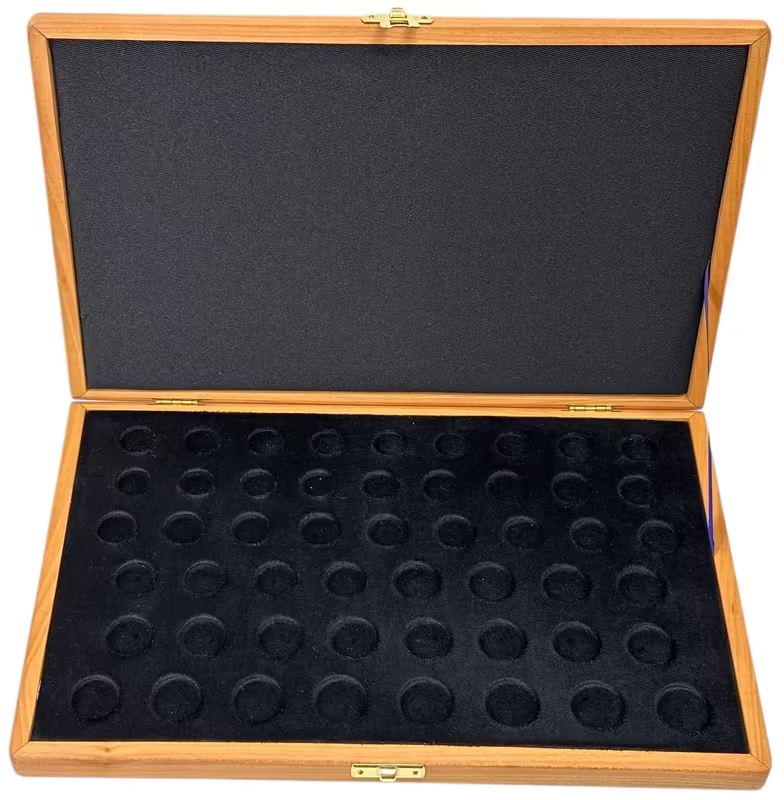
Etue na mince - 1.republika oběžné mince do 50 hal, dřevo
Dřevěná etue na oběžné mince z 1.republiky do hodnoty 50 haléřů. Uvnitř plato potažené černým sametem s prohlubněmi pro mince. Určeno pro 60 ks mincí. Povrch matný lak.
Skladem 5 ks - Code: MCZ142-PROOF
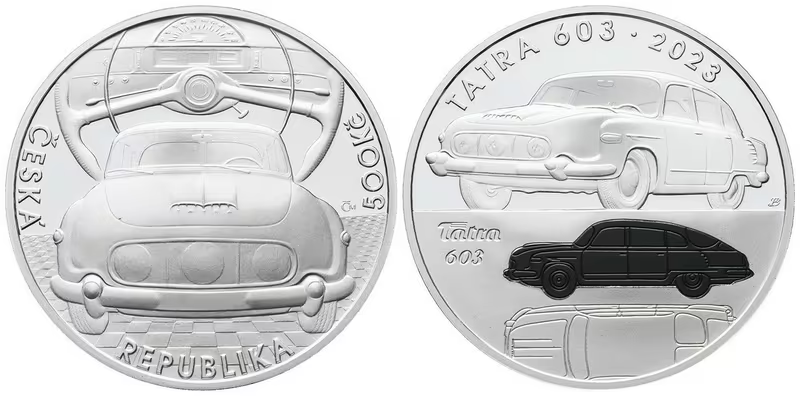
500 Kč 2023 - Automobil Tatra 603, PROOF
Česká republika (1993 - ) Slavné dopravní prostředky 500 Kč 2023 - Osobní automobil Tatra 603, autorka Petra Brodská, Aurea C242, etue, certifikát, kapsle, PROOF Ag 0,925 s vloženým černým prvkem, 40 mm (25 g), raženo 10 794 ks (běžná kvalita), 19 206 ks…
Skladem (>5 ks) - Code: MCZ142
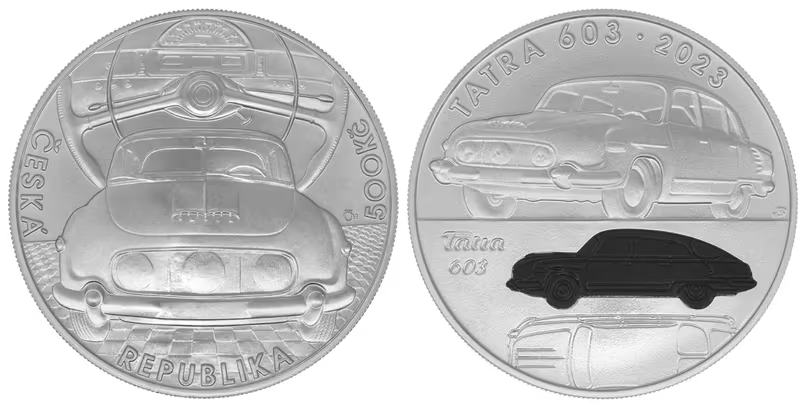
500 Kč 2023 - Automobil Tatra 603
Česká republika (1993 - ) Slavné dopravní prostředky 500 Kč 2023 - Osobní automobil Tatra 603, autorka Petra Brodská, Aurea C242, kapsle, certifikát, kapsle, běžná kvalita Ag 0,925 s vloženým černým prvkem, 40 mm (25 g), raženo 10 794 ks (běžná kvalita),…
Skladem (>5 ks) - Code: 61269
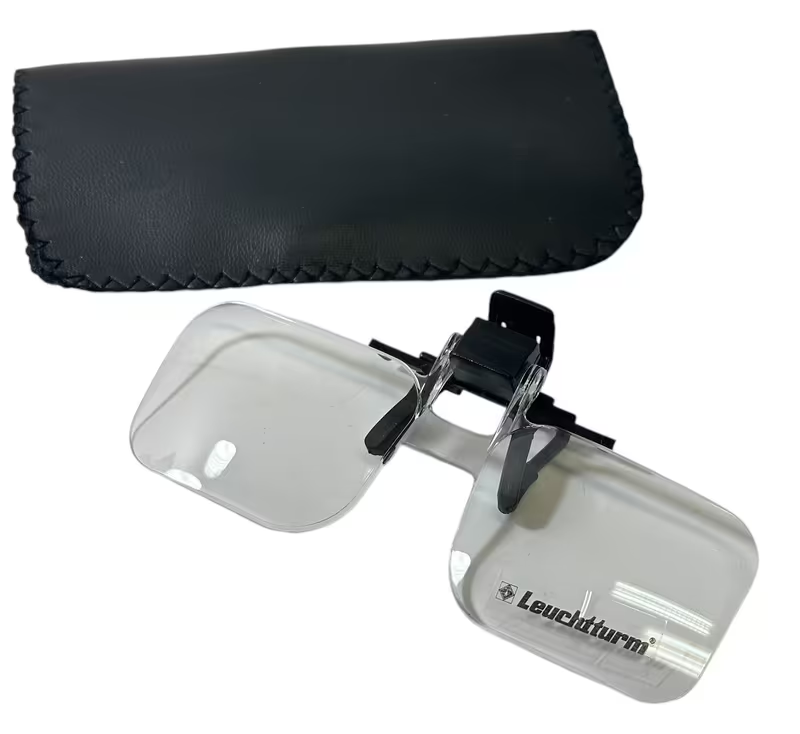
Lupa - klip na brýle, Leuchtturm
Lupa - klip na brýle. Nasazovací klip na brýle, zvětšení 2x. Plastové čočky, ochranný černý obal.