Frederick Christian of Brandenburg-Bayreuth
Frederick Christian of Brandenburg-Bayreuth was a margrave of the House of Hohenzollern who, from 1763 to 1769, ruled the small but culturally and economically important principality of Brandenburg-Bayreuth within the Empire. In numismatics he is associated above all with coins struck in Bayreuth during his short reign.
Frederick Christian of Brandenburg-Bayreuth (1708–1769) came from the Franconian branch of the House of Hohenzollern, which held the Margraviate of Bayreuth (and earlier also Kulmbach) as part of the mosaic of German states within the Holy Roman Empire. He was born at Weferlingen and became margrave only in his mature years: he assumed the reign in 1763 after the death of his kinsman and predecessor, Margrave Frederick, at a time when Central Europe was just emerging from the upheavals of the Seven Years' War.
His reign lasted only a few years, yet it is important for understanding the region. From the 17th and 18th centuries onward, Bayreuth was known as a courtly and cultural centre of Franconia, and its economy depended on the careful administration of its agricultural hinterland, crafts, and urban markets. It was precisely in such smaller principalities that the stability of finances and currency was of exceptional importance: tax and toll revenues were limited, while the costs of administration, the court, and any military obligation to the Empire remained high. Under such conditions it often became apparent whether a ruler could keep the budget under control and maintain confidence in the circulating coinage — for in everyday commerce, what mattered was the quality of small change, its fineness, and whether it conformed to the customs of neighbouring lands.
History
In the numismatic context, Frederick Christian is remembered chiefly as the issuer of circulation strikes of the Margraviate of Brandenburg-Bayreuth in the years 1763–1769. These coins bear his name and title and were produced in an environment where different monetary systems operated side by side (notably the thaler-based accounting and minor denominations in kreuzers). A short reign means that the issues tend to be tightly delimited in time, which is of interest to collectors: with some denominations one can distinguish year-dates and variants quite precisely and observe how the margraviate strove to keep pace with the monetary customs of the wider German space.
On coins associated with Frederick Christian, the ruler's title and the territorial coat of arms typically appear; smaller denominations in kreuzers (German Kreuzer) as well as higher values tied to the thaler currency are common. For practical circulation it was precisely the "small change" that was crucial, as it handled everyday payments in markets and towns. From a collector's perspective, several factors combine attractively: the short reign, the regional character of the issues, and the fact that these are coins of the German states, where collections are often assembled by ruler, mint, or denomination.
Coins and collectors' significance
If a collector encounters, for example, strikes recorded for the years 1763–1765 of certain kreuzer values, they can be classified not only by denomination and year-date but also within a wider context: the post-war period after the Seven Years' War was sensitive in Central Europe to the quality of currency and to how individual countries set the parameters of their coinage. With smaller states, the availability of metal, the need to finance administration, and the wish for the coins to be accepted beyond the borders of the principality often proved decisive. In practice, even a seemingly "ordinary" small coin thus represents a source for the economic history of the region and for how monetary circulation functioned in the German lands of the 18th century.
In identifying these coins it pays to observe especially the legibility of the legend, the style of the portrait or shield, the mint marks, and any divergences in detail. With circulation strikes wear is commonly encountered, and so the grade and a natural patina carry considerable weight. For collectors of the "German states" Frederick Christian is at the same time a clear landmark: his issues are clearly dated to a narrow span and follow on from the earlier Bayreuth rulers, which makes building a thematic series easier.
In our auction and shop
- Code: RX-Z-016
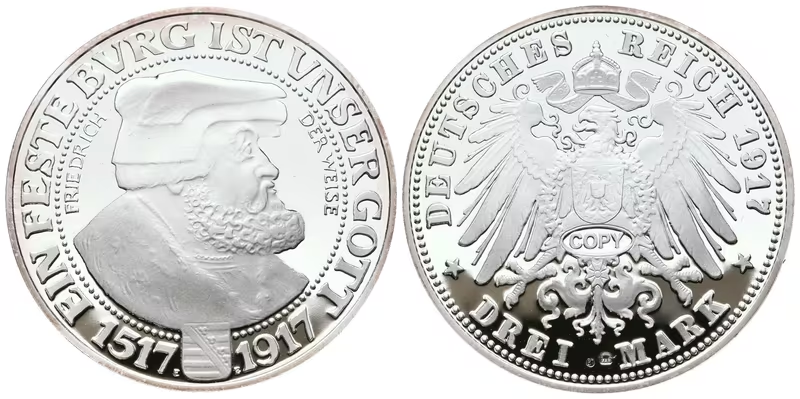
Německo, 3 Mark 1917 - Friedrich der Weise (Fridrich Moudrý), 400. výročí Lutherovy reformace 1517-1917; říšský orel, replika
Německé císařství - Sasko (replika) 3 Mark 1917 - Friedrich der Weise (Fridrich Moudrý), 400. výročí Lutherovy reformace 1517-1917; říšský orel Ag (.999), 40 mm (20 g), v kapsli. Stav mince odpovídá fotografii.
Skladem 1 ks - Code: XB1300-0403
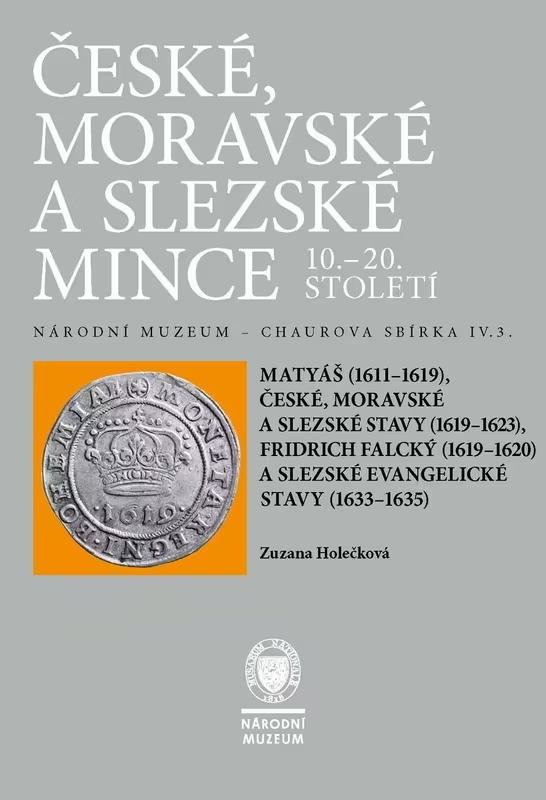
Chaurova sbírka - Matyáš, Fridrich Falcký a stavovské ražby
Katalog mincí Matyáše Habsburského, Fridricha Falckého a stavů zemí Koruny české Zuzana Holečková Publikace je dalším svazkem edice proslulé Chaurovy sbírky uložené v Národním muzeu. Přináší velmi podrobný popis rozsáhlého a v řadě ohledů výjimečného…
Skladem 1 ks - Code: SSVED90-D1803.2
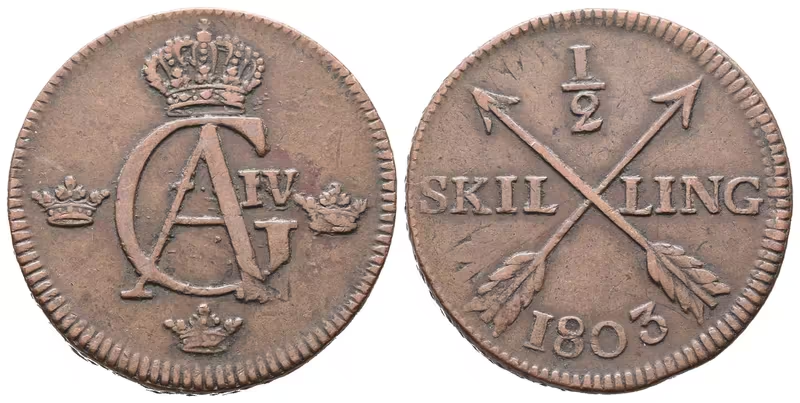
Švédsko, 1/2 Šilinku 1803
Švédsko, Gustav IV. Adolf, 1792 - 1809 1/2 Skilling 1803, Stockholm, KM.565, pěkná zach. a patina, přeražba na starším Skollingu Adolfa Fridricha ze 60. - 70. let, zbytky přeražby na Rv._R!
Skladem 1 ks - Code: FNESAS-2286
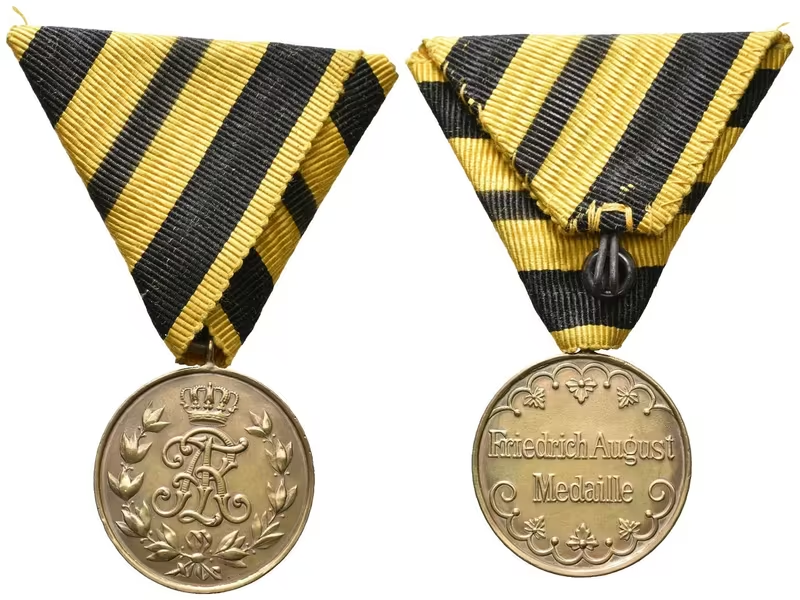
Sasko, Medaile Friedricha Augusta
Německo - Sachsen Medaile Friedricha Augusta ( Friedrich August Medaille in Bronze 1905 ) , bronz, OEK 2286 Pěkná zachovalost, patina, nepůvodní stuha
Skladem 1 ks