Jakob Fugger
Jakob Fugger (1459–1525) was the most influential European banker of the early modern period, nicknamed "the Rich". From an Augsburg merchant family he built a financial and mining empire that lent to monarchs, influenced politics and stood at the birth of modern banking.
Jakob Fugger was born in Augsburg into a family that belonged to the foremost burgher merchant houses of southern Germany. The Fuggers originally made their mark in the textile trade, but it was Jakob who managed to transform the family enterprise into an organisation that exceeded the bounds of ordinary commerce and began to dominate the capital flows of the whole of Europe. In his youth he gained experience in Italy, where he became acquainted with advanced accounting and banking practices. He later applied this knowledge in the Augsburg environment, which in the 15th and 16th centuries was one of the engines of European trade.
Fugger's ability to link finance with control over resources was crucial. He did not confine himself to loans and money-changing, but systematically engaged in mining and the metals trade. He invested in silver and copper production in the Alpine region, especially in Tyrol, and built a strong position in mining in Upper Hungary. He thus gained something that was key for monarchs and markets alike: access to precious metals and to the proceeds from their sale. At a time when state finances rested on mining and minting, control over metals meant extraordinary bargaining power.
Fugger's rise is closely linked to Habsburg policy. He provided loans to Maximilian I and later played a key role in the election of Charles V as King of the Romans (and subsequently Emperor). In practice this meant that the banking house was able to provide the huge sums required to politically secure the candidate, and this was not a "gift" but a deliberate investment backed by collateral, privileges and access to lucrative enterprises. Fugger thus represents the type of early modern "financier of power": money was not merely a means of exchange, but an instrument for influencing decisions at the highest level.
History
His business was also exceptionally modern in organisational terms. The Fuggers built a network of agents and branches, worked with credit, bills of exchange and sophisticated record-keeping. They managed risk by combining various sources of income: trade, mining, loans and the administration of financial flows. At the same time they knew how to use information — at a time when the speed of news decided exchange rates and commercial security, being informed was one of the chief assets. The House of Fugger thus became a symbol of the transition from medieval commerce to an early capitalist financial system.
Jakob Fugger was also a notable patron and builder. In Augsburg he founded a social foundation known as the Fuggerei — a complex of houses for needy inhabitants, which became an extraordinary example of long-term burgher charity. At the same time he built up the family's standing through palaces, chapels and monuments, intended to show that the burgher elite could rival the nobility in prestige. After Fugger's death in 1525 the family continued in business, but its peak political and financial dominance was not repeated in the same form. Nevertheless, Jakob Fugger remains one of the key figures of European economic history: he shows how, in the early modern period, money, metals, the state and power became intertwined.
Fugger's world rests on a simple principle: whoever controls capital and access to metals controls part of politics. His loans were not merely "borrowings", but complex agreements secured by pledges, privileges and revenues from mines or customs duties. That is why his name is often associated with the financing of wars and with the workings of court politics, in which neither army nor diplomacy could function without ready cash and reliable credit. In practice this meant strict control of contracts, due dates and the flow of money — and also the ability to enforce obligations should a monarch fall into arrears.
Enterprise, finance and the connection with money
For numismatics, Fugger is interesting above all indirectly: investments in silver and copper translated into the availability of metal for minting and the stability of currency operations. In periods of frequent monetary tensions, a supply of quality metal was a strategic advantage, and the banking houses that could secure it acquired influence that was not only economic but also administrative. Fugger's example also reminds us that "value" in the early modern period was created not only at the mint, but also in the mines, in contracts and in credit. His legacy therefore lies not in any single coin, but in how fundamentally he changed the rules of the game between money and power.
In our auction and shop
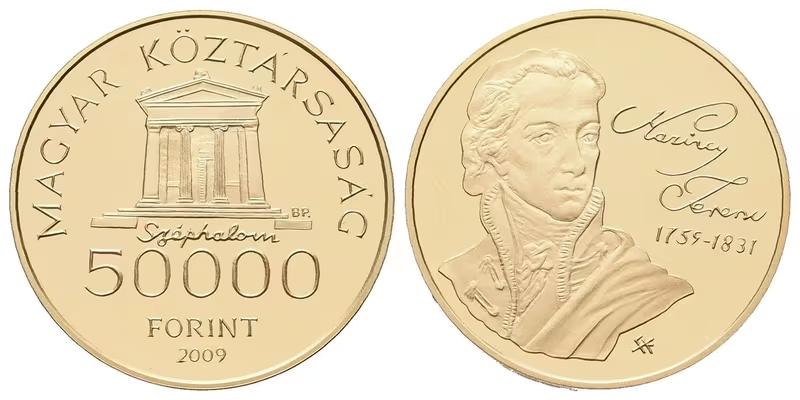
- Code: ZSMAD-94F2009
Maďarsko, 50 000 Forint 2009 - Kazynczy Ferenc, PROOF
Maďarsko 50 000 Forint 2009 - 250. výročí narození Kazynczy Ference Au 0,986, 23 mm (10 g), vyraženo pouze 10 000 ks, cerifikát, PROOF Kazynczy Ferenc (1759 - 1831) - Byl uherský šlechtic a jazykovědec. Odstartováním jazykové reformy se zasloužil o vznik…
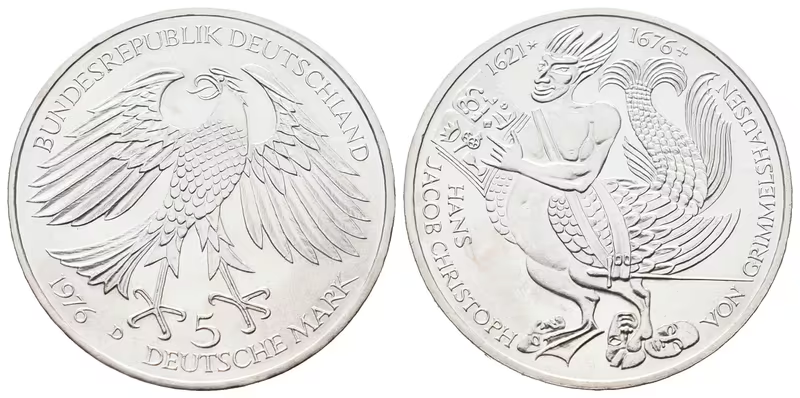
Skladem 1 ks - Code: NG-C1976D
SRN, 5 Marka 1976 D - Grimmelshausen
Spolková republika (1949 - ) 5 Marka 1976 D - Jakob Christoffel von Grimmelshausen, J.419, ražební lesk, drobné rysky, patina Ag 0,625, 29 mm (11,2 g)
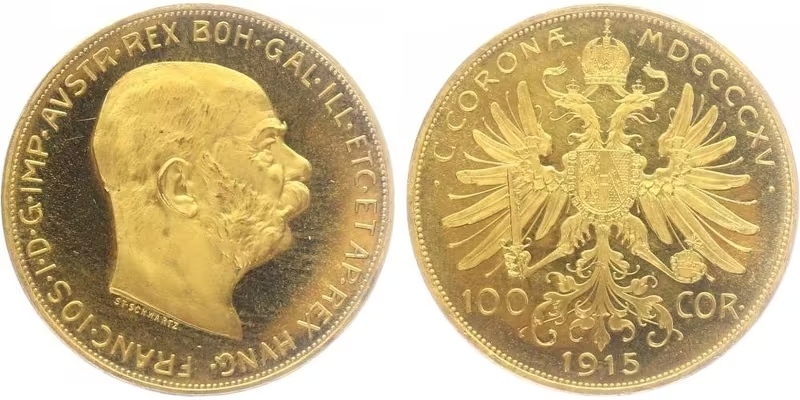
- Code: Z98J-1915TECKA
100 Koruna 1915 - podpis ST. SCHWARTZ, stará ražba
František Josef I. (1848 - 1916) 100 Koruna 1915 - podpis medailéra s tečkou ST. SCHWARTZ, stará ražba z leštěných razidel, Ves. 11, ilustrační foto Jedná se o mince ze sbírky a majetku rakouské šlechtické rodiny, která byla vytvořena patrně v období…
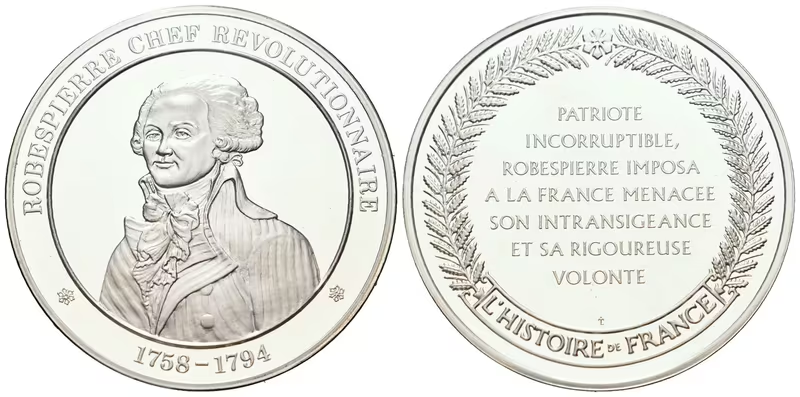
- Code: RX-FRAN059
Francie - AR Medaile b.l. - Robespierre
Robespierre - 1758-1794 Ag 0,800, 44 mm (cca. 37 g) Na minci se nachází Francouzský punc ryzosti. V originální kapsli. Medaile je ze série 'Historie Francie v medailích' - Na některých mincích jsou viditelné stopy patiny aj. - Viz. obrázek. L'Histoire de…