Henry II of Bavaria
Henry II of Bavaria, called the Quarrelsome (951–995), was a Bavarian duke of the Luitpolding family who repeatedly sought the imperial crown. His turbulent career marked the politics of the Holy Roman Empire in the second half of the 10th century, and his coins document the power of the Bavarian duchy.
Henry was born in 951 as the son of the Bavarian Duke Henry I and Judith, daughter of Duke Arnulf. He came from a collateral branch of the Saxon dynasty of the Ottonians and was a close relative of Emperor Otto I the Great. After his father's death in 955 he inherited the Bavarian duchy as a small boy under a regency administration.
Henry's political career was marked by ambitions and conflicts with imperial power. After the death of Emperor Otto I in 973 and the accession of his son Otto II, Henry entered the opposition. In 974 he attempted a coup against the new emperor, but was defeated and stripped of the duchy. There followed a period of exile and repeated attempts to return to power.
The epithet "the Quarrelsome" (der Zänker) was given to Henry precisely on account of his constant conflicts with imperial authority. After the death of Otto II in 983 he again tried to obtain the royal crown. He proclaimed himself guardian of the young Otto III and effectively seized power. In the end he had to retreat and content himself with the return of the Bavarian duchy, which he again obtained in 985.
History
Henry II the Quarrelsome died on 28 August 995 at Gandersheim. His son Henry, the future Emperor Henry II the Saint, inherited the Bavarian duchy and later attained both the royal and the imperial crown, which his father had sought in vain to obtain throughout his life.
The Bavarian duchy belonged in the 10th century among the important coinage areas of the Holy Roman Empire. Under the rule of Henry II the Quarrelsome, silver denarii were struck above all at the Bavarian mints, which served as the chief currency for commercial purposes. The most important mint was Regensburg (Řezno), the ancient seat of the Bavarian dukes.
Bavarian denarii of this epoch carry on the obverse usually a cross or a stylised portrait of the sovereign, while the reverses depict inscriptions with the duke's title or the name of the mint. The strikes are characteristic of the Ottonian period and exhibit the high quality of silver obtained from the Alpine mines.
Bavarian coinage of the 10th century
From the numismatic point of view, the coins of Henry II the Quarrelsome are interesting as evidence of the political turbulence of his rule. In periods when he was stripped of the duchy, the strikes were carried out in the name of imperial administrators or other dignitaries. These changes can be followed in coin production and document the instability of Bavarian politics in the second half of the 10th century.
In our auction and shop
- Code: SFRA87-D1586
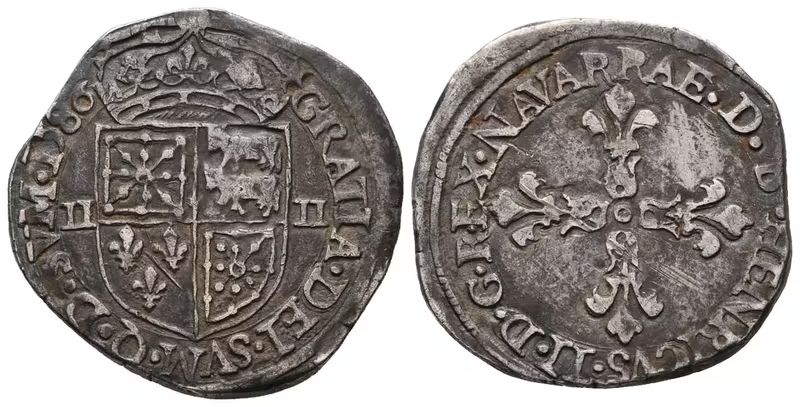
Francie, 1/4 Ecu d’Bearn 1586
Francie - Vikomtství Béarn, Jindřich II. Navarrský (1572 - 1589) 1/4 Ecu d´Bearn 1586, minc. Pau, PA.3501, pěkná zachovalost a patina_R!
Skladem 1 ks - Code: SKYP-A1310
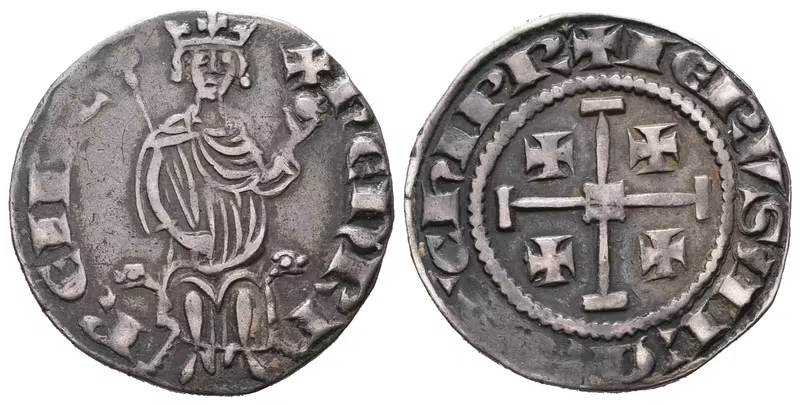
Kypr, AR Groš b.l.
Království Kypru a Jeruzaléma, Jindřich II. Kyperský (Lusignan) (1285 - 1324) AR Gros Grand b.l. (1310 - 1324), Sedící panovník s insigniemi čelně, opis HENRI REI De / IERVSL ED ChIPR, Metcalf 674/675, 687 Velmi pěkná zachovalost, kabinetní patina, pěkně…
Skladem 1 ks - Code: RAZEM-1978
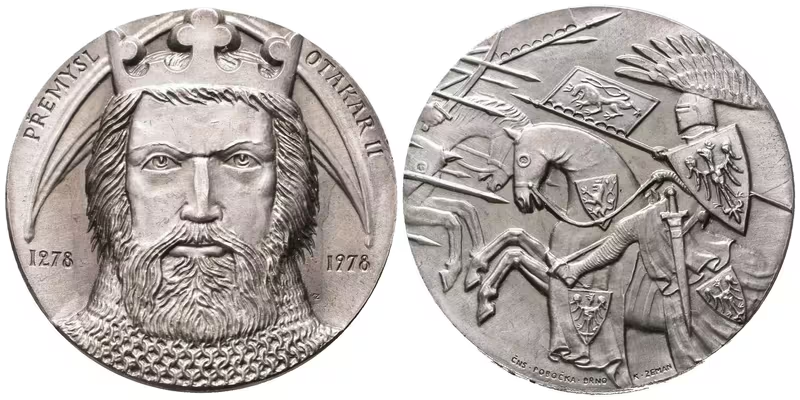
Zeman Karel - Přemysl Otakar II.
Zeman Karel (1949 - ) AR Medaile (1978) - k 700. výročí úmrtí krále Přemysla Otakara II. AG 0,900, 40 mm (50g), raženo 400 ks