Henry VIII
Henry VIII (1491–1547) was the English king of the Tudor dynasty, who became famous for the break with Rome and the founding of the Anglican Church. His rule combined courtly splendour with hard power politics, reforms and substantial interventions in the property of the Church.
Henry VIII ascended the throne in 1509 after his father Henry VII as a young sovereign who had a reputation as an educated and energetic ruler. At first he relied on the traditional authority of the king and on cooperation with prominent courtiers and clergy. His early period is associated with the image of a "Renaissance" court: tournaments, music, building works, but also ambitions in European politics, in which England sought to keep pace with rival powers. At the same time, however, pressure grew for stable finances and for the control of influential groups, since the state needed money for foreign expeditions and for the running of administration.
The turning point that determined the shape of his entire rule was the question of succession. The king was married to Catherine of Aragon, but did not have a legitimate male heir with her, which in the environment of dynastic politics represented a serious risk. Henry therefore sought the annulment of the marriage, but ran into the resistance of the papal curia at a time when the European situation was complicated by the power game of the Habsburgs. The dispute gradually transformed from a personal matter into a conflict over who had the highest authority in England in ecclesiastical matters. A key role in this process was played by the king's advisers, especially Thomas Cromwell, who was able to translate the king's will into the form of laws and administrative steps.
In 1534 the Act of Supremacy was passed, by which the king became the supreme head of the English Church. This was not just a "church declaration", but a fundamental change of power: from this moment on, obedience to the king was also manifested in the area of faith and church administration. Resistance had harsh consequences, and the symbol of the conflict became the fate of Thomas More, who refused to acknowledge the new form of the king's authority. The break with Rome at the same time opened the way to a great transformation of property: in the years 1536–1541 the dissolution of the monasteries took place and the transfer of their property to the Crown. The structure of property in the country was thereby changed, and space was created for new elites, since part of the land and estates was gradually sold or granted to the king's supporters.
History
Henry's personal life became a political question in the full sense of the word. His marriages and family relations were perceived through the prism of dynastic continuation and the balance of the court. The most well-known are the "six wives": Catherine of Aragon was followed by Anne Boleyn, then Jane Seymour, Anne of Cleves, Catherine Howard and Catherine Parr. Behind these marriages lay the effort for a legitimate heir, but also the rivalry of court factions. The king at the same time did not shrink from repression and executions if he considered it politically advantageous or in defence of his authority.
At the close of his rule the king's health deteriorated, and with it the harshness of the regime grew, which protected the dynasty and order in the country. Henry finally obtained a son Edward VI, but at the same time left a complex legacy: a state which was richer by part of the church property, but also religiously divided and financially burdened. After his death in 1547 the questions of faith and power again sharpened under the rule of his children, Mary I Tudor and Elizabeth I, each of whom chose a different religious path. Henry VIII thus appears in history as a sovereign who changed the institutional foundation of the state and set the direction from which England in essence did not retreat.
Henry VIII is important also for the history of money. War expenses and the demands of the state led to the fact that in his time the quality and composition of currency changed. Particularly well-known is the gradual decline of fineness of some silver strikes in the last years of his rule, which was intended to bring, in the short term, more coins from the same quantity of metal. In circulation, however, this increased distrust and supported the rise in prices, since people quickly recognised that the "same coin" no longer had the same value in metal. Connected with this is the popular nickname "Coppernose": on worn portrait coins, at the highest points of the relief, the underlying metal could show through, and so the sovereign's nose changed colour.
Reformation, coins and collector context
On his coins the striking portrait iconography and rich titulature are prized by collectors, reflecting the changes in his position. For identification it is useful to follow the denomination, the style of portrait, mint marks and the legibility of the legend, since a number of variants and issues exist. With silver pieces from the late period it is additionally good to perceive the natural appearance of the surface and to evaluate later cleaning cautiously. The coins of Henry VIII thus combine the attractive story of the English Reformation with very concrete traces of economic policy, which are often literally visible on the metal "at first glance".
In our auction and shop
- Code: RASEV-1979
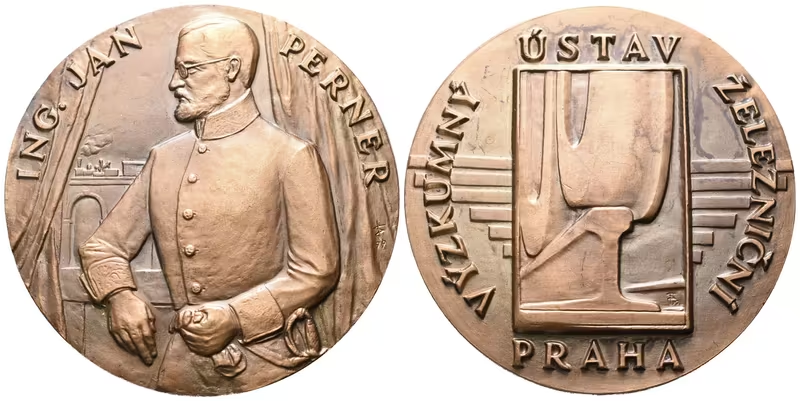
Severa Jindřich - Jan Perner
Severa Jindřich (1909 - 1980) AE Medaile 1979 - ing. Jan Perner/ vydáno pro Výzkumný ústav železniční Praha Bronz s patinou, 70 mm (149,5 g), etue
Skladem 1 ks - Code: SFRA87-D1586
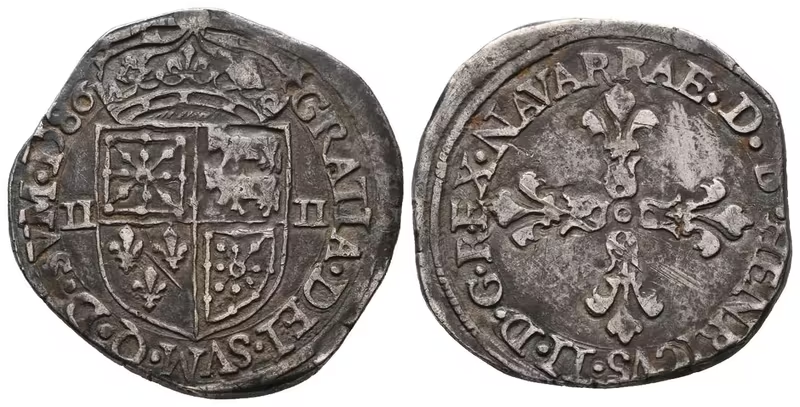
Francie, 1/4 Ecu d’Bearn 1586
Francie - Vikomtství Béarn, Jindřich II. Navarrský (1572 - 1589) 1/4 Ecu d´Bearn 1586, minc. Pau, PA.3501, pěkná zachovalost a patina_R!
Skladem 1 ks - Code: SFRA88-D1603
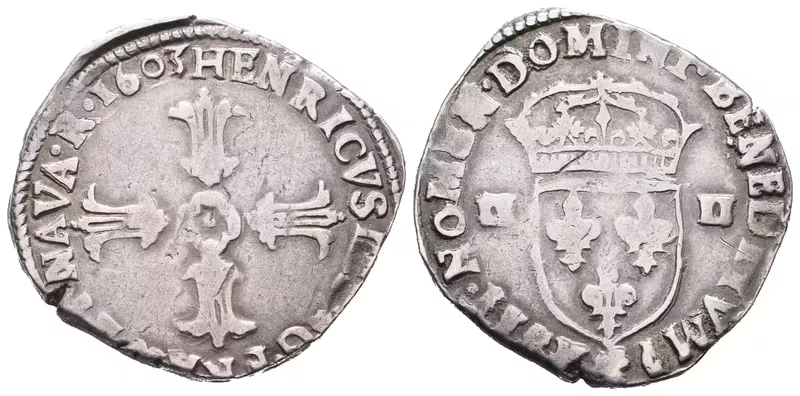
Francie, 1/4 Ecu 1603
Francie, Jindřich IV. (1589 - 1610) 1/4 Ecu 1603 (značka tři kroužky?), minc. Bordeaux nebo Remes, Dupp.1224, patina, excentrický, vady střížku (9,52 g)
Skladem 1 ks - Code: NABAVLA-1393
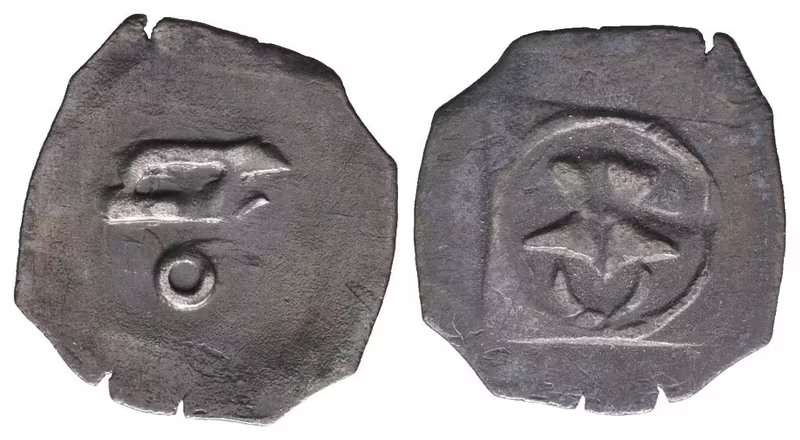
Bavorsko - Landshut, Fenik se čtyřrázem
Bavorsko - Landshut, Jindřich IV. (1393 - 1450) Pfennig se čtyřrázem, minc. Landshut, Rad.48, pěkná zachovalost, patina, ned.
Skladem 1 ks