Johann II of Liechtenstein
Johann II of Liechtenstein (Johann II, 1840–1929) was the long-reigning Liechtenstein prince, who ruled from 1858 to 1929. He became renowned for the modernisation of state administration, the issuing of a constitution and his marked support for the arts.
Johann II of Liechtenstein was born on 5 October 1840 at Lednice Castle (then Eisgrub) as the eldest son of Prince Alois II of Liechtenstein and Princess Franziska Kinsky. After his father's death he ascended the princely throne on 12 November 1858 and ruled until 1929. Although he stood at the head of a small Alpine state, his family was among the wealthiest aristocratic dynasties of the Habsburg Monarchy, and Johann II lived a large part of his life outside Liechtenstein itself — particularly in Vienna and on family estates in Moravia. He remained unmarried, and after his death the rule passed to his younger brother Franz I.
He came to the head of the principality at a time when Central Europe was changing rapidly: industry and trade were strengthening the importance of modern administration, while the revolutionary year of 1848 had brought to many countries pressure for constitutionalism and civil rights. Liechtenstein was indeed among the smallest states by area and population, but here too it was necessary to define more clearly the relationship between ruler, authorities and population. An important step was the adoption of the constitution of 1862, which introduced fundamental civil rights and created a land diet (Landtag). This established in the country a framework of constitutional life, which was later replaced by the more modern constitution of 1921.
History
In Liechtenstein tradition Johann II is often remembered as "the Good" — not because of a single dramatic event, but rather for the long-term style of his reign, which favoured stability, gradual reforms and care for the cultural legacy of the family. During his time, the country's economic orientation and its ties to the surrounding region, especially to the Austrian area, were also gradually transformed. For a small principality, it was crucial to maintain a functioning administration and legal certainty, because precisely confidence in order and continuity was one of the principal forms of "capital" such a state could offer.
No less important was Johann's role as patron. The Liechtensteins were among the great European collecting families, and Johann II carried on this tradition by supporting the arts, taking care of representative residences and maintaining extensive collections. Alongside prestige, this was also a conscious building of dynastic memory: art, architecture and the cultivated environment of the palaces were to demonstrate the long-term standing of the dynasty and its "civilising" role. Johann II died on 11 February 1929 at Valtice Castle and was buried at Vranov near Brno. His reign closed one epoch — an era in which Liechtenstein gradually moved from traditional dynastic administration to modern institutions without losing the continuity of its ruling family.
The Ruler and the Numismatics of Liechtenstein
During the reign of Johann II of Liechtenstein, the country's own coinage also asserted itself more clearly, although the strikes were closely linked to the Austrian monetary area. At the turn of the 19th and 20th centuries, in connection with the introduction of the krone currency, the first Liechtenstein gold and silver denominations appeared, bearing the name and portrait of the ruler. Best known is the gold issue of 20 krone of 1898 (with a relatively small mintage), which was followed by further krone strikes.
For circulation, silver coins of 1 krone (from 1900) and later also 2 krone (for example the years 1912 and 1915) were also struck. These coins were produced in Vienna and their metrology corresponded to the standards of the Austro-Hungarian currency, which simplified their use in everyday transactions. For collectors, the Liechtenstein krone strikes are attractive in their combination of "a small state" and high-quality Viennese mint production: they typically bear the ruler's portrait, titulature and state symbolism, which clearly distinguishes the Liechtenstein issue from the Austrian coins of the same system. At the same time they show how even a small principality was able to present itself, through coins, as a sovereign subject with its own ruler and emblem.
In our auction and shop
- Code: MCSS-1429
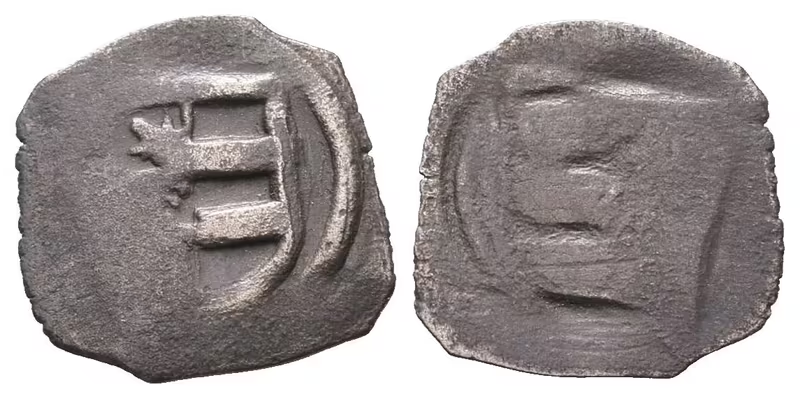
Salzburg, Fenik se čtyřrázem
Salzburg - biskupství, Johann II. von Reisberg (1429 - 1444) Pfennig se čtyřrázem, CNA A 55, pěkná zachovalost a patina
Skladem 1 ks - Code: MCSS-1429.2
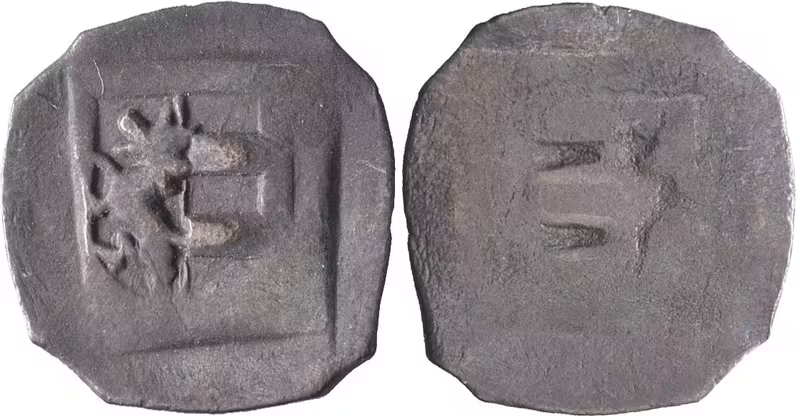
Salzburg, Fenik se čtyřrázem
Salzburg - biskupství, Johann II. von Reisberg (1429 - 1444) Pfennig se čtyřrázem, CNA A 55, pěkná zachovalost a patina
Skladem 1 ks - Code: MCSS-1429.1
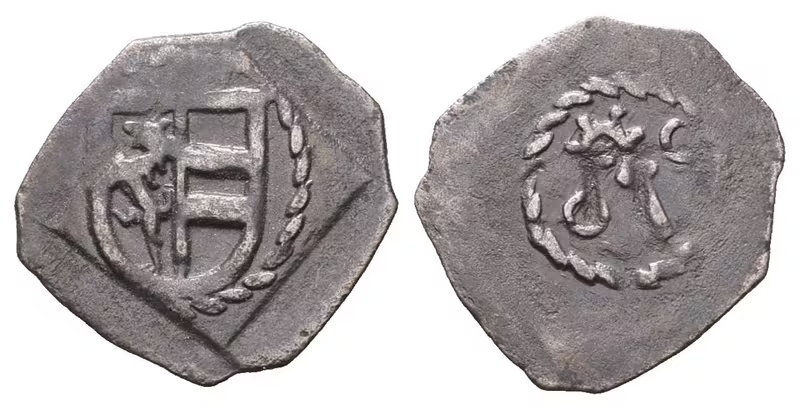
Salzburg, Fenik se čtyřrázem
Salzburg - biskupství, Johann II. von Reisberg (1429 - 1444) Pfennig se čtyřrázem, CNA A 55, Rad. 11, pěkná zachovalost a patina
- Code: MCSS-1429.3
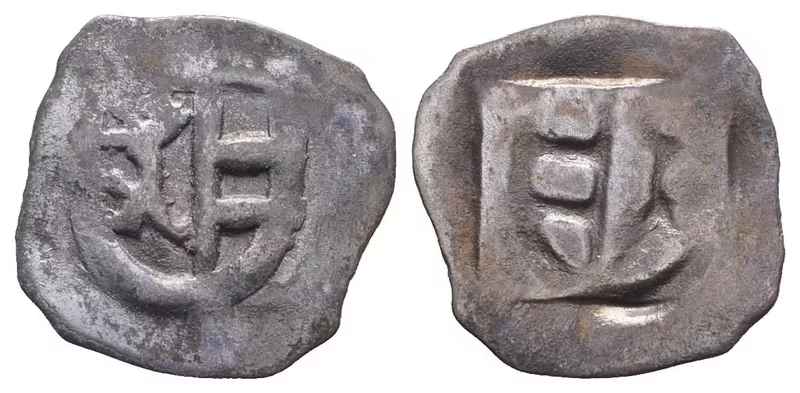
Salzburg, Fenik se čtyřrázem
Salzburg - biskupství, Johann II. von Reisberg (1429 - 1444) Pfennig se čtyřrázem, CNA A 55, lehce zvlněný