Cast coins and medals
Cast coins and medals are coins and medals produced by pouring molten metal into a previously prepared mould (for example of clay, sand or plaster), as opposed to strikes produced by the blow of dies. Historically, casting was used for some of the earliest coins and for part of medallic production, but for modern circulating coins casting is a typical sig…
Casting belongs to the oldest metallurgical procedures and, in the world of money, it appears as early as antiquity. In the Roman Republic the oldest, heavier copper coins were produced by casting (the known cast bronze means of payment that stand at the beginning of Roman coinage). Casting was also used in the preparation of blanks: with Celtic staters, for example, metal discs were first formed which were only afterwards struck, so that casting was part of the production process even before the strike itself.
In the modern period, casting prevailed markedly in medallic art. Medals did not have the function of ordinary circulating coinage, and therefore a technology could be chosen which better suited the artistic intent or smaller series. Some Renaissance medals, often religious or ceremonial, arose by casting, as did copies of originally struck medals. The cast medal made it possible to reproduce the relief faithfully without the expensive preparation of dies, and the procedure was therefore retained in later times also, especially for more massive medals and commemorative items.
History
In modern coinage, however, the situation differs. Circulating coins are produced by striking, since striking ensures the precision, sharpness of detail and uniform parameters needed for circulation. For this reason, casting is regarded for modern circulating coins as a suspicious sign: a cast "circulating coin" is generally a forgery, since legal issues are technologically produced differently. This does not mean that casting is in itself "bad"; for medals it is a legitimate method, but for circulating coinage it is a warning signal.
Counterfeiters often choose casting because it is technologically simpler than the manufacture of dies and the striking process. On cast imitations, however, features typically appear which stand out on close inspection. Castings tend to be of slightly smaller dimensions, because metal contracts slightly on cooling. The edges of letters and images tend to be less sharp, the relief appears "soft" and the smooth surfaces of the field lack the typical mint lustre. Under magnification one can sometimes see on the surface small bubbles or pores arising from casting, or traces of sprue channels and edge dressing.
How a cast coin is recognised and why cast counterfeits are made
These shortcomings counterfeiters often try to cover up by additional surface treatment, for example chasing, polishing or patination, so that the coin looks old and "natural". It is precisely the combination of a suspicious surface and subsequent alterations that is often a warning. Historically, casting was one of the most common methods of counterfeiting, since it made it possible to produce imitations quickly without expensive equipment. In the modern age, although forgeries produced by striking in workshops with top-class technique also appear, casting remains the typical route for simpler counterfeits.
With medals, by contrast, casting is common and acceptable, especially in the case of massive pieces or artistic castings. In the numismatic description it is therefore important always to distinguish whether we are assessing a coin intended for circulation, or a medal or commemorative item. Casting may, with a medal, be part of its charm and its technology, whereas in a modern circulating coin it is usually a reason for caution and expert verification.
In our auction and shop
- Code: XB-KROM
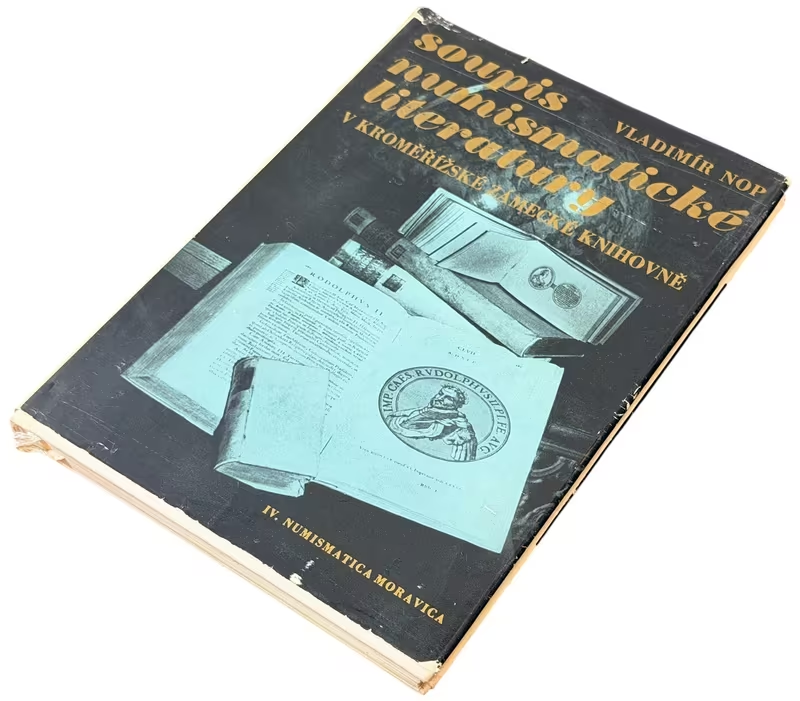
Soupis numismatické literatury v kroměřížské zámecké knihovně
Nop, Vladimír Soupis numismatické literatury v kroměřížské zámecké knihovně Brno 1974, 103 stran a vyobrazení, vázané, papírový přebal lehce poškozený jinak pěkná zachovalost
Skladem 1 ks - Code: XH003
3. Aukce - mincí • vyznamenání • bankovek • medailí a odborné literatury
Aurea Numismatika 3. Aukce - mincí • vyznamenání • bankovek • medailí a odborné literatury Praha - 09.12.2001
Skladem (>5 ks) - Code: XH004
4. Aukce - mincí • vyznamenání • bankovek • medailí a odborné literatury
Aurea Numismatika 4. Aukce - mincí • vyznamenání • bankovek • medailí a odborné literatury Praha - 19.05.2002
Skladem 4 ks - Code: XH005
5. Aukce - mincí • vyznamenání • bankovek • medailí a odborné literatury
Aurea Numismatika 5. Aukce - mincí • vyznamenání • bankovek • medailí a odborné literatury Praha - 07.12.2002
Skladem (>5 ks)