Nicopolis ad Istrum mint
The Nicopolis ad Istrum mint was an important Roman provincial mint operating from the 2nd to the 3rd century AD in Lower Moesia (today's Bulgaria), founded by Emperor Trajan after the victory over the Dacians. For numismatics, Nicopolis ad Istrum is significant as a producer of bronze provincial coins with Greek legends documenting the Romanisation of th…
Nicopolis ad Istrum ("City of Victory on the Danube") was founded by Trajan in 106 to commemorate his victory over the Dacian king Decebalus. The mint began striking provincial bronze asses with portraits of emperors and Greek legends. As one of the few provincial mints, it had the right to strike large bronze medallions. Its strategic position on the route between the Danube and the Black Sea ensured economic importance.
The Antonine period brought prosperity. Under Antoninus Pius and Marcus Aurelius the mint produced artistically high-quality issues with local deities - the Great God on horseback and the river god Ister. Septimius Severus granted the city metropolis status, and the mint struck commemorative issues. Caracalla personally visited Nicopolis and initiated massive coinage. The military anarchy of the 3rd century brought a decline in quality - the coins of Gordian III and Philip the Arab were the last.
History of the Nicopolis ad Istrum mint
The Gothic invasions of 250-270 devastated the region. Nicopolis was plundered and the mint destroyed. Diocletian restored the city, but the right to mint was not renewed. Archaeological excavations have revealed the remains of mint workshops with unfinished flans and dies. Nicopolis ad Istrum documents the rise and fall of Roman power on the lower Danube.
The Nicopolis ad Istrum mint struck only bronze denominations for local circulation. The Greek legends NIKOPOLIS PROS ISTRON reflected the Hellenistic tradition of the region. The iconography combined Roman imperial motifs with local cults. Technical quality was high, and emperors' portraits reached the level of imperial mints. Mintmarks make it possible to date issues.
Characteristics and production
Production supplied Lower Moesia and Thrace. Large bronze medallions (35-40 mm) are a speciality of Nicopolis. The export of Nicopolitan coins is attested in Dacia and Scythia. Archaeological finds document intensive local circulation. More than 15 emperors and empresses are depicted on the coins. Nicopolis ad Istrum represents provincial coinage at the height of Roman power.
In our auction and shop
- Code: BE049-0980
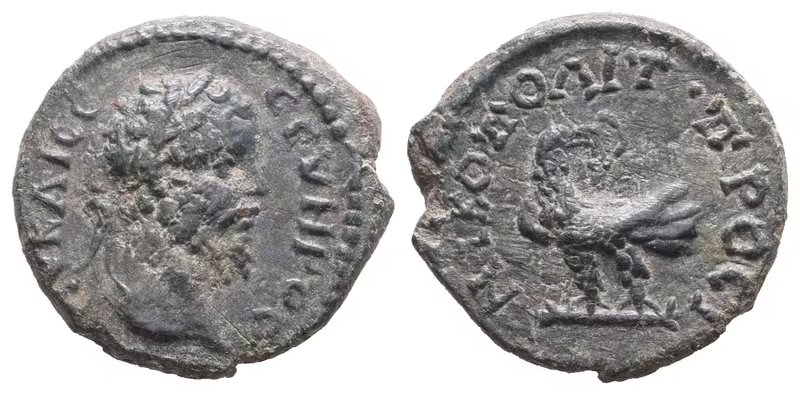
Septimius Severus, provinciální AE, Nikopolis ad Istrum
Septimius Severus (193 - 211) mincovna Nikopolis, Moesia Inferior, orel s věncem v zobáku, Mouchmov 980
Skladem 1 ks - Code: BE049-2824
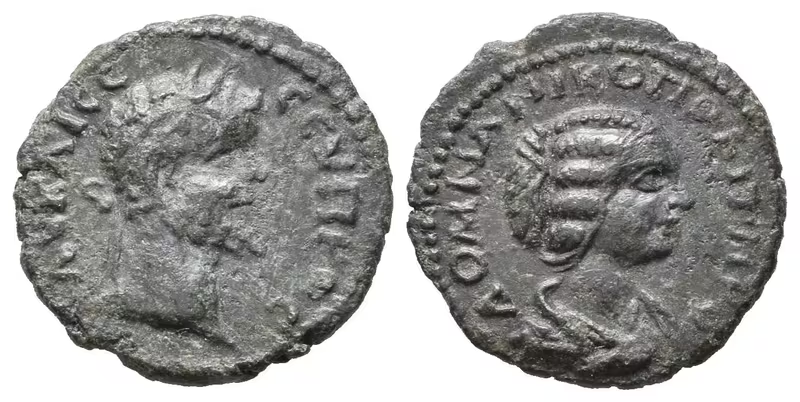
S. Severus, Moesia, Nikopolis, AE
Septimius Severus (193 - 211) Moesia, Nikopolis ad Istrum, společná ražba s manželkou Julií Domnou, AE 17, Portréty císaře na Av. a Julie Domny na Rv., opisy. Varbanov 2824, pěkná zachovalost a patina, rysky
Skladem 1 ks - Code: BE049-2480Recommended
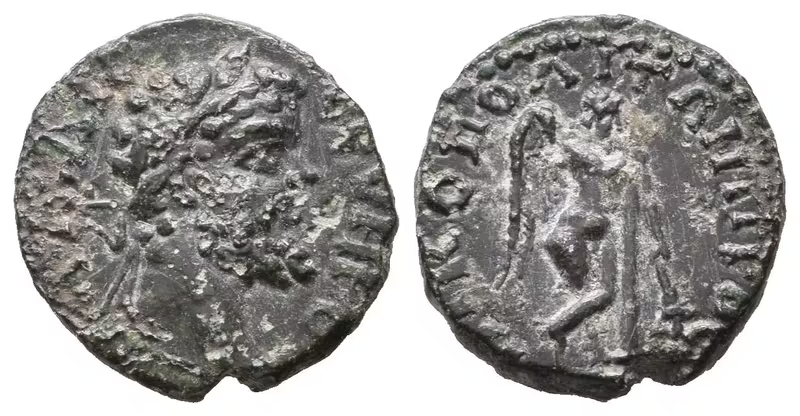
S. Severus, Moesia, Nikopolis, AE
Septimius Severus (193 - 211) Moesia, Nikopolis ad Istrum, AE 18, Rv: Eros-Thanatos se opírá o úzký sloup, má zkřízené nohy. Varbanov 2480, velmi pěkná zachovalost a patina, vady střížku_R!
Skladem 1 ks