William Ernest of Saxe-Weimar-Eisenach
William Ernest of Saxe-Weimar-Eisenach (1876–1923) was the last reigning grand duke of the small Thuringian state of Saxe-Weimar-Eisenach. He reigned from 1901 to 1918, supported cultural and building projects in Weimar, and after the November Revolution of 1918 he abdicated.
William Ernest was born on 10 June 1876 in Weimar into the Ernestine branch of the House of Wettin. His father, the hereditary grand duke Charles Augustus, died before he could assume rule, and so in 1901 William Ernest ascended the throne after his grandfather Charles Alexander. Ruling a small grand duchy within the German Empire had a specific character: the state was part of the imperial whole, but the internal administration, court and cultural policy remained markedly "provincial". Yet Weimar already from the 18th century had a reputation as a city linked to the Classical tradition (Goethe, Schiller), and from the turn of the century it also became a space for more modern artistic experiments.
Under William Ernest the transformation of Weimar as a representative centre of culture and learning continued. In his time, projects associated with modern architecture and applied art developed, and the role of municipal institutions, theatres and schools was strengthened. The grand-ducal patronage is also associated with the construction and organisational support of an environment in which artists and architects of the turn of the 19th and 20th centuries worked. Alongside Weimar, the university town of Jena played an important role; it had traditionally been one of the intellectual centres of the region, and it was here, in the first decade of the 20th century, that some representative renovations and anniversary celebrations took place, which were reflected also in the commemorative culture of the state.
History
His personal reputation, however, was contested even during his lifetime. Some contemporaries perceived him as a monarch with a strict, authoritarian style and with little ability to win public sympathy. In a small state where politics and court life easily affected the everyday perception of its inhabitants, such an image had a particularly strong impact. Tensions also rose with the outbreak of the First World War, when even in Germany war-weariness, social pressures and dissatisfaction with conditions deepened.
In November 1918, after Germany's defeat and during the revolutionary wave that swept the entire empire, William Ernest abdicated on 9 November. Like the other German monarchs, he lost his throne, and the grand duchy was abolished. He spent the rest of his life away from the former centre of power, at the family seat in Silesia (Heinrichau, today Henryków in Poland), where he died on 24 April 1923. His fate is a typical example of the end of the German monarchies: the ruler of a small but culturally influential state found himself within a few days without a political role and without the traditional framework on which his legitimacy had rested.
The state, mintage and numismatic connections
Under William Ernest's reign, his state was part of the German mark monetary system, and so circulating and commemorative coins of the empire with regional identity were struck here. Typical for collectors are silver denominations, especially the 2-mark coin with the ruler's portrait, which has standardised parameters (in ordinary types one encounters a fineness of around 900/1000 and a diameter of about 28 mm). Alongside the circulating currency, commemorative strikes were produced that recalled important events and institutions associated with Weimar and Jena – such coins are a good piece of evidence of how even a small country used the coin image to represent prestige, learning and cultural continuity.
Numismatically, his period is clearly delimited thanks to its precise timing: the strikes fall within 1901–1918 and end together with the fall of the monarchy. With coins, therefore, fine differences are often tracked by years, mint marks and commemorative issues, since the "monarch" himself is fixed within one short stretch of history. Pieces in above-average condition and commemorative silver denominations are of added value, as collector demand makes itself felt more strongly there. In a broader context, William Ernest represents the last chapter of the long tradition of Ernestine principalities, which were small in territory but exceptionally visible culturally – and their coins are today one of the most legible material witnesses of that role.
In our auction and shop
- Code: SNIZ92-B1860
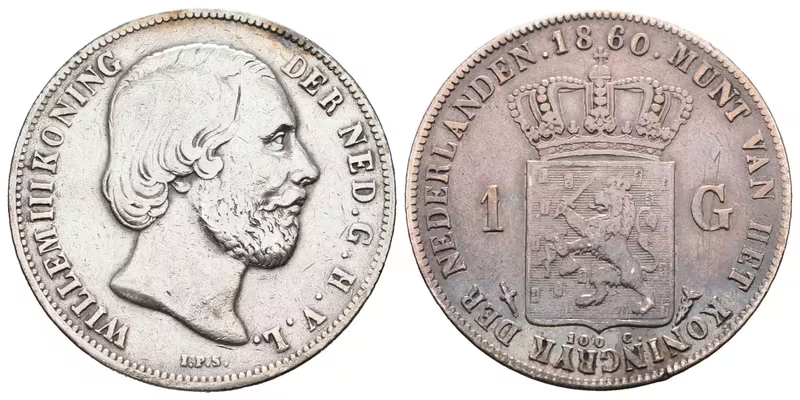
Nizozemí, 1 Gulden 1860 - Vilém III.
Nizozemsko, Vilém III. (1849-1890) 1 Gulden 1860, KM# 93 Ag (.945), 28 mm (10 g). Mincovna: Královská holandská mincovna - Utrecht. Hrana s nápisem "★ GOD ★ ZY ★ MET ★ ONS •". Stříbrná oběžná mince. Lit.: KM# 93.
Skladem 1 ks - Code: MCC17-2019
20 Koruna 2019 - Vilém Pospíšil
Česká republika (1993 - ) Významné osobnosti československé měny 20 Koruna 2019 - Vilém Pospíšil , Aurea C17, krásná zachovalost, ilustrační foto
Skladem (>5 ks) - Code: BCSR2CZ037.PN10
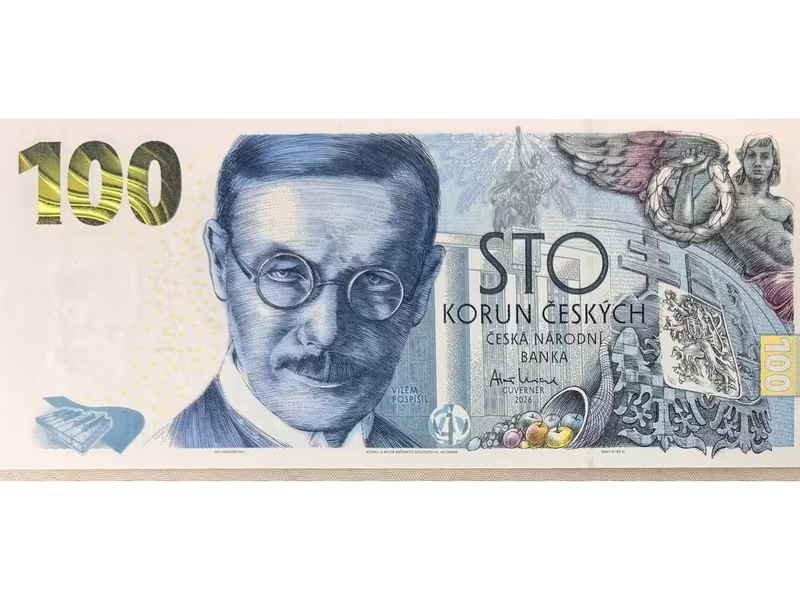
100 Koruna 2026 - Pamětní bankovka ke 100. výročí budování čs. měny - Vilém Pospíšil, serie PN10
Česká republika, 1993 - 100 Koruna 2026 - pamětní bankovka ke 100. výročí budování čs. měny - Vilém Pospíšil, série PN10 včetně originálního pouzdra, Hej.CZ38, foto pouze ilustrační N/UNC
Skladem (>5 ks) - Code: BCSR2CZ037.PJ09
100 Koruna 2026 - Pamětní bankovka ke 100. výročí budování čs. měny - Vilém Pospíšil, série PJ09
Česká republika, 1993 - 100 Koruna 2026 - pamětní bankovka ke 100. výročí budování čs. měny - Vilém Pospíšil, série PJ09 včetně originálního pouzdra, Hej.CZ38, foto pouze ilustrační N/UNC
Skladem 1 ks