48 kreuzer
The 48 kreuzer is a silver coin worth 48 kreuzers which appears in our lands at the beginning of the 17th century in connection with Estates and subsequent crisis-period issues. By its value it represented a higher denomination close to the half-thaler and thaler fractions, and was used in circulation chiefly where larger sums had to be paid in a single c…
The 48 kreuzer was introduced by the Bohemian Estates in Moravia, specifically in Olomouc, in 1620. The parameters already suggest that this was "large silver": a weight of 15.34 g and a diameter of 36.6 mm are recorded. The sources at the same time mention a fineness (expressed as "grain") of 0.563, which suggests that the coin was being produced at a time when the quality of the metal and monetary conditions were changing rapidly and the state was looking for ways to maintain circulation and at the same time financing.
Mintage of the 48 kreuzer continued under Frederick of the Palatinate (1619–1620) and under Ferdinand II (1619–1637). This corresponds well to the situation of the first years of the Thirty Years' War, when coinage became one of the means of obtaining resources and at the same time of supplying circulation with higher silver denominations. High kreuzer values were practical: they made it possible to pay larger sums without having to use many small coins, and at the same time they could be easily incorporated into the contemporary kreuzer accounting.
History
The fate of this coin was however closely tied to the monetary collapse of the early 1620s. The 48 kreuzer ceased to exist with the state bankruptcy known as the "kaláda" on 14 December 1623. The "kaláda" represents the key turning point at which the system was trying to end the period of debased issues and restore confidence in "coin of good grain". The denominations associated with the crisis-period circulation, including the 48 kreuzer, then disappeared from circulation or became invalid at their original tariff.
The 48 kreuzer belongs to coins that are attractive to collectors thanks to the combination of a large format and a short time window. The weight of 15.34 g and the diameter of 36.6 mm make it a striking piece on which a portrait, coat of arms and long legends can be well displayed — and at the same time the quality of the strike, the surface and any later interventions are very clearly visible on such a large silver coin. With coins from the crisis period, a natural surface and patina are often valued more than a "cleaned" appearance, because intervention in the surface may erase small traces important for identification and for authenticity.
Form, parameters and collecting significance
For the collector it is also important to perceive the monetary context. The 48 kreuzer is not merely "another number" in the kreuzer series, but evidence of a time when the state and individual mints reacted to an extraordinary situation: war, a lack of quality metal and pressure for financing. Its short existence until 1623 and disappearance with the kaláda give the coin a clear historical boundary, which helps the collector with classification and with building a thematic series (Estates and "Kipper" period, Moravian issues, high kreuzer denominations).
In practice it is worth watching the preservation of the edges and the legibility of the legends, because precisely on the edge and in the lettering wear shows fastest on circulation coins. With such high denominations one sometimes also encounters traces of metal testing (impressions, small nicks), because a large silver coin was often "tested" in circulation. Such traces can also be part of the coin's story, but it is important for collectors to be able to distinguish them from later damage.
In our auction and shop
- Code: XH048
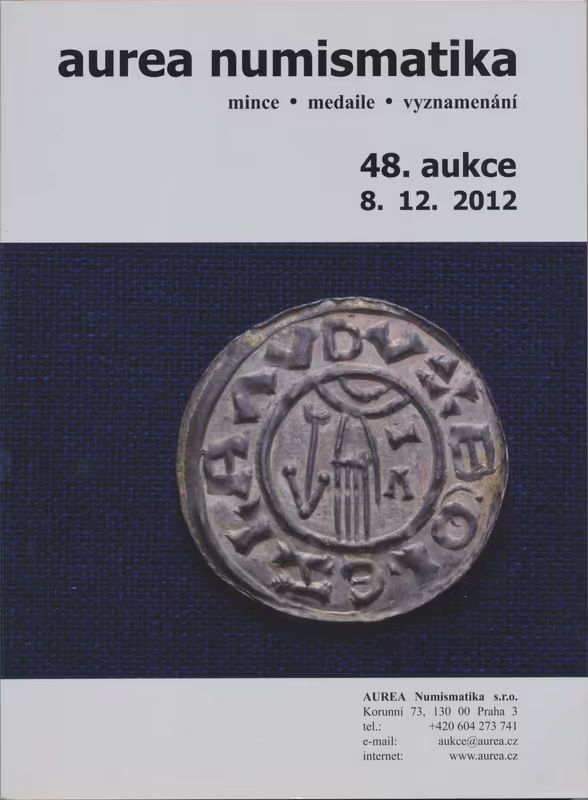
48. Aukce - mince • medaile • vyznamenání
Aurea Numismatika 48. Aukce - mince • medaile • vyznamenání Praha - 08.12.2012
Skladem 3 ks - Code: YE-93-48
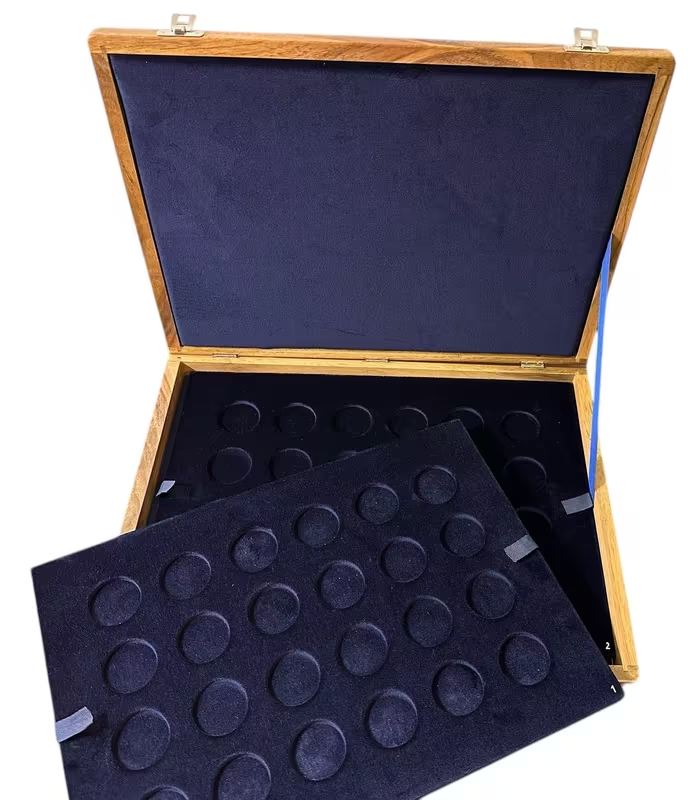
Etue na mince - pamětní Ag 200 kč po roce 1993, 48 ks, dřevo
Velká dřevěná etue na stříbrné pamětní 200 kč vydávané po roce 1993. Uvnitř 2 plata potažené sametem s prohlubněmi pro mince. Určeno pro 48 ks mincí. Povrch matný lak.
Skladem 2 ks - Code: BKORES048
- Code: BGRUZ048