Off-metal strike
An off-metal strike is a coin or medal struck from a metal different from that stipulated for the fineness and denomination by the coinage ordinance or the issuer's specification. It could arise deliberately (as a trial, for other denominations or for wider distribution) or unintentionally as a reject from the mint.
The term off-metal strike is used in numismatics for strikings in which the metal material was changed either deliberately or by mistake, while the design and inscriptions correspond to the ordinary type. In the Middle Ages we encounter this phenomenon chiefly in connection with the period of denarii and groschen, when pieces appeared imitating silver coins but struck from less valuable metals. In practice these were often contemporary counterfeits or substitutes intended to imitate higher-quality currency. From this comes the popular term "money of the poor": the coin looked similar to a silver one, but its actual value was considerably lower.
In the thaler period the term off-metal strike acquired a further layer of meaning. Sometimes dies originally intended for silver thalers were used for strikings from a more expensive metal, typically gold, and thus for the creation of multi-value pieces. Such off-metal strikes could correspond to multiples of ducats (values such as the ten-ducat are often mentioned), and because they were produced from existing dies for denominations of similar diameter, these strikings tend to be regular and "officially looking" in character. This does not automatically mean that they were ordinary currency; more often they served as representative pieces, gifts or special issues linked to the prestige and financial strength of the commissioner.
History
In the modern period we also encounter off-metal strikes as trial strikings. Mints and commissioners could verify the appearance of a design, the behaviour of a material or the quality of striking in different metals. Only rarely are off-metal strikes counted among curious rejects, where the wrong metal was used by mistake and the mint's quality control did not detect it. With medals, however, an off-metal strike in a different metal is fairly common: in the last two centuries the practice often applies of striking a medal in limited quantity from a precious metal (for example gold or silver) for subscribers or for official presentation, while a larger run is offered to the wider public in less valuable metals.
Off-metal strikes can be practically divided according to design and purpose. The first group is formed by off-metal strikes arising from the "switching" of material while preserving the same type, that is, the same dies, the same artistic rendering and the same diameter. This includes both trial strikings and certain representative pieces, or also production mistakes. The second group consists of off-metal strikes which use dies originally intended for a different denomination but of compatible dimensions, so that they pictorially resemble an ordinary coin while the value or purpose was different. With the third group, especially with older pieces, one has to bear in mind that an "off-metal strike" may be confused with a counterfeit: the decisive factor is the context, and whether it was official production, a trial striking or a private imitation.
Types of off-metal strikes and how to recognise them
The identification of an off-metal strike rests above all on the material and related parameters. A change of metal is often manifested in weight, colour, response to wear and on the edge (with coins the edge may also differ, if it was standardised). With medals the change of metal is mostly part of the intent, and individual variants are listed as separate renditions of the same design. In the numismatic description an off-metal strike is therefore noted not only by the metal, but also by whether it is a trial striking, a variant for different distribution, or a piece with a production error.
In our auction and shop
- Code: RAHAM-1934/1973
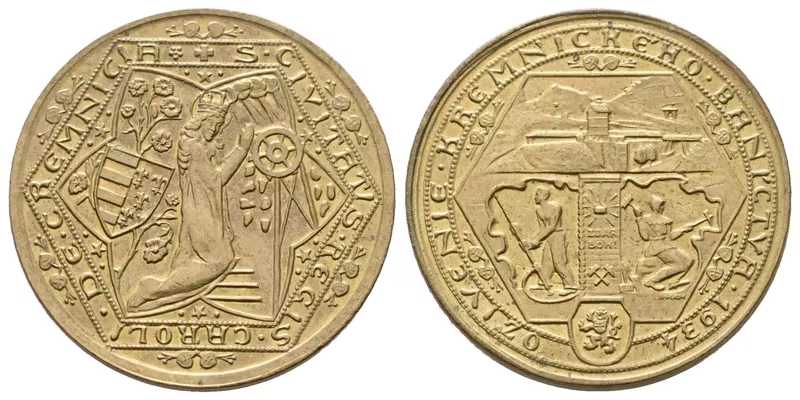
Hám Anton - Odražek 2 dukátové medaile na oživení kremnického baníctva
Hám Anton (1899 - 1965) AE Medaile 1934 - Odražek 2 dukátové medaile na oživení kremnického baníctva. Zlacený obecný kov, 25 mm (5,84 g), hladká hrana
Skladem 1 ks - Code: ZCP-1978-ODR-MS67
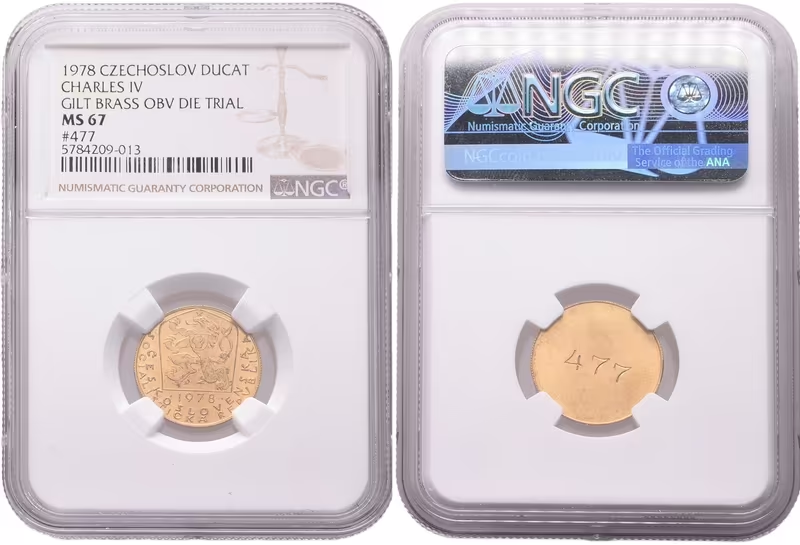
Dukát 1978 - jednostranný odražek lícní strany, NGC MS 67
Československo (1953 - 1992) Jednostranný odražek lícní strany dukátu 1978 - Karel IV., Aurea 201 Raženo pro reklamní účely státního podniku Klenoty, na rev. číslo "477", zlacený bronz, etue NGC, MS 67
Skladem 1 ks - Code: SVEL90-T1990
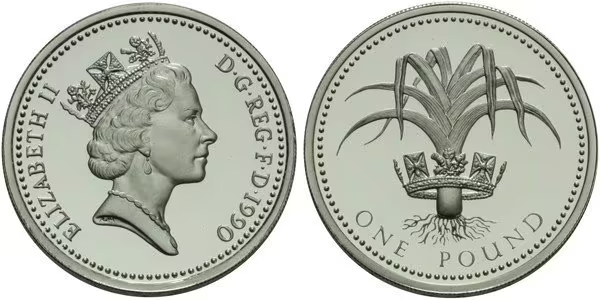
Velká Británie, 1 Libra 1990 - Odražek do stříbra
Velká Británie, Elizabeth II., 1952 - 2022 1 Libra 1990 - Odražek do stříbra, Ag 0,925, 22,5 mm (9,5 g), PROOF
Skladem 1 ks - Code: ZCM-1968-SADA
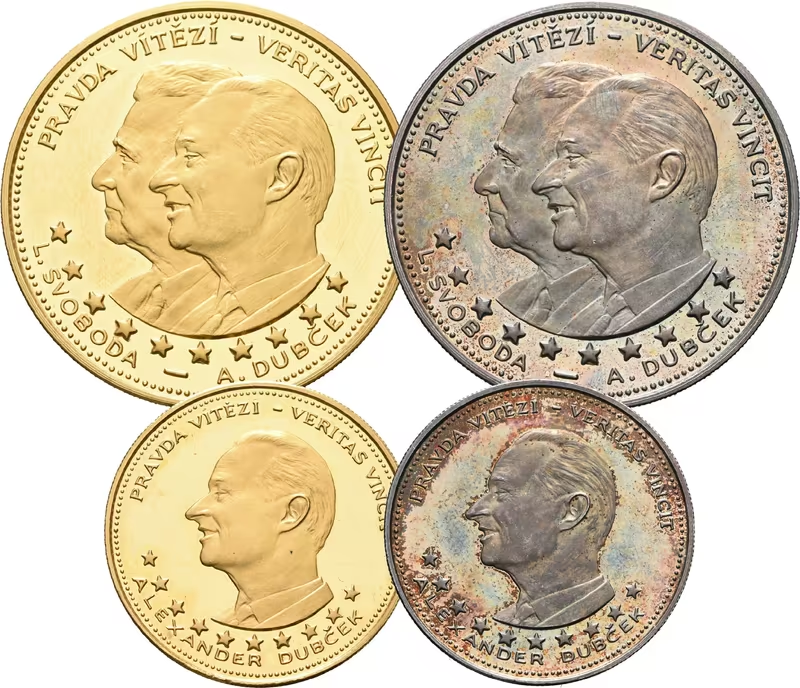
Soubor medailí 1968 - Pražské jaro
Československo (1953 - 1992) Soubor medailí 1968 - Pražské jaro Poprsí Alexandra Dubčeka a Ludvíka Svobody zleva, hvězdy a opis / Svatý Václav na koni, za ním silueta Hradčan, nápis 10 Dukát - Au 0,986, 40 mm (35,09 g), číslo 587, odražek v Ag 1,000, 40…
Skladem 1 ks