Thematic coins
Thematic coins are numismatic strikes focused on specific motifs — nature, sport, history, culture or science — which form coherent series across the years of issue. Unlike ordinary circulating coins, they build on a story and a visual theme, often in commemorative or collector form.
Thematic coins follow the older tradition of commemorative and ceremonial strikes, which were minted from the early modern period to mark coronations, victories, dynastic marriages or significant events. While ordinary currency long emphasised the ruler, the state coat of arms and the denomination, "extraordinary" coins and medals had a freer space for narrative — they could recall a personage, a building, a military success or a jubilee. It is precisely this commemorative dimension that is the direct predecessor of the modern thematic conception.
A more pronounced development of thematic series came with the spread of modern coinage and with the changes in society of the 19th and 20th centuries. As literacy, mass culture and travel grew, so too did interest in "pictorial" money carrying a message. States began to use coins deliberately as a communication medium: on a small area, official symbolism could be combined with a motif intelligible to the broad public. At the same time, two functions gradually separated — coins intended for circulation and coins intended for commemorative or collector purposes. This made it possible to strike issues with richer relief, better surface quality and more inventive iconography, without having to subordinate everything to the strict requirements of daily use.
After the Second World War, thematic coins became a regular part of the offerings of state mints. States issued series for anniversaries of cities, cultural institutions, important personalities, scientific discoveries or sporting events. With some themes these were one-off issues, while elsewhere long-term cycles were created that grew each year with a new instalment. It is precisely seriality that is typical of thematic coins: the collector does not acquire merely "one pretty coin" but follows a series that has a clear logic, a unified style and often unified parameters too (e.g. the same dimensions, the same metal, similar graphic structure).
History
A notable impetus was also the technological change in coinage. The quality of dies improved, top-grade surface treatments spread (for example a polished field in contrast with a matte relief), and even colour elements or combinations of metals began to be used for selected issues. All this strengthened the appeal of themes that can be expressed by an image: fauna and flora, architecture, space exploration, art or landscape. Thematic coins thus gradually ceased to be only "accompanying" commemorative strikes and became an independent segment of numismatics — with their series, favourite motifs, distinctive aesthetic and often international audience.
Today thematic coins fulfil several roles simultaneously. For the state they are an instrument of cultural presentation and commemoration of history; for the mint they represent a programme that can be planned over the long term; and for the collector they are coherent, easily graspable series. The common feature remains that the theme stands at the centre — and state symbolism is incorporated into the composition in such a way that it serves as a guarantee of origin, not as the sole content of the coin.
Thematic coins are most often issued as commemorative or collector strikes and often form series. Themes can be very broad: nature reserves, endangered species, sporting events, technical inventions, important buildings, historical milestones, personalities of culture or science. The series tend to have a unifying element — a recurring composition, a shared graphic line, the same format, or continuity over time (e.g. "one motif each year"). This is what distinguishes them from one-off commemorative coins, which can also be thematic but do not form a coherent cycle.
Types, execution and practical features
In terms of execution, thematic coins use a broader range of finishes than circulating coinage. High relief, more detailed engraving and high-quality surfaces are common. Some issues use a combination of metals, others work with patination, selective matting or colour emphasis of the motif. Even so, the basic "coin" identity must remain legible: the denomination, the issuing authority and the year (and where applicable the mint mark) are key for identifying the strike and for placing it in catalogues.
In practice, thematic coins are assessed not only by preservation grade but also by the consistency of the series. Important is the continuity of the years of issue, the uniformity of parameters and the artistic quality — that is, whether the motif fits into the whole and whether it is "legible" even on a small area. With some series, the limited mintage and the form of packaging (capsule, étui, certificate) also play a role, since this influences the long-term preservation of the surface. From a numismatic perspective thematic coins are interesting in that they combine the technical discipline of coinage with storytelling: on the one hand a precisely defined product, on the other a pictorial series that can map nature, history and culture across the years.
In our auction and shop
- Code: XB-1585
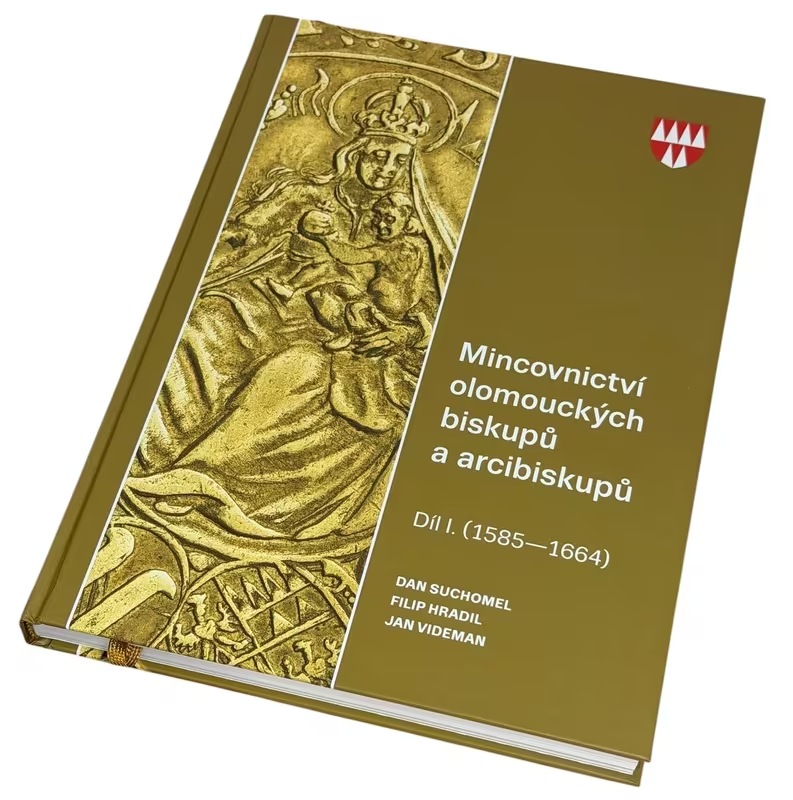
Mincovnictví olomouckých biskupů a arcibiskupů, I. díl
Dan Suchomel, Filip Hradil, Jan Videman Mincovnictví olomouckých biskupů a arcibiskupů, díl I. (1585 - 1664) Praha 2026, 236 stran a vyobrazení, vázané, nové! Publikace tematicky navazuje na oblíbený a obtížně sehnatelný sběratelský katalog z pera…
Skladem (>5 ks) - Code: STUVA-X2010
Tuvalu, Sada stříbrných mincí 2010 - Famous Ballets
Elizabeth II. (1952 - 2022) Sada stříbrných míncí 1 Dollar 2010 - Nejslavnější baletní představení. Ag 0,999, 40,6 mm, 1 Oz, (31,135 g), kapsle, luxusní kožená etue, certifikát, tématický papírový přebal, kolorovaný PROOF, razila The Perth Mint