Troy Pound
The troy pound is a historical unit of weight from the troy weight system used for precious metals. In its classical expression it corresponds to 12 troy ounces and today converts to 373.2417216 g.
Troy weights are associated above all with the trade in precious metals, where there was a need for a more accurate and long-term stable system than that of common market weights. The name "troy" is traditionally interpreted as a reference to the medieval commercial environment in Western Europe, where various weight systems spread together with long-distance trade and financial centres. The troy system gradually established itself as a practical standard for gold and silver, since it allowed clear division and was well suited both to minting and to wholesale trade.
In the English-speaking environment the troy system became firmly established for precious metals and related commodities, while for ordinary goods a different weight system was used. This created an important distinction: the "common pound" for everyday trade and the "troy pound" for valuable metals. For mints and bankers it was essential that precious metal was treated as a material whose fineness and weight had to be precisely controllable. The troy pound thus belonged among the practical instruments that made it possible to standardise calculations in melting, dividing the metal into flans, and in the accounting connected with minting.
History
In numismatics, the troy pound is significant especially as a "background" for calculating the weights of precious metals. Even though mint ordinances often work with local pounds and marks (for example the Cologne mark), the troy system became internationally intelligible especially in the modern period and in modern trade in gold and silver. Today the troy pound is rather a historical concept, since in practice the troy ounce is most often used as the basic unit for quotations of precious metals.
The troy pound consists of 12 troy ounces. One troy ounce is 31.1034768 g, so the troy pound works out at 373.2417216 g. This system differs from the common (avoirdupois) pound, which is used for most goods and has 16 ounces and a total weight of 453.59237 g. Precisely the confusion of these two "pounds" is among the most frequent errors when working with historical data.
Composition, conversions and use
In practice the troy pound appears mainly in historical texts, in descriptions of older weight systems, and in scholarly discussions of precious metals. For the investment market, however, the troy ounce is key: most world prices of gold and silver are given per 1 oz t (troy ounce). When describing bars and bullion coins, it is therefore advisable always to indicate whether troy units or metric grams are involved, so as to avoid mistaken conversion and incorrect comparison of weights.
In our auction and shop
- Code: SZ-NEJ-SAS-1850
Stříbrná známka - Saská trojka z roku 1850 - Ag 6 g - 999/1000
Stříbrná známka - Saská trojka z roku 1850 - Ag 6 g - 999/1000
Skladem 1 ks - Code: SCIN-G2015
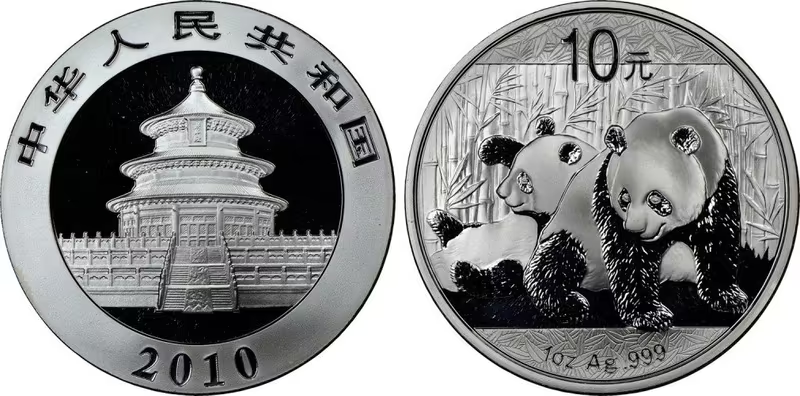
Čína, 10 Yuan 2015 - Panda
Čína 10 Yuan 2015 - Čínská panda Ag 0,999, 40 mm (31,105 g), 1 Oz, Proof komisní prodej, kapsle mohou být lehce poškrábané Čínská Panda Čínské stříbrné investiční mince Panda byly poprvé raženy Čínskou státní mincovou v roce 1983 , 1984, 1985 o váze 27 g…
Skladem (>5 ks) - Code: RH-2017.1
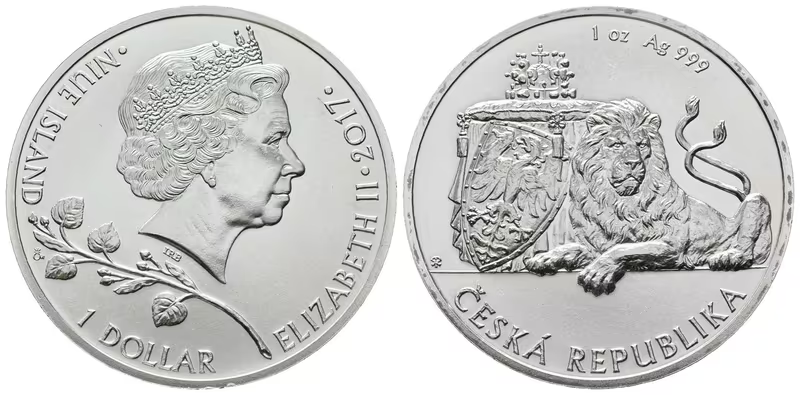
1 Dollar 2017 - Český lev
Niue Island 1 Dollar 2017 (Jaroslav Bejvl, Asamat Baltaev) - Stříbrná uncová investiční mince Český lev (První česká investiční mince) Ag 0,999, 37 mm (31,1 g), 1 Oz, kapsle Mince České mincovny „Český lev“ jsou ryze investiční mince ražené v České…
- Code: RH-2017
1 Dollar 2017 - Český lev
Niue Island 1 Dollar 2017 (Jaroslav Bejvl, Asamat Baltaev) - Stříbrná uncová investiční mince Český lev (První česká investiční mince) Ag 0,999, 37 mm (31,1 g), 1 Oz, číslo 295/500 Dárková varianta investiční mince je uložena do speciálního balení, které…