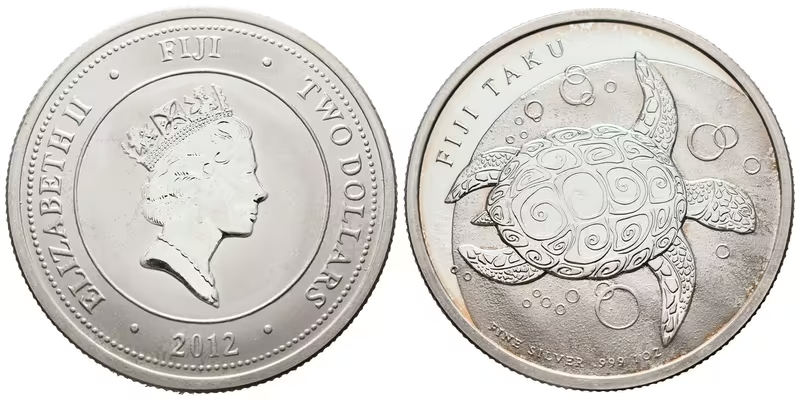
Fiji Mint
The Fiji Mint is not a physical mint, but rather a designation for the official issues of the Republic of Fiji produced in foreign mints. Since obtaining independence in 1970, Fiji has issued prestigious collector and investment coins.
Fiji has no mint of its own; all national coins are struck abroad — chiefly in Perth, London and Warsaw. The Fijian dollar has been the national currency since 1969. Circulating coins depict traditional cultural motifs — the tanoa (ceremonial bowl), bure (traditional house), tabua (whale tooth). Collector issues form the main numismatic production of the island state.
The portfolio of Fijian coins includes exotic Pacific motifs — sea turtles, sharks, tropical fish, orchids. Silver investment coins often make use of high relief and colour printing. Series dedicated to Polynesian mythology, the traditional art of tapa, kava ceremonies. Limited editions of gold coins with motifs of chieftains and war canoes. Technical innovations include the first coins in the shape of a turtle.
Characteristics of Fijian Coinage
Fijian coins often contain cultural elements — inset pearls, coconut fibres, microengraving of traditional patterns. Cooperation with local artists ensures authenticity. Export is chiefly to Australia, New Zealand and Asia. Numismatic revenues support the protection of natural heritage. Fiji represents the modern approach of small island states to monetising cultural wealth through coinage.
In our auction and shop
- Code: SFIJI90-S2012.1
Fidži, 2 Dollars 2012 - 1 Oz (Taku Turtle)
Fidži, Elizabeth II. (1952 - 2022) 2 Dollars 2012 - 1 Oz (Taku Turtle), KM# 151 Ag (.999), 40,70 mm (31,1 g). Mincovna: Novozélandská mincovna (New Zealand Mint / Te Kamupene Whakanao o Aotearoa) - Auckland. Stříbrná investiční uncová mince - 1 Oz; série…