The Wallensteins
The Wallensteins are an ancient Czech noble family who left a marked imprint on the history of the Bohemian lands, especially in the 17th century. The best-known member of the family was Albrecht Václav Eusebius von Wallenstein, Duke of Friedland and imperial commander, whose power was reflected in the operation of his own mints and the striking of coins…
The Wallensteins belong to the domestic nobility whose roots reach deep into the Middle Ages. Over the centuries the family branched out and held a range of estates in various parts of Bohemia. Truly European fame, however, came only during the Thirty Years' War, when Albrecht Václav Eusebius von Wallenstein (1583–1634) came to the fore. He came from a Protestant background but converted to Catholicism at a young age and gradually rose in imperial service. His ascent was a combination of military ability, political dexterity and the extraordinary economic strength he was able to build on extensive holdings.
After the defeat of the Estates' uprising, the property map of the Bohemian lands was significantly reshuffled. Wallenstein managed to create a large domain especially in north-eastern Bohemia and underpinned it with thoughtful administration and economic management. At the same time he became one of the key figures of imperial military strategy: he organised large army units, led campaigns in Central Europe and acquired titles that expressed his exceptional standing within the Habsburg Monarchy. His power, however, also aroused fears; at one point he was removed from command, later recalled, and ultimately fell victim to a political and military turning point. In 1634 he was murdered in Cheb, and the confiscation of his vast property followed, which was divided among the emperor's supporters.
History
In a broader view, the family name Wallenstein is also linked with a cultural and architectural legacy. Above all, Jičín was in his day intended as a representative centre of the dominion, in keeping with the effort to create a "court" and an administrative core worthy of a duke. After Wallenstein's death, however, the family situation changed and later members of the family did not match his exceptional position to the same degree. Even so, the Wallensteins remained an important part of Czech aristocratic history — as an example of a family whose star rose sharply in a single century and was just as sharply broken by political events.
From a numismatic point of view, the Wallensteins are linked above all with the minting activity of Albrecht Václav Eusebius von Wallenstein. He obtained a range of privileges, among them the right to strike coins, and indeed made use of mints on his territories. Two minting locations are most often associated with his name: Jičín and Sagan (Zaháň). The mintage was of a dual character. Part of the production was usable in ordinary monetary circulation, while part served as a representative expression of power — coins bearing his portrait and titulature were the "metallic signature" of a duke who wished to present himself as a major player in European politics.
Wallenstein coinage and mintage
In his coins the customary denominations of the time appear, from gold ducats and their multiples to silver thalers and fractions of the thaler. Alongside these, smaller silver denominations in the kreuzer system are also recorded, and it was precisely some of these smaller coins that had the greatest chance of entering everyday circulation. To understand Wallenstein coinage, the economic background is also important: the operation of mints requires metal and stable sources, and where the resource possibilities are limited, mintage often has a greater prestige than mass-circulation significance. This explains why, with some of the Wallenstein issues, the representative purpose is emphasised and why selected small denominations predominantly featured in everyday dealings.
After Wallenstein's death and the confiscation of his property, his minting project came to an end. Later members of the family no longer struck coins as a routine matter; the family memory was then more often commemorated through medallic art — that is, ceremonial strikes intended to recall the tradition and standing of the family. For collectors, Wallenstein coins are attractive in that they link the dramatic history of the Thirty Years' War with concrete numismatic material: on the coin one sees not only a ruler and a state, but also the ambition of an individual who managed, for a time, to build what was almost "a state within a state".
In our auction and shop
- Code: RAKOLA-1987
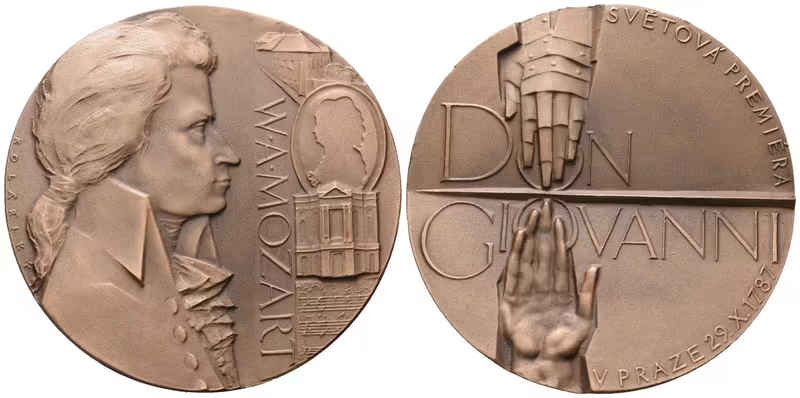
Kolářský Zdeněk - W.A. Mozart
Kolářský Zdeněk (1931 - 2022) AE Medaile 1987 - Na památku opery Don Giovanni od W.A.Mozarta Patinovaný bronz, 60 mm
Skladem 1 ks - Code: RAKOLA-SADA
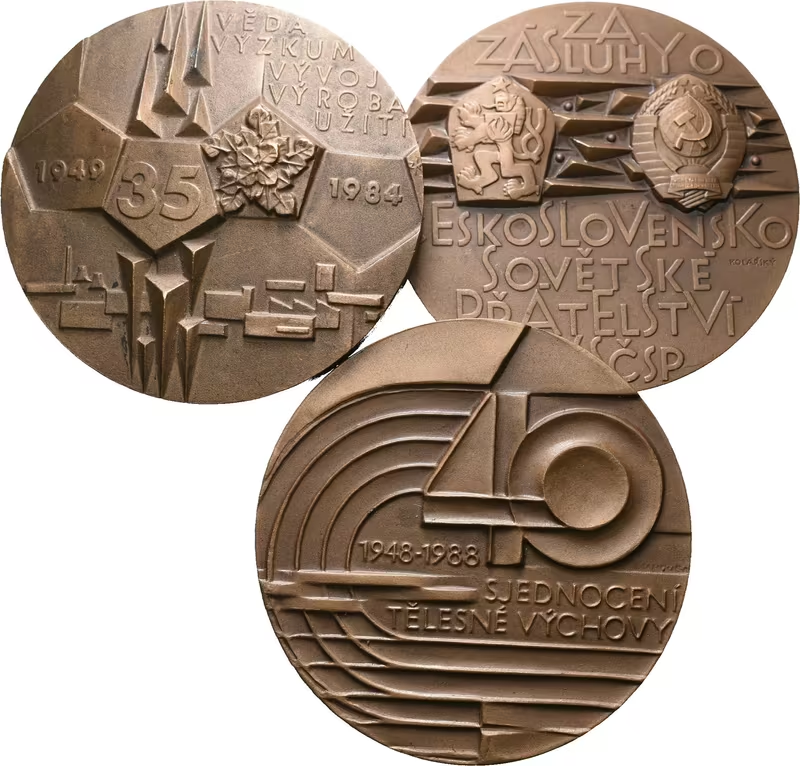
Kolářský Zdeněk - lot 3 medailí
Kolářský Zdeněk (1931 - 2022) AE Medaile - lot 3 ks, Za zásluhy o československo-sovětské přátelství, 1948-1988 sjednocení tělesné výchovy, SVÚM 1949-1984 Patinovaný bronz, 60 mm
Skladem 1 ks - Code: XB1626
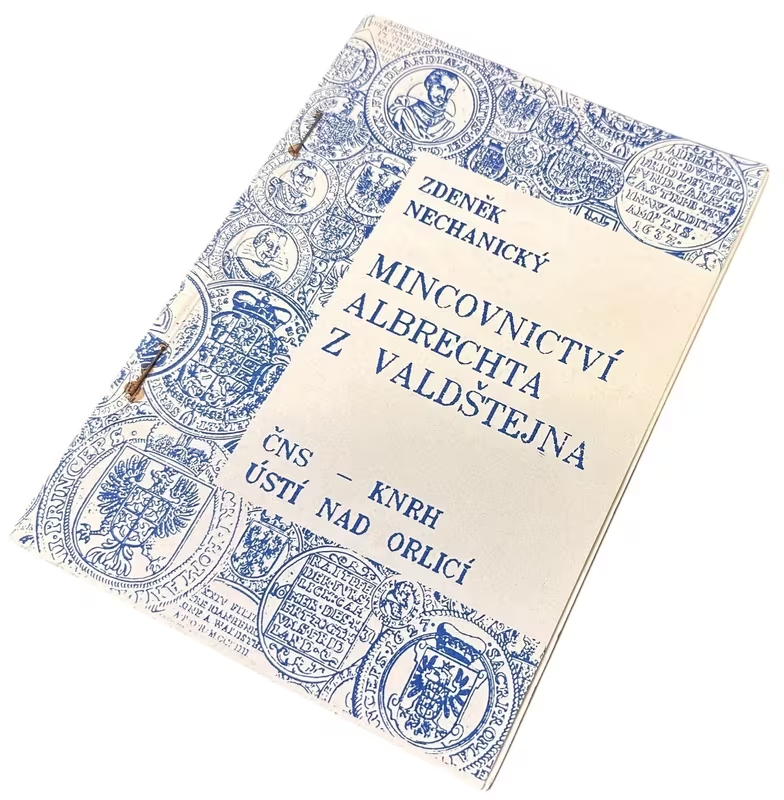
Mincovnictví Albrechta z Valdštejna
Nechanický, Zdeněk Mincovnictví Albrechta z Valdštejna Ústí nad Orlicí 1991, 38 stran a mnoho vyobrazení, vázané
- Code: RG-1993VAL
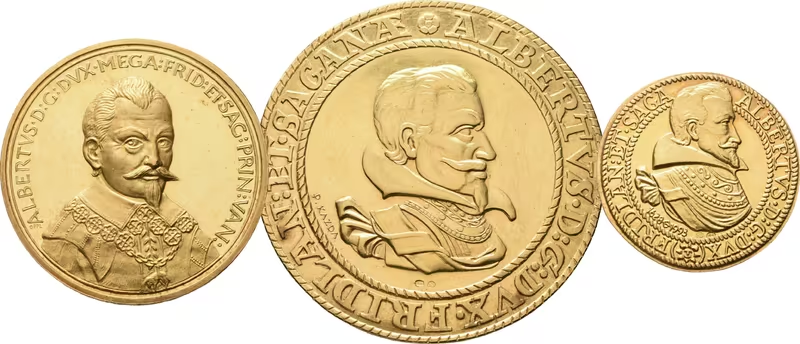
AV Medaile Albrechta z Valdštejna
Zlaté dukátové medaile Albrechta z Valdštejna Poprsí Valdštejna zprava, opis / Znak, opis 20 Dukát b.l. (P. Kazda), Au 0,986, 50 mm (69,82 g), raženo 15 ks 10 Dukát 2000 (V. Oppl), Au 0,986, 38 mm (34,9 g), raženo 20 ks 5 Dukát 1993 (H. Válková), Au…