Coin
A coin is a struck (occasionally cast) metal piece of legal payment with a prescribed weight and fineness, for which the state or the ruler stands as guarantor. On the obverse and reverse it bears an image and a legend, by which the issuer, the value or the period of origin can be identified, and it serves for payment for goods and services.
The coin ranks among the longest-used means of exchange. Its essence is simple: an authority that has society's confidence (a state, a ruler, a city) guarantees that a particular piece of metal has a certain weight and quality, and people therefore accept it in trade. In the oldest coining cultures the idea took hold that value need not be verified by weighing and assaying the metal at every payment — it is enough for the means of payment to bear a clear mark of the issuer. This significantly accelerated trade and made it easier to collect taxes and fees.
In the European area, the coin became a fundamental instrument of state power. The ruler or the city gained control over money circulation by means of the mint, where metal was remelted and struck into standard denominations. In circulation there then met domestic and foreign coins alike, which people accepted according to reputation, quality and usefulness in a given region. In times of stability, firmer standards came to the fore, while in times of war and crisis there were more frequent interventions in the currency, changes of weight or fineness, or exchanges of currency, so that the issuer could maintain the financing of the state.
The Middle Ages and the early modern period brought a rich range of coins both in terms of metal and of purpose. Small silver and copper denominations served the everyday market; higher silver coins and gold strikes were used for larger payments, trade and the storage of value. At the same time, the appearance of coins also developed: alongside simple crosses and emblems there appear portraits of rulers, heraldry, religious motifs and inscriptions, which were intended to remind the public who was the source of power and law. The coin thus functioned not only as money, but also as a bearer of symbols and propaganda — the image and the titulature were 'a small state announcement' that was passed from hand to hand.
History
With the development of technologies, production also changed. From hand striking with a hammer, coinage gradually moved on to machine striking, which made possible a more precise diameter, a more regular edge and a higher resistance to counterfeiting. The importance of the edge grew particularly at the moment when coins began to be clipped (when metal was removed from the edge). Reeding, inscriptions or other treatments of the edge made fraud more difficult and supported trust in circulation.
In modern times the role of the coin has changed with the advent of banknotes and cashless payments, but it has not disappeared. The coin remains practical for small payments, vending machines and ordinary circulation, because it is durable and cheap to keep in operation. At the same time, commemorative and collector issues have proliferated, often bearing richer artistic execution and produced in precious metals or in special finishes. Alongside this there exist objects similar to coins, but which are not means of payment — medals, tokens or purpose tokens. It is precisely the distinction 'what is a coin' that is fundamental in numismatics: what matters is whether the piece is a strike intended for payment, for the parameters of which the issuer stands as a monetary authority.
A coin most often has a circular shape and bears artistic elements and text on both sides. The area inside the edge is known as the field, and on it is placed the image (for example a portrait, an emblem, a coat of arms or a symbol) and the legend or inscription, which may state the issuer, the nominal value, the year of striking or a motto. The edge and rim are not merely a 'technical detail' — on many coins they serve as protection against clipping and as an element for easy recognition in the hand.
What a coin looks like and what it is for
In terms of use, a coin is regarded primarily as a circulating strike intended for payment, typically the current coin in everyday circulation or the trade coin, which was accepted also in long-distance trade thanks to the quality of the metal and trust in its standard. In practice, however, money circulation was often supplemented also by extraordinary situations: in periods of a shortage of small change, emergency strikes or substitute means of payment arose, which could temporarily fulfil the function of a coin, but their position was as a rule limited by time and place.
For collectors, it is important that a coin is always a specific combination of metal, weight, diameter, type and variant. Small details are decisive: the form of the letters in the legend, the mint mark, differences in the portrait or in the details of the emblem. Value is then influenced by rarity, state of preservation and original surface. With historical coins, context is moreover key — who issued it and why, what role it played in the monetary system and how it spread in circulation. It is precisely for these reasons that coins are among the most valuable material sources: they combine economics, politics and everyday life in a single small object that has often survived for centuries.
Frequently asked questions
Questions from our knowledge base related to “Coin”. Full answers can be found in Frequently asked questions.
Jak určit hodnotu mince?
Hodnota mince se určuje podle několika faktorů. Mezi ně se řadí stáří mince, kov, ze kterého je vyražena a náklad (vzácnost). Množství typů a nominálů mincí je rozsáhlé a existují tak i tisíce let staré mince se zanedba…
Read full answerJak ocenit starou minci?
Tento proces Vám můžeme usnadnit prostřednictvím našich odborníků na numismatiku a notafilii. Nabízíme profesionální určení a posudky k mincím a bankovkám založené na dlouholeté zkušenosti v oboru numismatiky a notafili…
Read full answerJaké jsou druhy mincí?
Existuje velká řada druhu. Velmi jednoduše je lze rozčlenit na mince oběhové (ty, které byly skutečně používány při každodenní směně), pamětní (vyražené na památku nebo k významné události) a investiční (o těch již byla…
Read full answer
In our auction and shop
- Code: XA-RIMNM
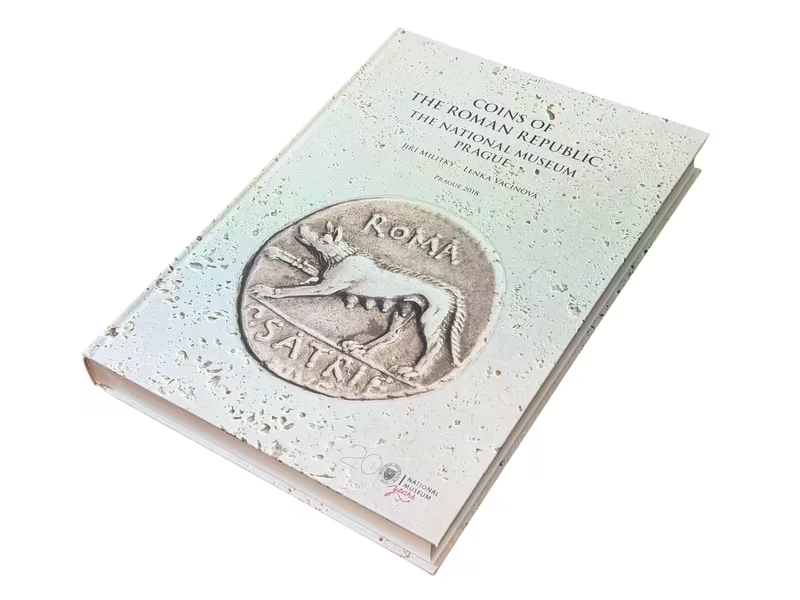
Mince Římské republiky ve sbírkách Národního muzea
Militký, Jiří a Vacinová, Lenka Coins of the Roman Republic. The National Museum. Prague. The Systematic Collection and the Gulyantsi Hoard (Bulgaria) Praha 2018, 431 stran a vyobrazení, vázané, nové!
Skladem 1 ks - Code: XB1526HAL.3P
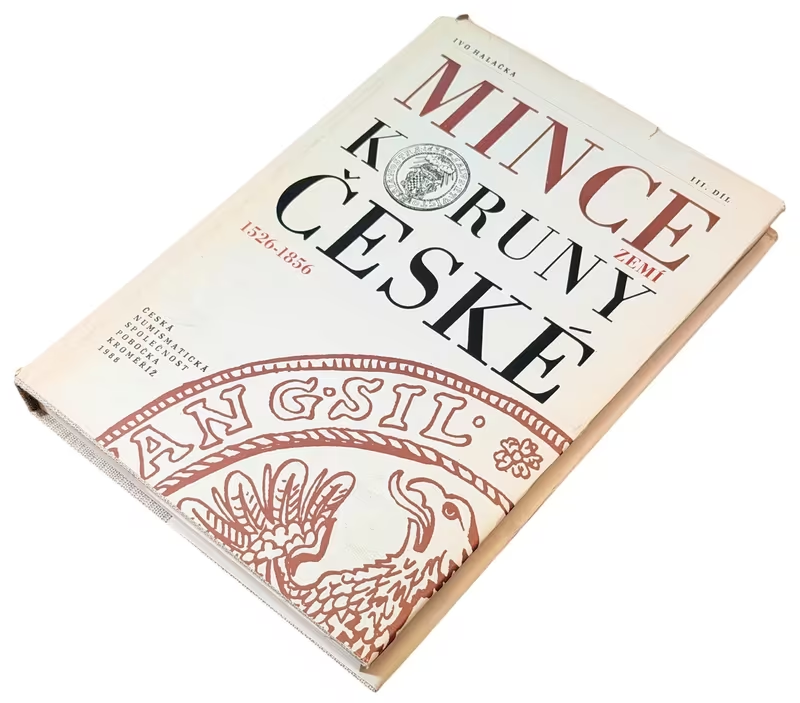
Mince zemí Koruny české III. díl
Halačka, Ivo Mince zemí Koruny české 1526 - 1856, III. díl Kroměříž 1988, celkem 329 stran a mnoho vyobrazení, vázané, papírový přebal poškozený jinak pěkná zachovalost komisní prodej, ilustrační foto
Skladem 1 ks - Code: XB1526HAL.1
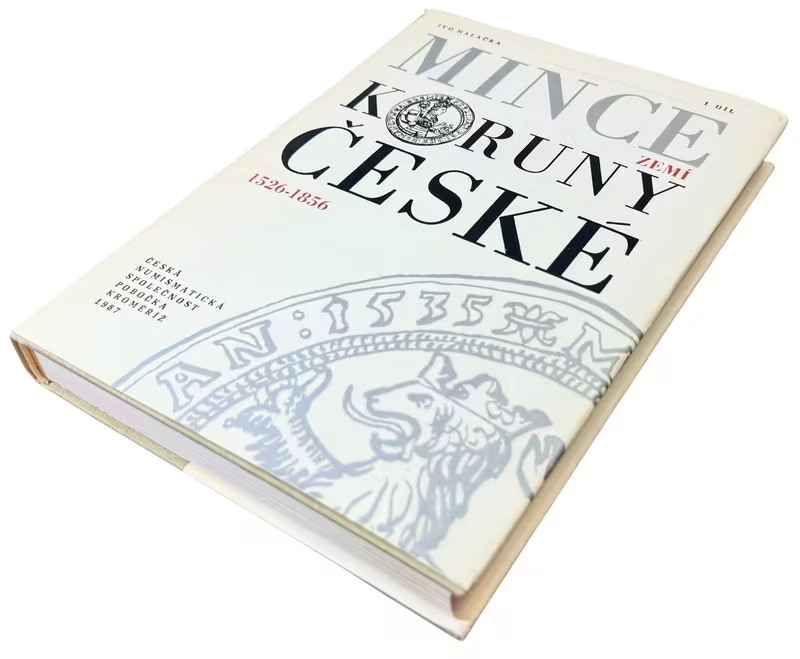
Mince zemí Koruny české I. - III. díl
Halačka, Ivo Mince zemí Koruny české 1526 - 1856, I. až III. díl Kroměříž 1987-1988, celkem 999 stran a mnoho vyobrazení, papírový přebal, přebaly lehce opotřebené jinak velmi pěkná zachovalost, použité
Skladem 1 ks - Code: XB-1765
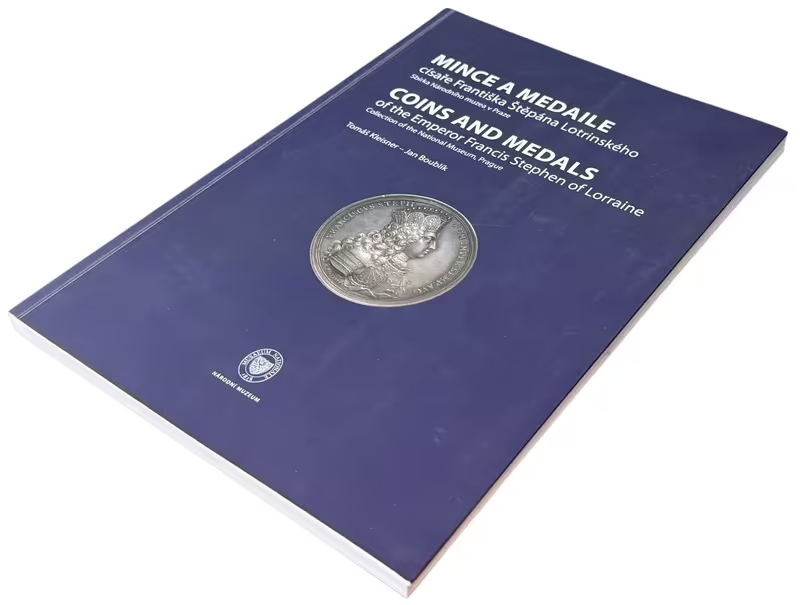
Mince a medaile císaře Františka Štěpána Lotrinského
Kleisner Tomáš, Boublík Jan Mince a medaile císaře Františka Štěpána Lotrinského Praha 2011, 208 stran a mnoho vyobrazení, brožované, jako nové, nep. opotřebovaný přebal
Skladem 1 ks