Silver bar
A silver bar is a standardised piece of refined silver of known weight and fineness, intended primarily for investment and the preservation of value. It is usually marked with hallmark data (e.g. 999/1000), the weight and the mark of the refinery or producer, so that it is easily verifiable and tradable.
Silver belonged for thousands of years among the most important metals for trade, the storing of wealth and the minting of coins. It was long treated not only as a material for jewellery, but also as a metal by weight: ingots, pieces and later also standardised castings served as a means of exchange where coins were lacking or where larger sums needed to be paid. In antiquity and the Middle Ages, alongside coins, silver in the form of raw material or semi-finished product also held its place, with its value assessed by weight and fineness.
The gradual professionalisation of coinage and state control of money strengthened the role of coins, but silver as a metal by weight did not disappear. On the contrary, in long-distance trade and in financial centres it was common to work with precious metal as a commodity. In the early modern period and in the 19th century, silver also became the basis of some monetary systems, and its price had a direct influence on the economies of states. When, during the 20th century, most countries moved away from metal standards and currency switched to paper and cashless money, precious metals gradually shifted to the role of investment asset.
Modern silver bars expanded especially in the 20th century, and more markedly in the second half of the century, when silver began to be commonly traded on commodity markets and when demand for physical metal outside the banking system grew. The bar became a practical form: unlike coins it has neither nominal value nor a state monetary function, but offers a clearly defined weight and fineness, so that it can simply be valued according to the current market price of silver. International standardisation was also important - investors and traders needed bars to be quickly identifiable, verifiable and accepted without complex testing.
History
In recent decades the market in silver bars has further expanded. Alongside the large industrial good delivery bars for institutions, smaller investment bars intended for ordinary buyers have established themselves. These often bear the producer's mark, a serial number and sometimes also a certificate, because confidence in the declared fineness is crucial. At the same time, design and limited edition bars have also appeared, which balance between investment and collecting - nevertheless the essence does not change: a silver bar is above all physical silver in standardised form.
With investment bars you will most often encounter a fineness of 999/1000 or 999.9/1000 with some producers. The bar usually has the weight stamped on it (e.g. 1 oz, 100 g, 1 kg), the fineness, the mark of the refinery or mint, and with higher weights often also a serial number. These data enable rapid verification when buying back and reduce the risk of confusion or counterfeiting. With renowned producers, a protective case (blister) and a certification card are also added, increasing confidence in the unimpaired state of the bar.
A silver bar is used mainly as a form of storing value and as a way to hold physical silver without the collector premium typical of some coins and medals. Unlike currency or commemorative coins, its price is usually closely tied to the spot price of silver and to the trader's mark-up. In practice this means that the main factors are weight, fineness, the trustworthiness of the producer and the state of the surface (for investment, undamaged pieces are often preferred, while with cast bars a slight surface patina is normal).
Fineness, marking and practical use
In the numismatic context, the bar stands on the borderline: it is not a coin, because it has neither nominal value nor the function of legal tender, but it is often produced by the same enterprises as coins and shares with them the emphasis on quality control and marking. For buyers, it is therefore key to distinguish an investment bar from silver medals or tokens: with a bar, the metal and its parameters are decisive, while with medals the motif, print run and collector demand can significantly enter the price.
In our auction and shop
- Code: BJAPN0013
Japonsko, 50 stříbrných Monme, Kan’en 3 (1750), Akashi, hansatsu
Japonsko / Japan 50 stříbrných Monme, Kan´en 3 (1750), Akashi, prov. Harima (dnešní pref. Hyógó), hansatsu 0/AU
Skladem 1 ks - Code: RX-Z-021
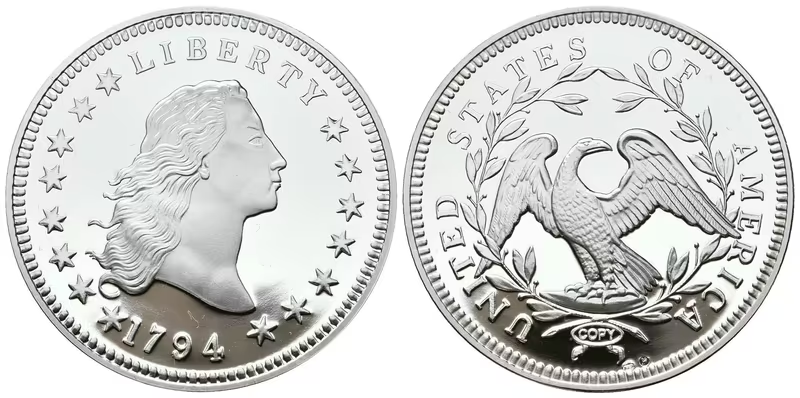
USA, 1 Dollar 1794 - Flowing Hair Liberty / Orel - první americký stříbrný dolar, replika
Moderní replika (značeno COPY) 1 Dollar 1794 - Flowing Hair Liberty / Orel - první americký stříbrný dolar Ag (.999), 40 mm (20 g), v kapsli. Stav mince odpovídá fotografii.
Skladem 1 ks - Code: FA-140CVKE
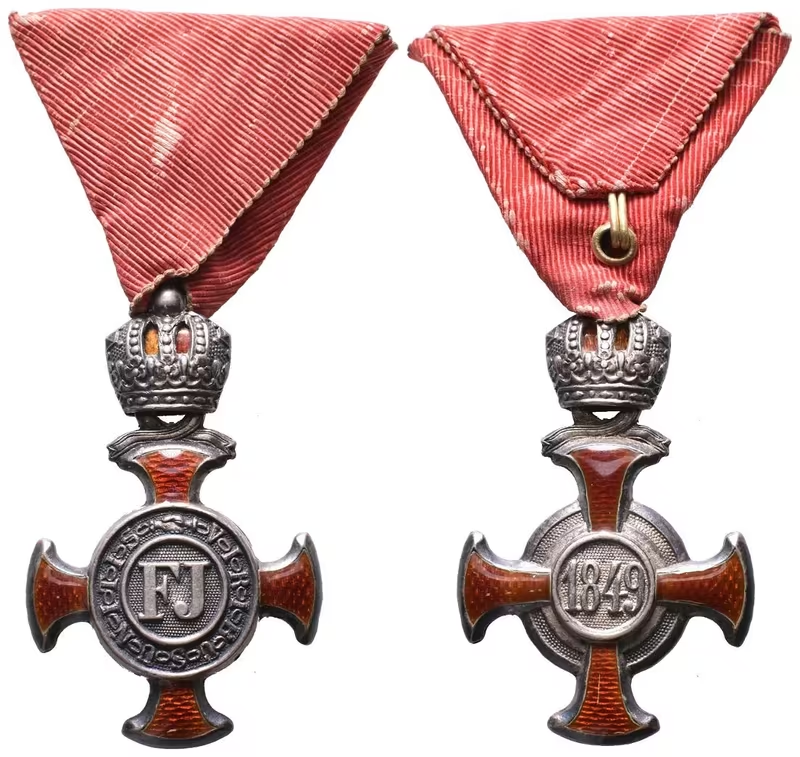
Záslužný kříž, stříbrný s korunou na civilní stuze v etui
Rakousko - Uhersko / Rakouské císařství Záslužný kříž, stříbrný s korunou na civilní stuze, stříbro, smalty, smalt v koruně, značeno WILH. KUNZ WIEN X, puncováno, Marko.140c Kříž v krásné zachovalost, stuha opotřebovaná, etue lehce poškozená, značeno…
Skladem 1 ks - Code: FPOL-107
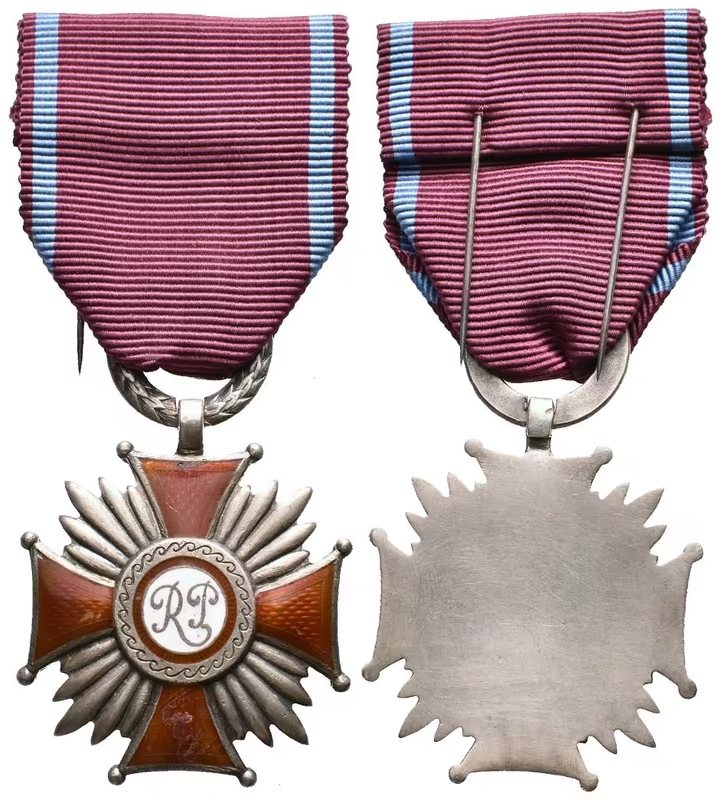
Polsko, Stříbrný kříž za zásluhy RP
Polsko Zlatý kříž za zásluhy PRL, 1945 - 1952, bronz zlacený, smalty, neznačeno Pěkná zachovalost, vada smaltu v cípu kříže, stuha
Skladem 1 ks