Augustus I of Saxony
Augustus I of Saxony was the Albertine Saxon Elector (1553–1586), who strengthened the administration of his land and sought a stable currency. In coinage he is associated with the integration of Saxony into the imperial coinage rules and with a marked centralisation of striking in Dresden.
Augustus I of Saxony (1526–1586) succeeded his brother Maurice of Saxony as Elector in 1553, taking over a country which had behind it a turbulent period of imperial disputes and religious tensions. In his policy he concentrated on building a firm territorial state: he extended and refined administrative structures, strengthened financial oversight and sought greater independence from negotiations with the estates. In contemporary and later assessments he appears as a ruler who knew how to combine practicality with a long-term plan — including an emphasis on order in economic management, in law and in revenue collection. His reign coincides with a period when the wealth of the ore-mining districts of the Ore Mountains and the development of urban crafts created the preconditions for a strong, silver-based currency.
Within the Empire, Augustus acted as a leading figure of the Lutheran estates, while at the same time often choosing a balancing approach rather than open confrontation with the Habsburg imperial court. In the history of confession he is recorded above all for initiating and signing the Formula of Concord (Konkordienformel 1577) and subsequently the Book of Concord (1580), through which he sought the unification of Lutheran doctrine at a time when disputes were deepening in the Protestant environment. Among political episodes typical for his era is also the imperial execution against John Frederick II of Saxony during the so-called Grumbach disturbances: in 1567 he conquered Gotha and had this event commemorated on a representational strike of a thaler, on which the coin image became a direct instrument of political communication.
History
For numismatics, however, his pursuit of stable and intelligible coinage practice is above all essential. The Saxon lands belonged among regions with an exceptionally lively monetary circulation in which both domestic and foreign coins met. In order to limit confusion in exchange rates and strengthen confidence in local coinage, Augustus's policy aimed at clearer rules and more disciplined production. In 1571 Saxony joined the Augsburg Imperial Coinage Ordinance of 1559 and related imperial regulations, thereby committing the Elector to the broader effort to unify the parameters of coins within the Empire. The practical impact of such steps was not merely a "paper" decree but also pressure for coins to be struck with predictable fineness and for the scope for speculation and local deviations to be reduced.
Markedly significant too was the centralising step associated with the electoral constitution of 1572, which made the Dresden Mint the sole mint in the Electorate. From the state's perspective this was a strong instrument of control over the metal and over monetary circulation; from the perspective of the history of coinage it was a moment that helped to unify the style and parameters of Saxon strikes. To technological innovations the year 1575 is linked, when at the Dresden mint under Augustus the walzenprägung (roller-die striking) was introduced — that is, a more mechanised method of production that enabled higher output and better repeatability of certain types. Augustus died in 1586 in Dresden and was buried at Freiberg; his reign nevertheless left a lasting trace in how the role of coinage as part of state administration came to be understood in Saxony.
Coinage under Augustus I and collector context
The strikes associated with Augustus I of Saxony include a wide spectrum of denominations from smaller values up to thalers, which had significance not only in domestic circulation but also in long-distance trade. For collectors there are two interesting levels: the technical (quality and method of striking, including later roller-die technology) and the political-symbolic (the coin as the "official image" of the ruler and the country). With representational thalers one often encounters a prominent electoral coat of arms and an emphasis on titulature; with circulating pieces the image tends to be more restrained, but these coins too can show well how a more standardised monetary system was being born in the 16th century.
When identifying coins it is essential to observe the legend, the form of the arms and the style of engraving. With 16th-century Saxon strikes it is worth working with catalogues and comparing variants, because small differences in the legend may indicate a different issue or workshop. State of preservation is assessed mainly by the legibility of the legend and the sharpness of the relief; with silver coins, natural patina and fine hairlines from circulation or later handling are common. If you encounter an "overly perfect" surface without natural traces of age, caution is in order — with more sought-after types there exist modern imitations as well as pieces with aggressive cleaning which can visually "lift" a coin but rather harm its collector value.
In our auction and shop
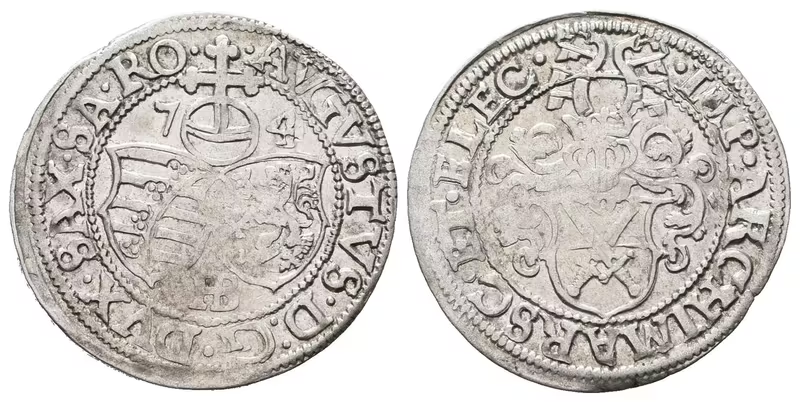
- Code: NASAS50-D1574
Sasko, Groš 1574 HB
Sasko, August I., 1553 - 1586 Groschen 1574 HB, Drážďany, K/K.110, velmi pěkná zachovalost, lesk, patina, lehce zvlněný
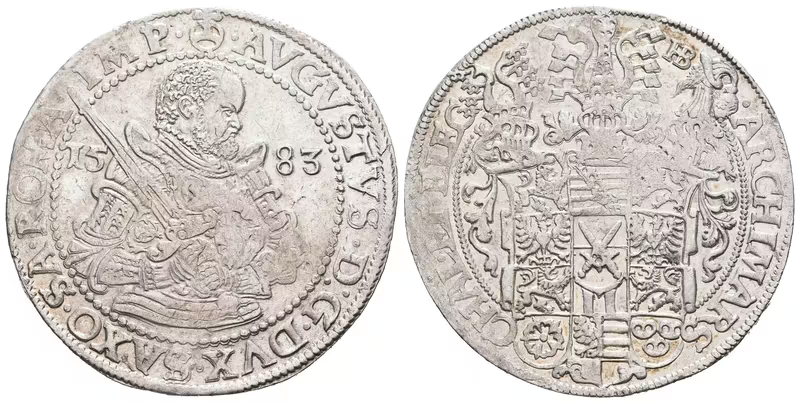
Skladem 1 ks - Code: NASAS50-A1579
Sasko, Tolar 1583
Sachsen, August I., 1553 - 1586 Tolar 1583 HB, Dresden (29,09 g), Keilitz/Kahnt 68, Dav. 9798, velmi pěkná zachovalost, patina, zbytky lesku na Av., lesk na Rv., rysky
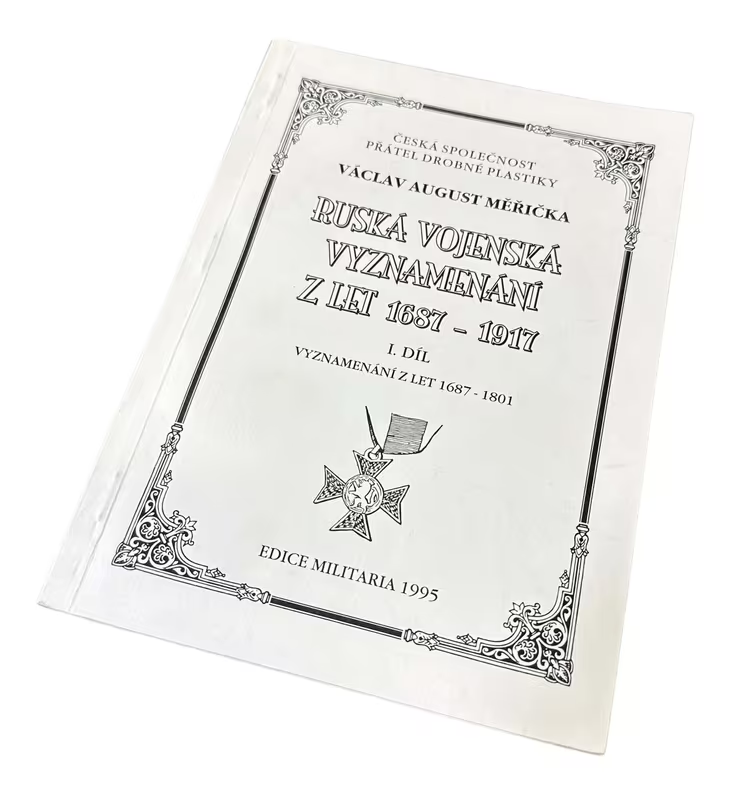
Skladem 1 ks - Code: XFRU-1687
Ruská vojenská vyznamenání z let 1687 - 1917, I. díl
Václav August Měřička I. díl, vyznamenání z let 1687 - 1801. edice Militaria 1995, vydala Česká společnost přátel drobné plastiky
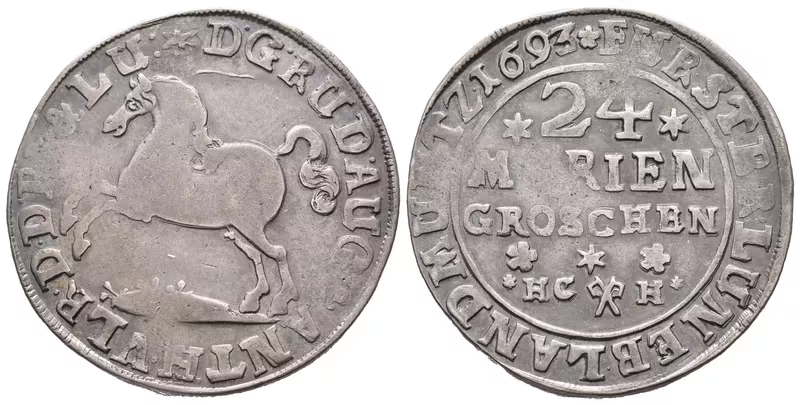
Skladem 3 ks - Code: NABRAUW-1693
Brunšvick-Wolfenbüttel, 24 Mariánských grošů 1693
Braunschweig - Wolfenbüttel, Rudolf August a Anton Ulrich (1666/1685 - 1704) 24 Mariengroschen 1693 HCH, Braunschweig, KM.586, Welt.2080, velmi pěkná zachovalost, patina, rysky a drobné vady střížku
Skladem 1 ks