Jubilee Coin
A jubilee coin is a coin issued to mark an important anniversary or state event, in order to commemorate it with a special motif, inscription or date. It may be intended for circulation, but more often it is produced as a commemorative or collectors' strike in silver or gold.
Jubilee coins build on the very old idea that a coin is not merely a means of payment but also a reliable bearer of messages. In antiquity and the Middle Ages, strikes commemorated victories, the accession of a ruler, the foundation of a town or important buildings, because coin spread the fastest and the farthest. In modern times this principle has been transformed into the targeted commemoration of anniversaries: through coins, the state emphasises continuity, identity and important historical milestones, which are to remind the public of a shared story.
The term "jubilee" in practice denotes strikes issued for a particular anniversary (for example the founding of a state, the reign of a ruler, the anniversary of the death or birth of an important figure, or other state and social events). From an ordinary circulating coin, a jubilee strike differs in that its production has a specific reason and the motif is subordinated to that reason. At the same time, it is necessary to distinguish whether the piece is a coin intended for circulation or an issue which has from the outset a commemorative and collector character. In the past, jubilee motifs also appeared on coins that actually circulated, while in modern coinage strikes intended rather for collectors prevail, often in precious metals and in higher quality of execution.
In the Czechoslovak tradition, jubilee coins are firmly linked with the commemorative silver issues of the interwar period. Among the often-cited examples are the silver 10-koruna piece issued for the 10th anniversary of the founding of the Republic (1928) or the silver 20-koruna piece commemorating the death of Tomáš Garrigue Masaryk (1937). These strikes show how the jubilee is reflected in the artistic programme: alongside the denomination and the state arms there appear an anniversary message and motifs that are to capture the idea of the Republic and its values.
History
Alongside silver commemorative coins, gold jubilee strikes also have a strong place in the Czech setting, particularly the St Wenceslas ducats. In various issues these were used as representative and ceremonial coins, in which the anniversary is reflected not only in the inscriptions and dating but also in the very choice of the traditional motif. Cited as jubilee, for example, are the St Wenceslas ducats struck for the 5th anniversary of the founding of the Czechoslovak Republic, and also the gold 5-ducats and 10-ducats struck for the St Wenceslas millennium (1929), which build on the deeper historical symbolism of the patron of the land.
The jubilee conception is applied in later times too: cited as an example are the ducats struck in 1978 for the 600th anniversary of the death of Charles IV. From the point of view of terminology, it also holds that a large part of Czechoslovak and Czech commemorative coins can in a broader sense be considered jubilee strikes, because precisely anniversaries and the commemoration of state or cultural milestones are one of the main reasons for their issue. A jubilee coin thus stands on the border between a "commemorative message" and a "coinage tradition": it combines the economic framework of a coin with the cultural and historical message that the state wishes to preserve in the long term.
A jubilee coin is usually recognised by the fact that it bears an unambiguous link to a specific event: the anniversary is marked on it, the date, often also an explanatory legend or symbols connected with the theme. The artistic treatment is more festive than that of ordinary circulating coinage, and the motif often works with the state arms, portraits of important figures, architecture or symbolism, which is to recall the anniversary at first sight.
What a Jubilee Coin Looks Like and What It Is For
The material of jubilee coins varies according to purpose. If they are intended for circulation, they are made of ordinary metals and their main function is to "recall an anniversary in everyday life". In Czechoslovak and Czech practice, however, jubilee strikes in silver and gold predominate, which are produced as commemorative and collectors' coins. With these, the quality of the striking (for example proof) is also important, because the coin is to look representative and to stand the test of time as a keepsake.
From the numismatic point of view, with jubilee coins one follows the denomination, year of issue, metal, weight, diameter, mintage and the author of the design. With some strikes the role is played also by whether they were really released into circulation or whether the coin was distributed mainly in sets. A jubilee coin is therefore not merely "a coin with a nice motif" but a particular historical document which captures what events the state considered worthy of commemoration and in what artistic language it wished to communicate them to the public.
In our auction and shop
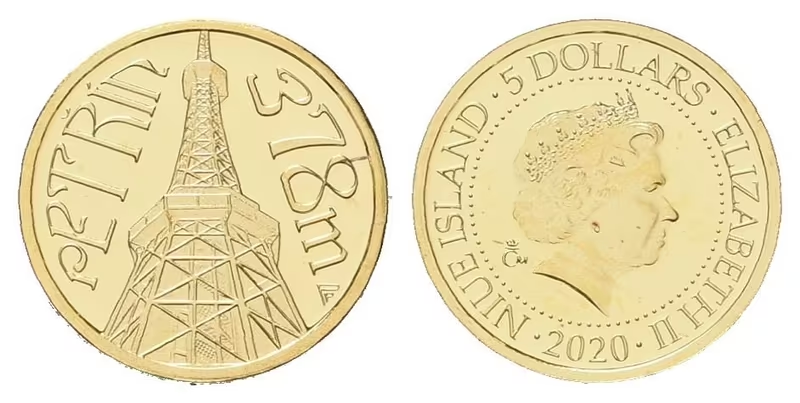
- Code: ZD-2020PET
Zlatá mince Praha - dobová pohlednice
Niue 5 Dollars 2020 (Petr Patka) - Zlatá mince Praha - Petřín v dobové pohlednici Au 0,9999, 11 mm (0,5 g), náklad 2000 ks, PROOF Petřínská rozhledna vznikla díky úsilí Klubu českých turistů u příležitosti Zemské jubilejní výstavy v roce 1891. Přestože…
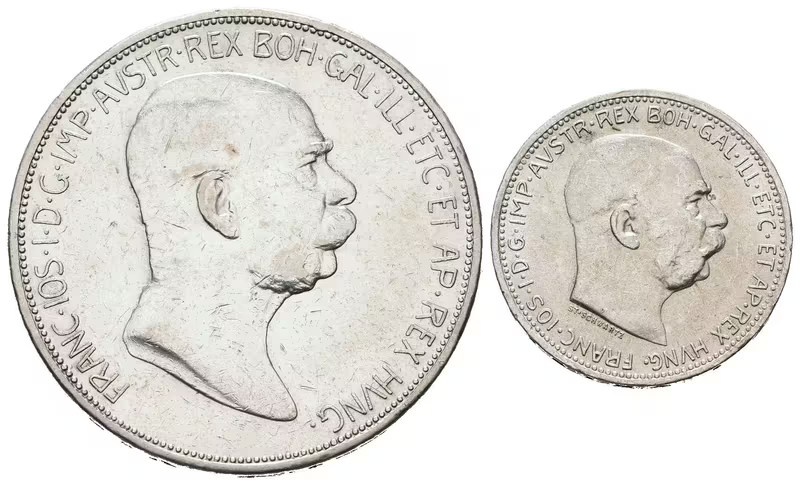
- Code: MA128-1908LOT
Sada mincí 1 Koruna 1915 a 5 Koruna 1908 - jubilejní
František Josef I. (1848 - 1916) 5 Koruna 1908, 60. výročí nastoupení vlády Františka Josefa I., Ves. 128 + 1 Koruna 1915, Vídeň, společná etue, certifikát_2 ks
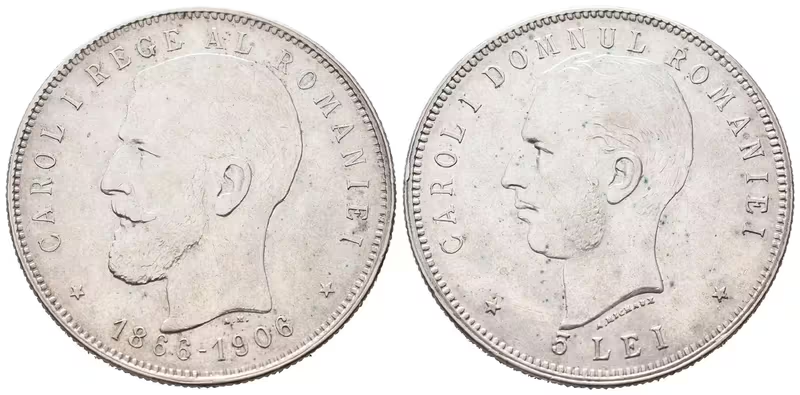
- Code: SRUM86-A1906
Rumunsko, 5 Lei 1906 - Jubilejní
Rumunské království, Carol I. (1866 - 1914) 5 Lei 1906 - K 40. výročí panování, minc. Brusel, KM.35, velmi pěkná zachovalost, lesk, patina, rysky